
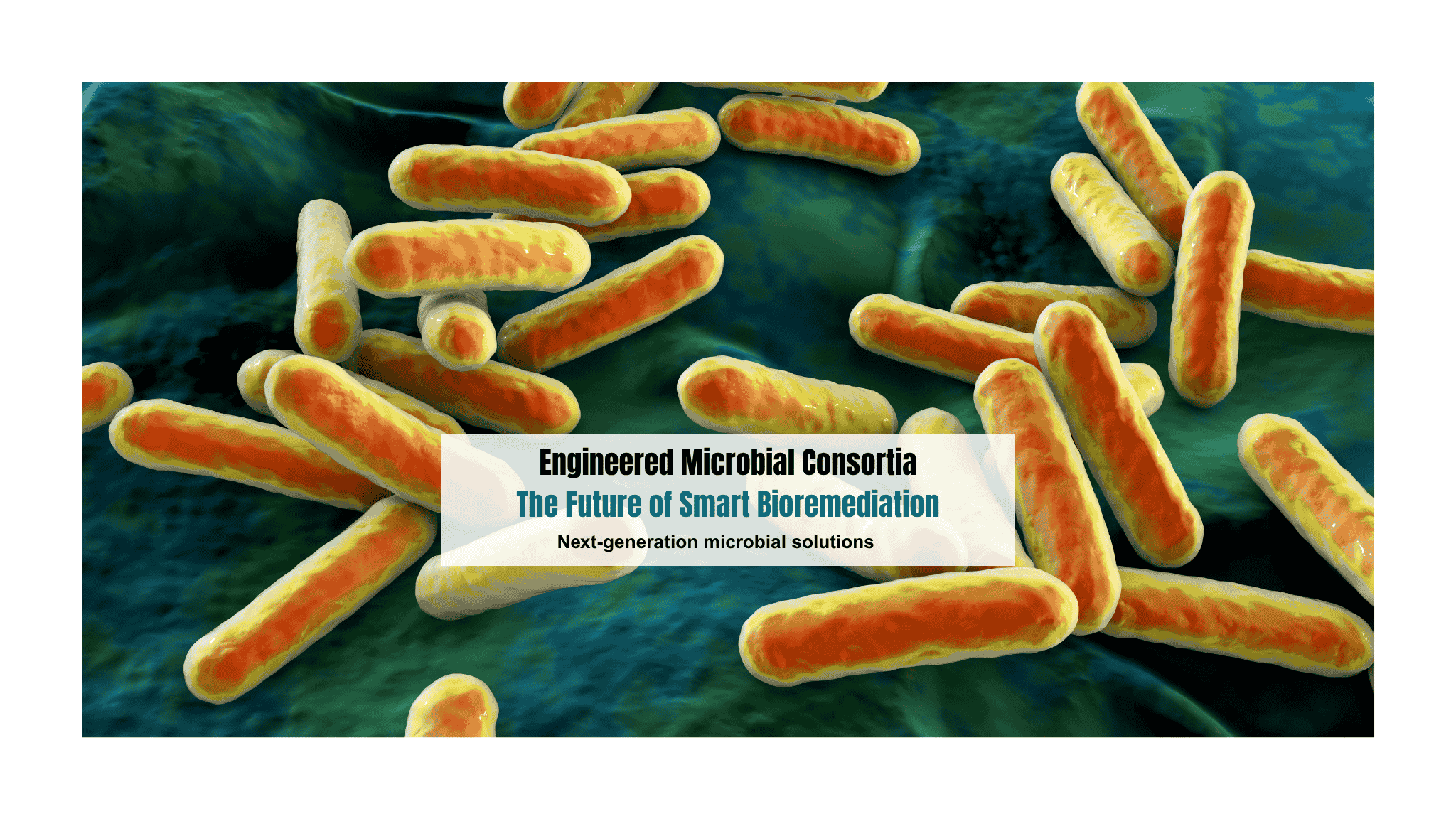
Engineered Microbial Consortia: The Future of Smart Bioremediation
How Team One Biotech is transforming wastewater, soil, and effluent treatment with next-generation microbial solutions- Engineered Microbial Consortia (EMC)
Industrial wastewater, landfill leachate, petrochemical discharge, and textile dye effluents often contain complex mixtures of pollutants—hydrocarbons, dyes, metals, ammonia, solvents, and toxic organic compounds. These aren’t easily treated by single-strain microbes or traditional ETP/STP methods alone. As environmental compliance becomes stricter and industries move toward sustainable operations, Engineered Microbial Consortia (EMC) have emerged as one of the most effective solutions for fast, stable, and holistic bioremediation.
Engineered microbial consortia are purpose-designed combinations of bacteria and fungi that work cooperatively to degrade, transform, and neutralize multiple pollutants simultaneously. Research between 2023–2025 has consistently shown that multi-microbe systems outperform single strains in degrading recalcitrant pollutants, especially in real-world conditions with fluctuating loads, mixed contaminants, or high TDS environments. [1], [2]
This is where Team One Biotech brings an edge—by designing, optimizing, and deploying customized consortia and ready-to–use biocultures, specifically formulated for Indian effluents, Indian climate, and CPCB-compliant treatment goals.
Why Engineered microbial Consortia Work Better Than Single Microbes
Engineered consortia succeed because they offer:
| Advantage | Why It Matters |
| Division of Labour | Each strain handles different metabolic steps of pollutant breakdown |
| Functional Redundancy | Ensures stability even under shock loads, pH swings, or temperature changes |
| Higher Pollutant Range | Hydrocarbons, dyes, metals, nitrates, phenols, surfactants — treated in parallel |
| Biofilm Strength | Mixed biofilms + DIET (Direct Interspecies Electron Transfer) boost speed [3] |
| Reduced Toxic Intermediates | One microbe’s by-products become another’s food source |
In simpler words — consortia “share the workload,” making remediation faster, deeper, and more resilient, especially in non-sterile real-world ETP/STP and drain environments.
Scientific Mechanisms Behind Engineered Microbial Consortia
| Mechanism | Outcome |
| Synergistic Metabolism | Complex pollutants broken down in multiple linked steps |
| Biosurfactant Production (e.g., Bacillus) | Emulsifies oils & fuels, increasing bioavailability |
| Biofilm-Based DIET | Faster electron transfer → faster anaerobic breakdown |
| Co-metabolism for Hard Pollutants | Helps degrade dyes, PAHs, pesticides, pharma molecules |
Recent studies (2024–2025) show consortia reduce COD, color, and toxicity 30–70% faster than single microbes in textile and refinery effluents. [4], [5]
Team One Biotech’s 6-Step Engineered Consortia Workflow
| Step | What We Do |
| 1. Site Profiling | Pollutant fingerprint, seasonal variation, toxicity, COD/BOD, metals |
| 2. Strain Shortlisting | Indigenous isolates + lab strains from our microbial library |
| 3. Bench-Scale Optimization | 2–6 member consortia selection, stability testing, biosurfactant screening |
| 4. Biofilm & Carrier Engineering | Ceramic/carbon carriers for high biomass retention |
| 5. Pilot Deployment (On-Site) | 1–10% flow pilots to simulate full-scale performance |
| 6. Full-Scale Implementation | Dosing plans, monitoring, remote support, re-seeding protocols |
This method ensures predictable and regulator-friendly outcomes, especially under CPCB/SPCB consent conditions.
Where These Consortia Deliver Best Results (Use-Cases in India)
| Industry | Pollutants | Result |
| Textile & Dyeing | Azo dyes, anthraquinone dyes | 80–95% color + COD reduction [[4]] |
| Petrochemical/Refinery | Oils, greases, PAHs | Faster emulsification & biodegradation |
| Municipal Drains | Ammonia, surfactants, sewage mix | Stable biofilm even at fluctuating loads |
| Metals + Organics Mix | Electroplating wastewater | Lower toxicity; safer polishing stage |
Strain Catalog Integration
Team One Biotech also supplies lab-tested, purity-verified, GRAS microbial and fungal strains for industries, agriculture, and aquaculture.
👉 Link: Buy Strains Page —
| Example Strain | Function | Application |
| Bacillus subtilis | Biosurfactant + hydrocarbon breakdown | Oil & refinery wastewater |
| Pseudomonas putida | Aromatic compound degradation | Textile effluent |
| Nitrosomonas spp. | Ammonia oxidation | Municipal STPs |
| Trichoderma harzianum (fungus) | Organic residue breakdown | Soil & leachate sites |
Additional benefits from the T1B strain program:
- GRAS certified
- Custom concentration/formulation
- 3–7 day delivery
- Technical guidance on application
India Regulatory Fitment
Engineered biocultures align with:
- CPCB guidelines for in-situ bioremediation
- Environment (Protection) Act
- Municipal & SPCB monitoring frameworks
Because consortia reduce chemical load, sludge, and toxicity, they support India’s push toward ESG, ZLD, and sustainable remediation.
KPIs We Deliver and Measure
- COD/BOD reduction curve
- Color/ADMI removal
- Oil & grease elimination
- Toxicity reduction (bioassay-based)
- Shock-load resilience
- Seasonal stability
FAQs
Q: Can these microbes survive high TDS/temperature?
Yes—consortia provide redundancy and shock resistance superior to single strains.
Q: Can this replace ETPs?
No. It enhances and stabilizes ETP/STP performance and lowers OPEX.
Q: Do regulators accept bioremediation?
Yes—CPCB already publishes SOPs for microbial drain treatment.
Conclusion
Engineered Microbial Consortia are the next leap in bioremediation—smarter, faster, and more adaptable than conventional biological treatment. For Indian industries facing compliance pressure, variable influent loads, and sustainability goals, Team One Biotech’s engineered consortia and microbial strain program provide a science-backed, field-tested, CPCB-aligned solution.
Call to Action
If you want a pilot, audit, or strain recommendation, connect with our team: