


Microbial Colony Development in Septic Systems
The phone call always comes at the worst possible moment. A houseguest is arriving tomorrow, and suddenly there’s that unmistakable odour wafting from the garden. The toilet won’t flush properly. Your neighbour mentions they’ve noticed something unpleasant near your compound wall. For lakhs of Indian homeowners, this nightmare scenario isn’t hypothetical, it’s a recurring crisis that exposes families to health risks, social embarrassment, and expensive emergency repairs.
What most people don’t realise is that beneath every functioning septic system lies an invisible army of microorganisms working tirelessly to break down waste. When this microbial colony collapses, your entire wastewater management system collapses with it. The question isn’t whether you need these bacteria, it’s whether you’re accidentally killing them every time you pour bleach down your drain.
The Living Laboratory Beneath Your Feet

Your septic tank isn’t just a concrete chamber buried in the ground. It’s a carefully balanced bioreactor hosting trillions of microorganisms engaged in the complex process of organic waste degradation. These bacterial colonies don’t appear overnight, nor do they operate randomly. They follow a predictable lifecycle that determines whether your system thrives or fails.
Understanding this lifecycle changes everything about how you maintain your septic system. The bacteria responsible for bioremediation in your tank progress through four distinct phases, each critical to long-term septic health.
Lag Phase: The Vulnerable Beginning
When bacteria first enter your septic environment, whether naturally through waste or introduced through microbial additives, they don’t immediately start working. This lag phase represents their adjustment period. The microorganisms are adapting to the temperature, pH levels, and nutrient availability in your tank.
During Mumbai’s sweltering summers, this phase shortens considerably. In the cooler climates of hill stations like Ooty or Shimla, it extends significantly. This is why septic systems in different regions of India require tailored approaches to maintenance.
For housing societies in Bangalore or Pune, where multiple units share sewage treatment infrastructure, this lag phase becomes even more critical. A sudden influx of harsh chemical cleaners from even one household can reset the entire colony back to square one, leaving hundreds of litres of waste unprocessed.
Log Phase: Peak Performance
This is when your microbial colony hits its stride. Bacterial reproduction accelerates exponentially, and waste breakdown occurs at maximum efficiency. The anaerobic bacteria in the depths of your tank are consuming solid waste, converting it into simpler compounds, while facultative bacteria handle the transition zones.
During this phase, properly maintained septic systems handle the heavy loads typical of Indian households, large joint families, frequent guests, and the water-intensive washing practices common across the subcontinent. The colony is robust enough to process everything from kitchen waste to bathroom effluent without creating the foul odours that plague poorly maintained systems.
This is also when your septic system is most forgiving of minor disturbances. A single use of Harpic or phenyl won’t immediately devastate the colony, though repeated use certainly will.
Stationary Phase: The Balancing Act
Eventually, bacterial growth plateaus. The colony has reached the carrying capacity of your septic environment. Population growth equals population death, creating a stable equilibrium. In well-designed systems, this phase can last for years.
The challenge for Indian septic systems is maintaining this balance through dramatic seasonal changes. The monsoon presents particular difficulties. In Kerala, Assam, or coastal Maharashtra, heavy rains can flood septic tanks, diluting the bacterial concentration and washing away portions of the colony. The sudden influx of water also reduces the retention time needed for proper organic waste degradation.
Industrial facilities face an additional challenge. The wastewater from factories often contains compounds that slowly poison the bacterial colony, gradually pushing it out of the stationary phase and toward collapse.
Death Phase: The Point of No Return
When a microbial colony enters the death phase, the decline accelerates rapidly. Nutrients become depleted, toxic compounds accumulate, or environmental conditions become untenable. Bacteria die faster than they reproduce.
The symptoms are unmistakable: persistent foul odours, slow drainage, visible scum on the surface of standing water, and backed-up toilets. By this stage, emergency intervention isn’t optional, it’s necessary to prevent a complete system failure that could cost over ₹50,000 to rectify.
The Chemical Warfare Happening in Your Drains

Walk into any Indian household, and you’ll find an arsenal of cleaning products: Lizol, Domex, Harpic, phenyl, and various acid-based toilet cleaners. These products promise hygiene and freshness. What they deliver to your septic system is something closer to a chemical weapon.
Phenyl, still widely used for floor cleaning across India, is particularly devastating to septic bacteria. Its active compounds don’t just clean your floors, they sterilise your septic tank, killing off the very organisms responsible for waste breakdown. A single bucket of phenyl-laced water can set back your microbial colony by weeks.
The same applies to the antibacterial handwashes, bleach-containing detergents, and harsh toilet cleaners that promise a “deep clean.” They work too well, eliminating not just harmful pathogens but also the beneficial bacteria essential for sewage treatment.
Housing societies compound this problem. When twenty flats in a Gurgaon tower complex all pour chemical cleaners down their drains, the cumulative effect on the shared septic infrastructure becomes catastrophic. Facility managers often don’t understand why their expensive sewage treatment plants require desludging every six months instead of every two years.
Consider this: Team One Biotech’s system audits across Delhi-NCR consistently reveal that chemical cleaner overuse is the single largest factor in premature septic failure. The solution isn’t just reducing chemical use, it’s actively replenishing the bacterial population with specialised microbial additives designed for Indian wastewater conditions.
Anaerobic vs. Aerobic: The Dance of Decomposition
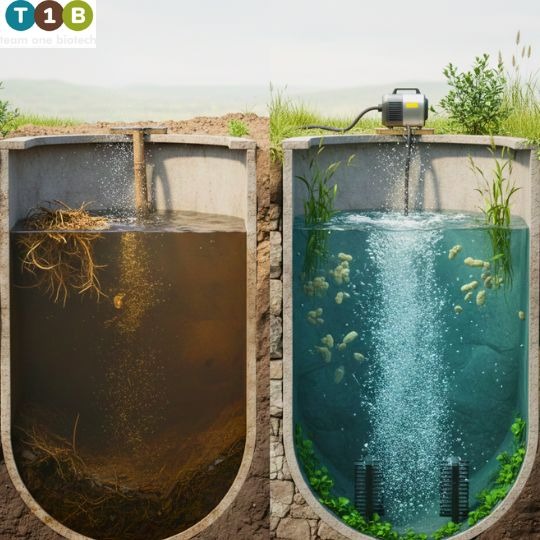
Your septic system operates on a two-stage process that mimics natural decomposition, but accelerated and contained. Understanding the difference between anaerobic and aerobic bacteria explains why proper system design matters so profoundly.
The Anaerobic Zone: The Deep Workers
In the oxygen-depleted depths of your septic tank, anaerobic bacteria perform the heavy lifting. These microorganisms don’t require oxygen, in fact, oxygen can inhibit or kill many anaerobic species. They break down complex organic compounds in solid waste, converting proteins, fats, and carbohydrates into simpler molecules.
This process generates methane and hydrogen sulphide as byproducts, which is why improperly vented septic tanks create that characteristic “rotten egg” smell. In well-designed systems, these gases vent harmlessly away from living areas.
Indian wastewater presents unique challenges for anaerobic bacteria. Our cuisine’s heavy use of oils and ghee creates fatty layers that are difficult to break down. The high fibre content from vegetable-heavy diets adds bulk. Anaerobic bacteria adapted to these conditions perform better than generic imported strains, a fact that Team One Biotech’s research has repeatedly confirmed.
The Aerobic Zone: The Polishers
In the upper layers of your tank and especially in the drain field or soak pit, aerobic bacteria take over. These microorganisms require oxygen and perform the final breakdown of organic compounds into carbon dioxide, water, and stable organic matter.
The monsoon poses particular challenges for aerobic bioremediation. When soak pits flood, the aerobic bacteria suffocate. When the water recedes, the system must rebuild this bacterial population from scratch, a process that can take weeks during which your septic system operates at reduced efficiency.
Housing societies with sequential batch reactors or extended aeration systems depend heavily on maintaining healthy aerobic bacterial populations. When these colonies fail, the treated effluent quality plummets, potentially violating environmental regulations and creating health hazards.
The Monsoon Challenge: When Water Attacks Your Waste System
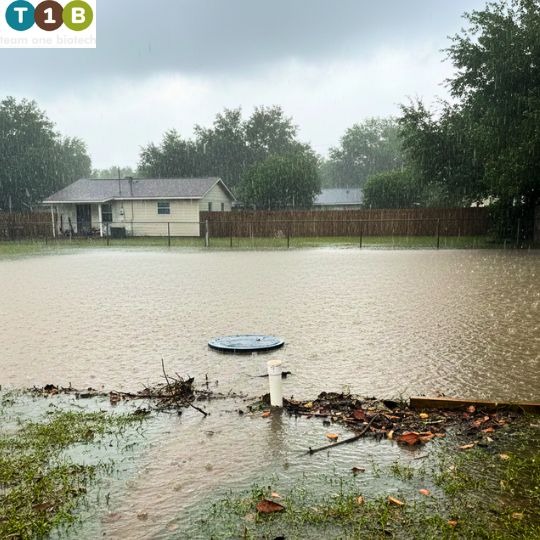
For three to four months every year, much of India transforms into a water-logged landscape. Streets flood. Basements fill. And septic systems face their greatest annual test.
The problems are multiple and compounding. First, groundwater levels rise, often submerging soak pits and drain fields. This eliminates the aerobic treatment zone entirely. Second, rainwater infiltration dilutes the bacterial concentration in septic tanks, reducing treatment efficiency. Third, the cooler temperatures of the monsoon season slow bacterial metabolism.
In cities like Chennai, where cloudbursts can dump 200mm of rain in a single day, septic tanks can overflow, washing away years of carefully established bacterial colonies. The aftermath isn’t just a cleanup problem, it’s a rebuilding problem that requires weeks of careful bacterial reestablishment.
Facility managers in high-density areas like Navi Mumbai or Noida face additional complications. Shared sewage treatment infrastructure means that when one building’s septic system fails during monsoon, the backup can affect dozens of households. The social tensions this creates in housing societies are well documented.
The solution lies in proactive management. Introducing concentrated microbial additives before monsoon season helps build bacterial populations robust enough to withstand dilution. Ensuring proper drainage around septic tanks prevents excessive water infiltration. These preventive measures cost a fraction of emergency repairs.
Urban Density: The Compound Effect
Indian cities are among the most densely populated on Earth. Mumbai packs over 30,000 people per square kilometre. This density creates unique challenges for septic and sewage treatment systems that Western wastewater management models don’t adequately address.
Consider a typical housing society in Pune: forty flats, 150 residents, sharing a common septic system designed for perhaps 100 people. Morning peak hours see toilets flushing simultaneously, washing machines running in parallel, and kitchens disposing of cooking waste from forty different households. The hydraulic load alone can overwhelm bacterial colonies that haven’t been properly established or maintained.
The waste composition is equally challenging. Indian households generate more organic kitchen waste, vegetable peels, fruit scraps, rice water, than Western counterparts. This should theoretically benefit septic bacteria, as it’s readily biodegradable organic matter. However, when combined with the oils, spices, and acidic compounds from Indian cooking, the waste stream becomes more complex.
The facility manager’s nightmare scenario unfolds when chemical use patterns diverge across households. Twenty families might use eco-friendly cleaning products while five others regularly pour drain cleaners and phenyl into the system. Those five households can single-handedly compromise the bioremediation capacity of the entire infrastructure.
This is precisely where professional intervention becomes essential: Team One Biotech’s microbial solutions are formulated to withstand the variable chemical inputs and high organic loads typical of Indian housing societies, maintaining stable bacterial populations even under adverse conditions.
Industrial Wastewater: A Different Beast Entirely
Manufacturing facilities, food processing plants, and textile factories generate wastewater that would devastate household septic systems. The bacterial strains capable of handling domestic sewage are wholly inadequate for industrial effluent.
Pharmaceutical plants discharge trace antibiotics that create selection pressures favouring resistant bacterial strains. Textile factories release dyes and fixing agents that many bacteria cannot metabolise. Food processing facilities generate wastewater with biochemical oxygen demand (BOD) levels ten times higher than domestic sewage.
These industries require specialised bacterial consortia, carefully selected combinations of microorganisms bred specifically for industrial waste streams. A one-size-fits-all approach to bioremediation fails spectacularly in industrial settings.
The regulatory environment adds complexity. The Central Pollution Control Board and State Pollution Control Boards mandate specific treatment standards. Facilities that fail to meet these standards face penalties, operational shutdowns, and reputational damage. Maintaining robust bacterial colonies in industrial sewage treatment plants isn’t just about avoiding bad smells, it’s about regulatory compliance and business continuity.
Restoring the Balance: A Path Forward
The solution to septic system failures isn’t complicated in principle, though it requires consistency in practice. Your microbial colony is resilient when properly supported but fragile when neglected or poisoned.
Start by auditing your chemical use. That bottle of acid toilet cleaner might make your bowl shine, but it’s creating long-term problems in your septic system. Eco-friendly alternatives clean effectively without devastating your bacterial population.
Understand that your septic system has carrying capacity limitations. If your household has grown, adult children returning home, elderly parents moving in, your septic infrastructure may need capacity expansion or more aggressive bacterial supplementation.
Schedule regular professional assessments. A qualified microbiologist or wastewater specialist can measure bacterial activity levels, identify problems before they become crises, and recommend targeted interventions. This is particularly crucial for housing societies and industrial facilities where system failure affects many people.
Most importantly, recognise that your septic system is a living ecosystem requiring ongoing care. The bacteria working in your tank right now are keeping your family healthy, your property value intact, and your neighbours unbothered by unpleasant odours. They deserve better than being poisoned with harsh chemicals every week.
The Decision That Changes Everything
Septic system failure is preventable. The science is clear, the solutions are proven, and the consequences of inaction are both expensive and unpleasant. The microbial colonies in your wastewater treatment system aren’t mysterious, they’re well-understood biological communities that respond predictably to how you treat them.
Every day you delay addressing the chemical warfare happening in your drains is another day your bacterial population weakens. Every monsoon season that passes without proper preparation is another opportunity for colony collapse. Every household in your society that pours phenyl down the drain is undermining the infrastructure you all depend on.
The path forward requires partnering with specialists who understand Indian wastewater conditions, the climate variations, the chemical use patterns, the dietary impacts, and the infrastructure challenges unique to our country. Team One Biotech has spent years developing microbial solutions specifically for these conditions, not generic formulations adapted from Western markets.
Your septic system’s health is not negotiable. The bacteria working beneath your home right now are either thriving or dying. Contact Team One Biotech today for a comprehensive system assessment and discover how specialised microbial additives can restore the balance your wastewater infrastructure needs. Because prevention isn’t just better than cure, it’s dramatically cheaper, less disruptive, and more effective.
The invisible ecosystem beneath your home deserves your attention. Give it that attention today, and it will serve your family reliably for decades. Neglect it, and you’re one crisis away from an expensive, embarrassing emergency that could have been entirely prevented.
Looking to improve your ETP/STP efficiency with the right bioculture?
Talk to our experts at Team One Biotech for customised microbial solutions.
Contact: +91 8855050575
Email: sales@teamonebiotech.com
Visit: www.teamonebiotech.com
Discover More on YouTube – Watch our latest insights & innovations!-
Connect with Us on LinkedIn – Stay updated with expert content & trends!