
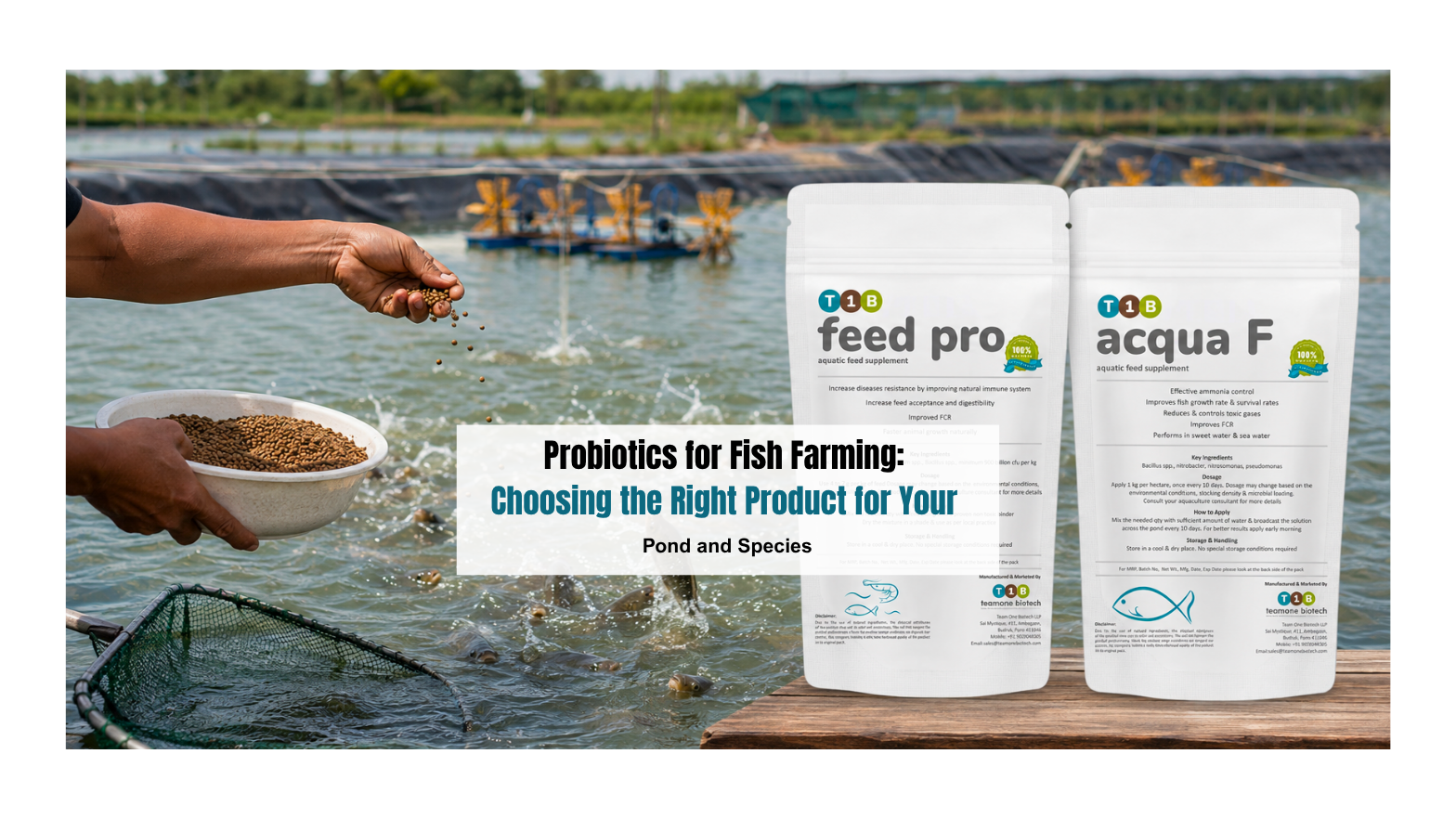

Probiotics for Fish Farming: Choosing the Right Product for Your Pond and Species
You have seen it before. The water turns a shade that does not sit right, a murky grey-green where there should be clarity. Your fish are clustering near the inlet, gulping at the surface when they should be feeding in the column. You check dissolved oxygen at dawn and the number makes your stomach drop. By mid-morning, the smell confirms what you already knew: something has gone wrong in the biology of your pond, and every hour you wait costs you yield.
This is not a dramatic edge case. It is the lived reality of thousands of fish farmers across India every season. And the worst part is that by the time the warning signs are visible, the biological imbalance has usually been building for days or weeks. Organic load accumulated quietly. Pathogen populations found their foothold. The microbial ecosystem that should have been protecting your pond was never established in the first place.
The instinct, for many farmers, is to reach for something familiar, a disinfectant, a dose of lime, sometimes an antibiotic treatment. These interventions can suppress symptoms in the short term, but they do not fix what is broken. Worse, they often make it harder to fix later.
The right answer is biological. Specifically, it is probiotics for fish farming, the right strains, in the right form, applied at the right time for your pond type and target species. Done correctly, this is not a speculative or trendy approach. It is how the most consistently productive fish farmers in India are managing pond health today.
By the end of this article, you will know exactly what to look for in an aquaculture probiotic product, what the label is not telling you, how to match a product to your species and system, and what mistakes to avoid. If you want personalized guidance before your next stocking cycle, the Team One Biotech technical team is available to consult on your specific operation.
Why Probiotic Bacteria for Fish Farming Are Not All the Same
The Strain Problem Most Farmers Never Hear About
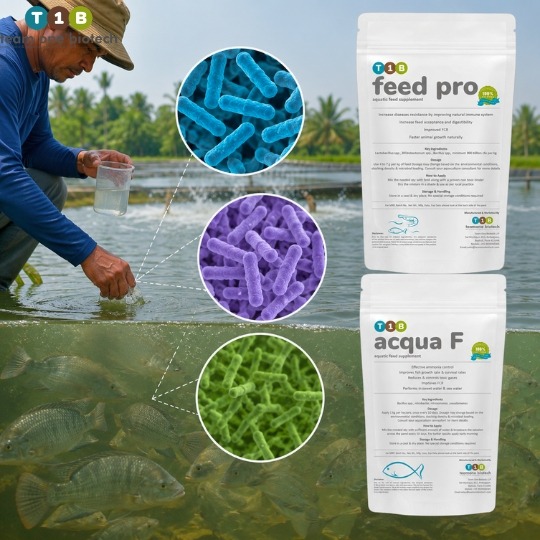
Walk into almost any agricultural input shop serving aquaculture farmers in India and you will find shelves of products labelled “aquaculture probiotic” or “beneficial bacteria for fish ponds.” The packaging often features impressive CFU counts, colony-forming units in the billions, alongside photographs of thriving ponds and healthy fish. What the packaging rarely tells you is which bacterial strains are inside, what those strains actually do in a pond environment, and whether they will survive long enough to do anything at all in your specific conditions.
This is the strain problem, and it is the reason so many farmers cycle through probiotic products without seeing consistent results.
Probiotic bacteria for fish farming are not interchangeable. A Bacillus subtilis strain that performs excellently in a freshwater carp polyculture pond, decomposing sludge, stabilising pH, reducing ammonia, may be entirely ineffective in a saline vannamei shrimp system. Not because the organism is poor quality, but because it was not selected for that salinity range, that temperature profile, or that particular biological challenge. Applying a mismatched product is not neutral. In some cases, introducing the wrong microbial load into a pond that is already under stress can compound the problem rather than resolve it.
The principle is straightforward: probiotic bacteria for fish farming must be selected based on target species, water salinity, temperature range, and the specific biological problem you are trying to address, whether that is ammonia accumulation, pathogen pressure, sludge breakdown, or biofloc stability.
What the Label Is Not Telling You
Even when a product lists its strains correctly, CFU count alone does not tell you whether those organisms are viable when they reach your pond. Viability at point of application is what matters, not viability at the point of manufacture.
Liquid probiotic concentrates stored in a warehouse without temperature control lose viability fast. Powder formulations exposed to humidity before being opened may carry a fraction of their stated count. Products applied immediately after a pond has been dosed with disinfectant or chlorine are walking into a hostile environment that will destroy most of the introduced bacteria before they can establish themselves.
Beyond viability, the carrier medium and mode of application shape how effectively the organisms reach their target environment. A granular probiotic broadcast over the water surface needs to sink and dissolve at the pond bottom where organic matter accumulates. A liquid concentrate applied to a deep, stratified pond without mechanical aeration may never penetrate the zone where it is needed most.
Indian aquaculture conditions impose unique stresses on microbial products. High ambient temperatures accelerate microbial metabolism and die-off. Monsoon-driven pH swings can shift pond chemistry faster than many imported or lab-developed strains are designed to handle. Intensive feeding regimens in commercial ponds generate organic loads that generic products from temperate-climate markets were simply not designed for.
This is not a reason to distrust the probiotic category. It is a reason to choose products developed and validated for Indian conditions, and to ask harder questions of manufacturers before buying.
Fish Pond Water Quality Management: What Probiotics Are Actually Fixing
The Ammonia Crisis in High-Density Ponds
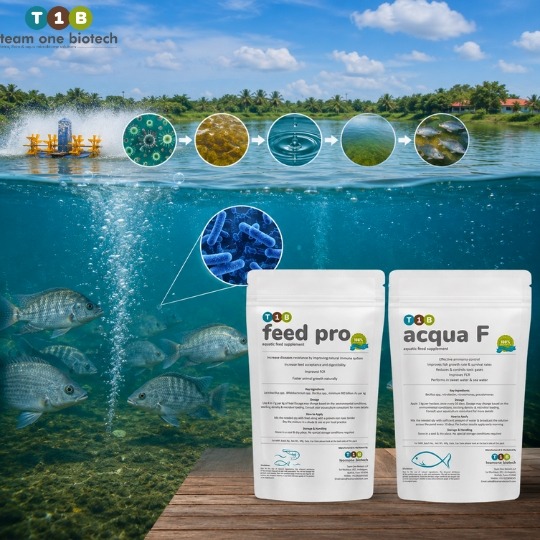
In any fish pond with meaningful stocking density and a feeding regime, ammonia is the enemy you cannot ignore. It enters the system through multiple pathways: uneaten feed settling on the pond bottom, fish excretion, and the decomposition of dead organic matter. As organic loading increases, and in commercial ponds it increases quickly, ammonia concentrations build in the water column faster than a poorly functioning biological system can process them.
The consequences are not subtle. Elevated ammonia suppresses immune function across most commercial fish species, making them vulnerable to opportunistic bacterial infections. It reduces feed conversion ratios, meaning your farmers are spending on feed that is delivering less growth. In acute cases, it causes direct gill damage and mortality.
Effective ammonia control in fish pond management is primarily a microbial problem, and it demands a microbial solution. Nitrifying bacteria, particularly Nitrosomonas and Nitrobacter, are the organisms responsible for processing ammonia through the nitrogen cycle, converting it first to nitrite and then to the relatively harmless nitrate form that plants and algae can uptake. Quality aquaculture probiotics that introduce and sustain these nitrifying populations in your pond are the foundation of functional ammonia management.
Disclaimer: Ammonia reduction timelines and target parameters vary significantly based on stocking density, feed type, pond size, species, water source, and seasonal conditions. The processes described here are general industry indicators. Always consult a qualified aquaculture technical advisor for pond-specific benchmarking and protocol design.
Pathogen Suppression Without Antibiotics
The other major function of a well-managed probiotic programme in fish pond water quality management is competitive exclusion of pathogens. In a pond with a healthy, established population of beneficial bacteria, harmful organisms like Aeromonas hydrophila, Vibrio species, and Pseudomonas find it difficult to achieve the population densities needed to cause disease. They are being outcompeted for space, nutrients, and attachment sites by organisms that do not threaten your fish.
This is not a claim that probiotics eliminate disease risk. Ponds are open biological systems and no microbial product can guarantee pathogen-free water. What a good probiotic programme does is shift the microbial balance decisively toward beneficial populations, so harmful bacteria cannot dominate even when environmental stressors, a sudden temperature drop, a heavy rain event, a feeding error, create a temporary opportunity.
The compliance dimension here is increasingly important. Central Aquaculture Authority guidelines and NFDB standards are tightening scrutiny of antibiotic use in Indian aquaculture, particularly for export-grade fish and shrimp. Biological fish health supplement programmes based on well-selected probiotic bacteria offer a regulatory-safe alternative that does not leave residues in the animal or in effluent discharge. Buyers in European, Japanese, and Gulf markets are asking for documentation. Farmers who have built biological control into their standard pond management protocol are far better positioned to meet those requirements than those who have relied on antibiotic intervention.
The critical point to understand is this: biological fish health supplement approaches work as prevention and maintenance tools. They are not rescue measures for a pond already in active disease crisis. If your pond is already showing mortality, you need emergency veterinary intervention first. Probiotics are what you deploy to make sure you do not get there again.
Aquaculture Probiotics in India: Matching the Product to the Species
Freshwater Species, Catla, Rohu, Tilapia, Pangasius
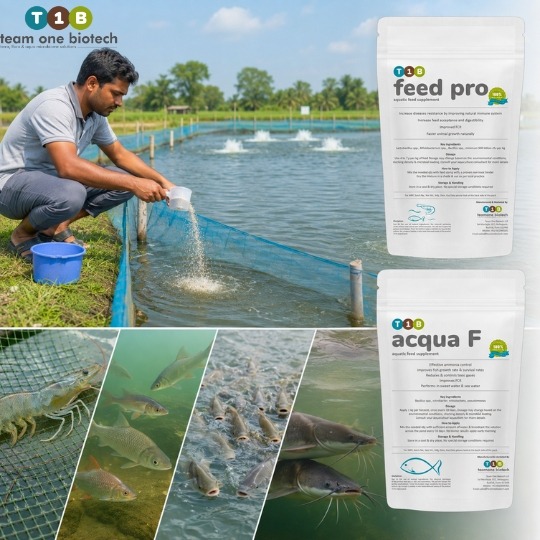
Freshwater commercial ponds in India, particularly those running traditional polyculture or intensive monoculture systems for carp species, tilapia, and pangasius, face heavy organic loading as a baseline condition. Supplementary feeding generates significant sludge accumulation. Water exchange is often limited. These ponds benefit most from probiotic blends containing Bacillus subtilis, Bacillus licheniformis, Lactobacillus species, and cellulolytic organisms capable of breaking down complex organic matter at the pond floor.
Key targets for freshwater probiotic management:
- Sludge reduction and BOD stabilisation, breaking down accumulated organic matter before it generates ammonia and hydrogen sulphide
- Ammonia and nitrite control, through nitrifying bacterial populations that establish a functional nitrogen cycle
- Feed digestibility support, through probiotic strains applied as a feed coating or mixed into pellets, improving nutrient absorption and reducing waste loading
Preferred product format for freshwater ponds is typically granular or water-soluble powder, broadcast over the pond surface. Application timing should include pre-stocking pond preparation, ideally seven to ten days before fish introduction, and then regular maintenance dosing through the production cycle, adjusted upward during peak feeding periods and after heavy rain events.
Marine and Brackish Species, Vannamei Shrimp, Seabass, Grouper
Brackishwater and marine systems present a fundamentally different set of biological challenges and demand a different set of probiotic strains. Biofloc probiotics for vannamei shrimp are probably the most demanding application in Indian aquaculture today.
In a biofloc system, the microbial community in the water column is not background biology, it is part of the production system itself. The floc provides nutrition to the shrimp, processes ammonia through microbial assimilation rather than nitrification alone, and supports the carbon-to-nitrogen balance that keeps the whole system functional. Introducing a probiotic that is not matched to the salinity range and the microbial ecology of a biofloc pond can disrupt the floc community rather than supporting it.
For vannamei specifically, Vibrio management is the central biological concern. Vibrio harveyi and related species are responsible for significant disease pressure in vannamei ponds across coastal India. Probiotic strains with demonstrated competitive exclusion activity against Vibrio, validated in saline conditions, not just freshwater lab trials, are the critical selection criterion for this species.
Early Mortality Syndrome risk during the first weeks post-stocking makes the microbial health of vannamei pond water in the establishment phase especially consequential. Probiotic application during this window, combined with careful biofloc management, is among the most impactful interventions available to a vannamei farmer.
Key targets for brackishwater and marine probiotic management:
- Vibrio suppression through competitive exclusion by salinity-tolerant beneficial strains
- Biofloc stability, maintaining the C:N balance and preventing floc collapse
- Immune stimulation, particularly in the post-stocking establishment phase
Preferred product format for these systems is liquid concentrate or water-dispersible powder with validated salinity tolerance. Application should begin pre-stocking, continue through the biofloc establishment phase, and move to weekly maintenance dosing through the crop.
Hatchery Environments
Hatchery applications require the most precise strain selection of any aquaculture context. Larval stages of both fish and shrimp are far more immunologically vulnerable than grow-out animals, and the water volumes involved are small enough that microbial imbalances escalate rapidly.
Probiotic use in hatchery water and in larval feeds must be validated specifically for safety at early life stages. This is not an area where a field-grade pond probiotic should be adapted and applied. Product documentation for hatchery use should reference NFDB registration, strain safety data at larval exposure levels, and ideally field trial data from comparable hatchery systems.
Team One Biotech offers species-specific bioremediation formulations developed for Indian pond and hatchery conditions. If you are managing a hatchery or are preparing to stock a new grow-out system, speak to our technical team before making product decisions.
How to Evaluate a Probiotic Product Before You Buy
The aquaculture inputs market in India has no shortage of probiotic products. Separating credible, well-validated options from generic or misrepresented ones requires asking specific questions. Use this checklist before committing to any supplier:
Strain disclosure: Does the manufacturer name the specific bacterial strains and their functions? A label that says only “beneficial bacteria, 10^9 CFU/g” is telling you almost nothing useful.
Viability guarantee: Is the CFU count guaranteed at product expiry, not just at manufacture? The difference between these two numbers can be enormous, particularly for liquid formulations stored in warm conditions.
Tropical validation: Has the product been tested and validated under Indian field conditions, high ambient temperatures, monsoon pH variability, and the organic load typical of commercial Indian ponds? Products developed for European or American conditions may not perform equivalently here.
Regulatory status: Is the product compliant with CAA guidelines and NFDB standards? Can the manufacturer provide the documentation you would need if your farm is audited or if you are exporting to a regulated market?
Application support: Does the company provide dosing guidance specific to your pond size, stocking density, and target species? A one-size-fits-all label instruction is a signal that the product is not designed for professional aquaculture use.
Track record: Can the manufacturer share field data or references from operations similar to yours? Anecdotal claims are easy to make. Ask for documentation.
Compliance note: Farmers operating under CAA licensing or supplying export markets should verify that any biological fish health supplement they use does not contain organisms restricted under their licensing conditions and does not conflict with effluent discharge standards applicable to their zone or state.
Common Mistakes That Kill Probiotic Effectiveness
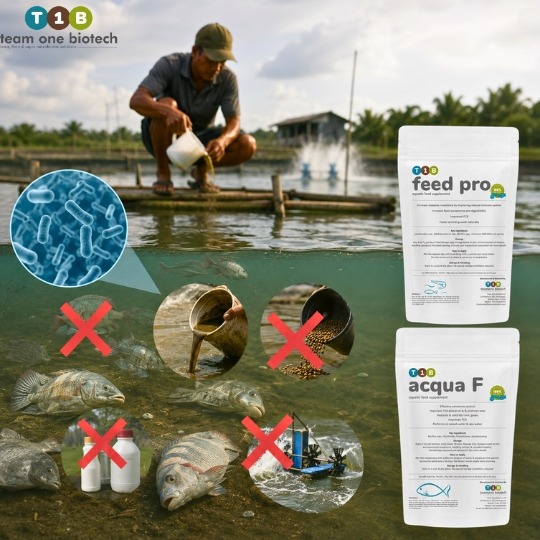
Even the right product fails when application practice is poor. These are the most common errors that waste product investment and leave farmers disappointed in the probiotic category:
- Applying probiotics immediately after a chlorine or disinfectant treatment without allowing an adequate clearance period, typically at least five to seven days depending on the product and pond size
- Storing liquid concentrates in direct sunlight or at temperatures above the product’s recommended storage range, destroying viable organisms before the product even reaches the pond
- Expecting probiotics to rescue a pond already in acute disease crisis, this is not what the category is designed for, and it sets up both the product and the farmer for failure
- Using a fixed dose regardless of season, when in fact microbial activity slows significantly in cooler months and dosing protocols should be adjusted accordingly
- Mixing probiotic products with antibiotic-based feed supplements, which neutralises the biological benefit entirely and wastes both products
- Skipping pre-stocking pond preparation entirely and only beginning probiotic application after water quality has already deteriorated
The consistent theme across all of these mistakes is that probiotics reward a planned, proactive approach and punish reactive, disorganised application. Build the biological system before your fish go in, maintain it through the crop, and adjust based on water quality monitoring data.
Frequently Asked Questions
Can I use probiotics for fish together with feed additives and minerals?
Most high-quality aquaculture probiotics are compatible with mineral supplements and non-antibiotic feed additives. Compatibility with antibiotic treatments is a different matter, mixing probiotic bacteria with antibiotic-based inputs in the same feeding event neutralises the biological benefit. Always confirm compatibility specifics with your supplier before combining products.
How soon will I see results from using probiotic bacteria in my fish pond?
Results depend heavily on your pond’s baseline conditions, stocking density, and organic load. Water quality improvements from nitrifying bacteria populations typically become measurable over a period of several days to a few weeks of consistent application, not overnight. Disclaimer: Timelines are indicative and will vary based on your specific pond environment and management practices.
Are aquaculture probiotics in India regulated?
The regulatory landscape is evolving. Products used on CAA-licensed farms should align with NFDB guidelines, and state fisheries departments may impose additional requirements. Farmers are strongly advised to ask any manufacturer for the compliance documentation relevant to their state, species, and licensing conditions before purchasing.
Is there a meaningful difference between biofloc probiotics for vannamei and standard freshwater fish pond probiotics?
Yes, and the difference matters significantly. Vannamei biofloc systems have unique salinity profiles, carbon-to-nitrogen dynamics, and pathogen pressures, particularly Vibrio, that freshwater pond formulations are not designed to address. Using a freshwater probiotic in a saline biofloc system can disrupt the floc community rather than supporting it. Species-specific formulations are not a marketing distinction. They are a functional one.
How do I manage ammonia control in a fish pond without relying on chemicals?
Sustainable ammonia control in fish ponds combines three elements: reducing feed waste through better feeding management and feed quality, maintaining adequate dissolved oxygen through aeration, and applying nitrifying probiotic bacteria consistently enough to establish and sustain a functional nitrogen cycle in your pond. This approach, when implemented as a standard protocol rather than a crisis response, is more reliable and less expensive than chemical intervention over a full production cycle.
Choose Better Biology, Build a More Resilient Pond
The quality of your pond’s microbial ecosystem is as foundational to your harvest as feed quality, water source selection, or stocking density. Farmers who understand this are the ones building operations that perform consistently across seasons, withstand environmental stress events, and meet the increasingly demanding biological quality standards of regulated export markets.
Probiotics for fish farming are not a luxury input or an experimental trend. In the context of tightening antibiotic restrictions, increasing buyer scrutiny, and the biological pressures that commercial-scale Indian aquaculture imposes on pond systems, they are increasingly the baseline of responsible pond management. The question is not whether to use them. It is whether you are using the right ones.
Team One Biotech manufactures bioremediation solutions built for the conditions Indian fish farmers actually face, the heat, the seasonal variability, the organic loads of intensive production, and the compliance requirements of domestic regulators and export buyers. Whether you manage freshwater polyculture ponds, brackishwater vannamei systems, or a hatchery operation, our technical team will help you identify the right probiotic strains, the right dosing protocol, and the right application schedule for your specific operation.
Contact Team One Biotech today. Take the guesswork out of pond biology and give your next crop the biological foundation it needs.
Looking to improve your ETP/STP efficiency with the right bioculture?
Talk to our experts at Team One Biotech for customised microbial solutions.
Contact: +91 8855050575
Email: sales@teamonebiotech.com
Visit: www.teamonebiotech.com
Discover More on YouTube – Watch our latest insights & innovations!-
Connect with Us on LinkedIn – Stay updated with expert content & trends!