
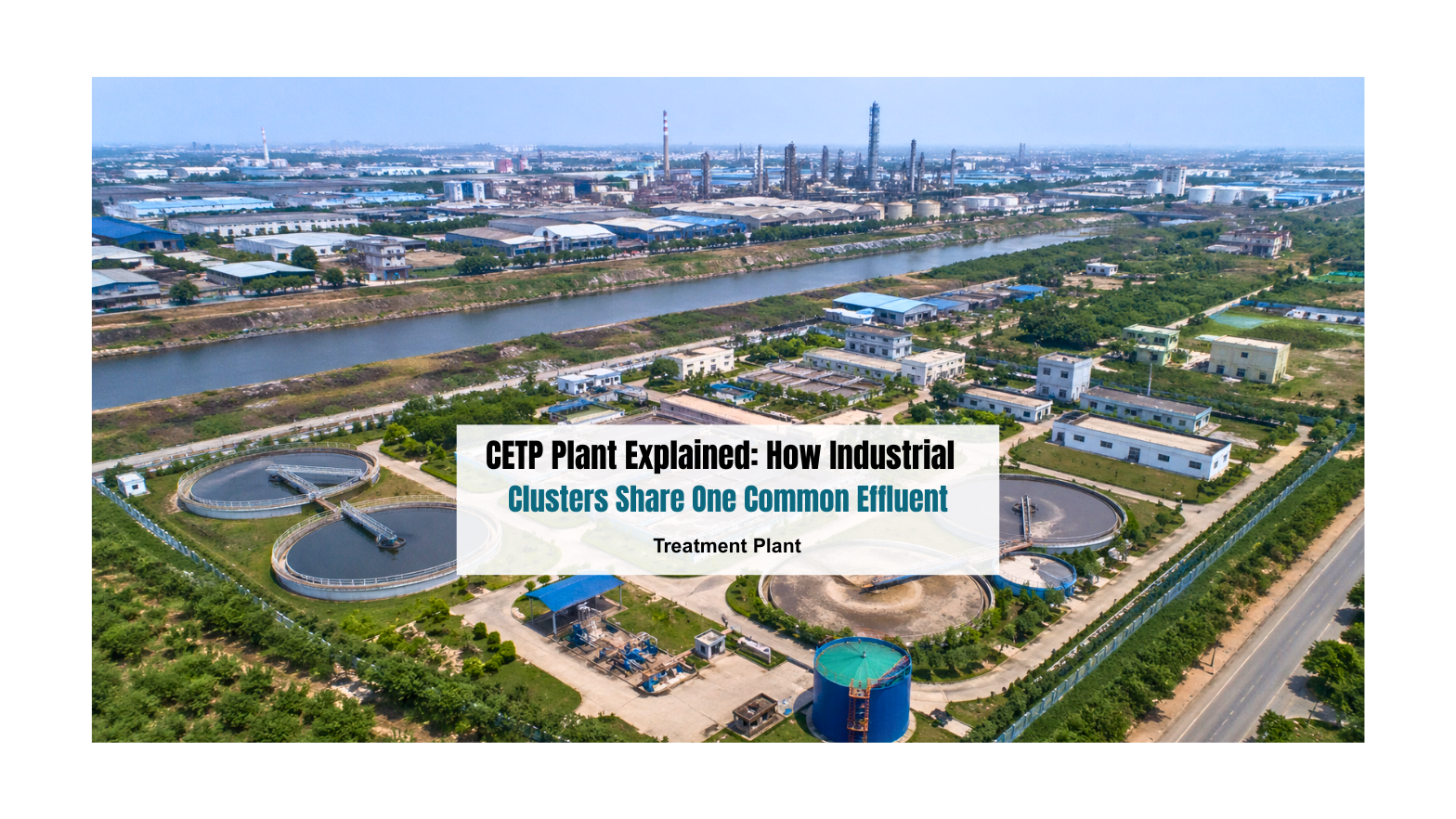

CETP Plant Explained: How Industrial Clusters Share One Common Effluent Treatment Plant
You already know the number. The monthly operational cost of running your own Effluent Treatment Plant, the consumables, the skilled manpower, the breakdown repairs at 2 AM, the regulatory audits, and the ever-present anxiety of a surprise SPCB inspection. For a mid-sized pharmaceutical or food processing unit, individual ETP operations can consume anywhere between 8% to 15% of total operational budgets, often without proportionate treatment outcomes.
This is precisely the problem that a CETP plant was designed to solve.
For industrial clusters across India, from pharmaceutical hubs in Hyderabad to tannery clusters in Kanpur, the Common Effluent Treatment Plant model is not just a cost-saving arrangement. It is a regulatory lifeline, an environmental commitment, and increasingly, a competitive advantage.
What Is a CETP Plant? A Clear Definition for EHS Professionals

A Common Effluent Treatment Plant, or CETP plant, is a centralized wastewater treatment facility that collects, conveys, and treats effluent from multiple industrial units located within a defined cluster or industrial estate. Instead of each unit bearing the full burden of building and operating its own ETP, member industries contribute a proportional share of costs and effluent, while a professional management body oversees the treatment and compliance.
In India, CETPs are recognized and actively promoted by the Central Pollution Control Board (CPCB) and respective State Pollution Control Boards (SPCBs) as a pragmatic solution for Micro, Small, and Medium Enterprises (MSMEs) that lack the capital and technical expertise to maintain sophisticated individual treatment systems.
According to CPCB guidelines, a functional CETP must meet the prescribed discharge standards at its final outlet, regardless of the variation in influent quality contributed by member industries. This makes robust, adaptive treatment technology, particularly bioremediation, non-negotiable.
Why Industrial Clusters Are Choosing the CETP Model
The Economic Case Is Straightforward
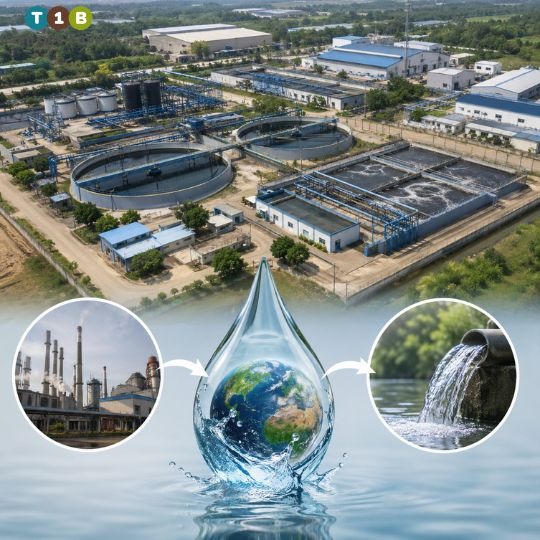
When ten pharmaceutical units in the same industrial estate each build their own ETP, they collectively duplicate infrastructure, manpower, and monitoring costs tenfold. A shared CETP plant eliminates this redundancy. Capital expenditure is distributed across members. Operational expertise is concentrated in one place. Economies of scale drive down per-unit treatment costs significantly.
For an MSME operating on thin margins, this difference is not marginal. It is the difference between viability and closure.
The Environmental Case Is Even Stronger
A centralized facility can afford advanced treatment stages, specialized microbial consortia, and real-time monitoring systems that individual small units simply cannot justify financially. The result is often far superior effluent quality at the discharge point compared to the aggregate output of multiple poorly maintained individual ETPs.
From a regulatory standpoint, SPCB officers prefer dealing with one professionally managed facility over dozens of non-compliant small units. CETPs reduce the administrative burden on regulators while improving environmental outcomes. It is, genuinely, a structure built for everyone’s benefit.
How a CETP Plant Works: The Treatment Stages Explained
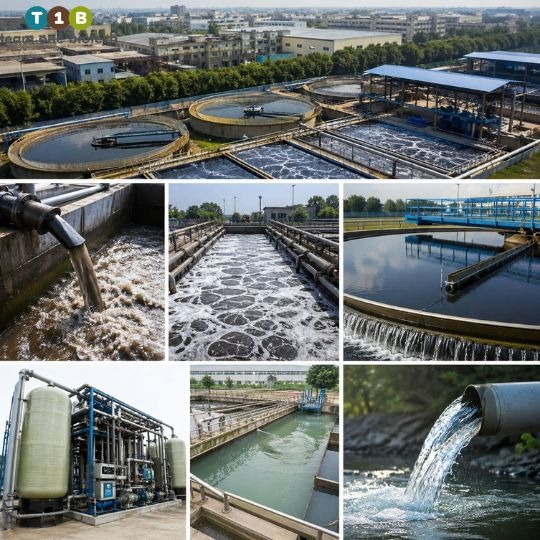
Understanding the treatment architecture helps EHS managers assess whether their cluster’s CETP is functioning optimally, and where bioremediation can fill critical gaps.
Stage 1: Collection and Equalization
Effluent from member industries is conveyed through a dedicated pipeline network to a central collection sump. Given the diversity of industrial sources, pH levels in the combined influent can range widely, typically between 4.0 and 10.5 depending on the industry mix. An equalization tank homogenizes flow rates and neutralizes extreme pH values before treatment begins.
This stage is often underestimated. Poorly equalized influent can destabilize downstream biological processes and push an entire CETP out of compliance overnight.
Stage 2: Primary Treatment
Primary treatment involves physical and chemical processes to remove suspended solids, oil and grease, and heavy settleable matter.
- Bar screens and grit chambers handle gross solids
- Clariflocculation with coagulants reduces Total Suspended Solids (TSS), often bringing levels down from influent ranges of 500-2000 mg/L to below 200 mg/L
- Primary clarifiers allow settleable sludge to separate
At this stage, incoming COD (Chemical Oxygen Demand) from mixed industrial effluents can range anywhere between 1,500 and 8,000 mg/L depending on the member industry profile.
Stage 3: Secondary Biological Treatment (Where Bioremediation Becomes Critical)
This is the core of any effective CETP plant. Biological treatment, powered by specialized microbial cultures, breaks down dissolved organic pollutants that chemical processes cannot address.
For CETPs receiving effluent from diverse industries, generic microbial inoculants are insufficient. The biological treatment system needs to handle:
- Complex pharmaceutical intermediates and antibiotic residues
- High-fat dairy effluents
- Lignocellulosic compounds from paper mills
- Sulfide-rich tannery effluents
- High-sucrose effluents from sugar processing units
Team One Biotech’s specialized bioremediation consortia are engineered to function in exactly these multi-pollutant environments. Our microbial formulations are acclimated to the specific chemical signatures of Indian industrial effluents, ensuring stable biological activity even when influent composition fluctuates between member industries.
Common biological treatment configurations at CETPs include:
- Activated Sludge Process (ASP)
- Sequential Batch Reactors (SBR)
- Moving Bed Biofilm Reactors (MBBR)
- Anaerobic reactors for high-strength organic loads
BOD (Biochemical Oxygen Demand) at the inlet of the secondary stage often ranges from 600 to 3,500 mg/L. A well-functioning biological stage should bring outlet BOD to within CPCB general discharge standards of below 30 mg/L for inland surface water disposal.
Stage 4: Tertiary Treatment and Polishing
Tertiary treatment ensures that the final effluent meets prescribed discharge norms or ZLD requirements. This may include:
- Sand and activated carbon filtration
- Nutrient removal (nitrogen and phosphorus)
- UV disinfection or chlorination
- Advanced oxidation processes for refractory pollutants
Industry-Specific Effluent Challenges in Indian CETPs
Pharmaceutical Sector
Pharma effluents contain Active Pharmaceutical Ingredients (APIs), solvents, and high-TDS loads. Antibiotic-laden effluents are particularly problematic because they suppress the very microbial populations needed for biological treatment. Bioaugmentation with antibiotic-resistant, pollutant-degrading strains is essential. COD values from pharma effluents can range from 3,000 to over 10,000 mg/L in certain API manufacturing units.
Dairy Sector
Dairy effluents are high in fats, proteins, and lactose, resulting in BOD loads typically ranging from 1,000 to 4,000 mg/L. They are highly biodegradable but can overwhelm under-designed biological systems and create odor issues. Lipase-producing microbial strains are a targeted solution here.
Food Processing Sector
Highly variable effluent quality is the defining challenge, with BOD and COD fluctuating dramatically depending on production cycles. Seasonal production makes biological system stability difficult to maintain.
Paper and Pulp Sector
Paper mill effluents contain lignin-derived compounds, chlorinated organics from bleaching processes, and dark-colored melanoidins that resist conventional biological treatment. Color removal is a persistent compliance challenge. Fungal and lignin-degrading bacterial consortia are increasingly being deployed in CETP biological stages serving paper cluster units.
Sugar Sector
Molasses-based effluent with extremely high COD (often ranging from 40,000 to over 1,00,000 mg/L at source) requires pre-treatment and dilution before entering a CETP. Anaerobic treatment is critical for managing these loads economically.
Tannery Sector
Chromium, sulfides, and high salinity make tannery effluents among the most complex to treat. The Kanpur tannery cluster is a well-documented example of the scale of challenge. Specialized chromium-tolerant microbial cultures, combined with chemical precipitation, are necessary upstream of the main CETP biological stage.
Compliance, ZLD, and the Regulatory Reality for Indian CETPs
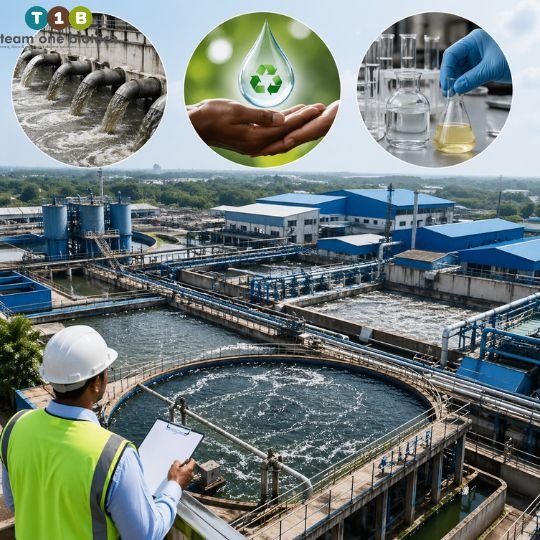
The CPCB and SPCBs have tightened discharge norms progressively over the past decade. For CETPs in ecologically sensitive zones, ZLD compliance is now mandatory in several states, including Gujarat, Tamil Nadu, and Maharashtra.
ZLD means zero liquid discharge, a framework requiring that all treated water is recovered and reused, with only solid sludge remaining as residual waste. Achieving ZLD at a CETP requires:
- Robust tertiary treatment
- Multi-Effect Evaporators (MEE) or Mechanical Vapor Recompression (MVR) systems
- Strong biological pre-treatment to reduce the organic load on downstream evaporation systems
Effective bioremediation at the secondary stage directly reduces the operational burden and energy costs of ZLD systems. A CETP that reduces COD by 90% or more through biological treatment before the ZLD train will operate at significantly lower cost than one that depends on thermal evaporation to do the heavy lifting.
If your CETP is struggling with ZLD compliance or facing SPCB notices, the answer often lies in upgrading the biological treatment core, not in adding more expensive hardware. Contact Team One Biotech to evaluate your CETP’s biological performance and identify targeted intervention points.
Key Performance Parameters: What EHS Managers Should Monitor
The following are general benchmark ranges for CETP monitoring. These will vary based on your member industry mix and applicable discharge standards.
- Inlet COD: Typically 1,500 to 8,000 mg/L (higher for pharma and sugar clusters)
- Outlet COD: Target below 250 mg/L for inland discharge
- Inlet BOD: Typically 600 to 3,500 mg/L
- Outlet BOD: Target below 30 mg/L for inland discharge
- pH: Maintain biological stage between 6.5 and 8.5
- Total Suspended Solids (TSS) at outlet: Below 100 mg/L for most discharge standards
Why Bioremediation Is the Smart Investment for Your CETP
Chemical treatment has a ceiling. You can only dose so many coagulants and add so many oxidants before the costs become prohibitive and the chemistry becomes counterproductive. Biological treatment, when properly managed with the right microbial consortia, is self-sustaining, scalable, and increasingly precise.
Team One Biotech provides CETP operators with:
- Industry-specific microbial consortia formulated for Indian effluent profiles
- Bioaugmentation protocols for stressed or failing biological stages
- On-site technical support for system stabilization
- Ongoing performance monitoring guidance
Whether your CETP serves a tannery cluster or a mixed pharma-food industrial estate, the right biological solution makes the difference between consistent compliance and chronic regulatory risk.
Reach out to Team One Biotech’s technical team to discuss how our bioremediation solutions can strengthen your CETP’s treatment performance.
The CETP model represents one of the most practical environmental management frameworks available to Indian industrial clusters today. It distributes cost, concentrates expertise, and creates the infrastructure capacity needed to meet stringent CPCB and SPCB norms. But a CETP is only as strong as its biological treatment core.
As ZLD mandates expand and discharge standards tighten, investing in high-performance bioremediation is not optional. It is the foundation of a compliant, cost-effective, and sustainable CETP operation.
Partner with Team One Biotech and build that foundation right.
Disclaimer: All numerical values, including COD, BOD, pH, and TSS ranges cited in this blog, are general industry benchmarks for illustrative purposes only. Actual treatment requirements, performance targets, and discharge standards vary significantly for every ETP and CETP based on specific influent characteristics, member industry profiles, applicable state regulations, and site conditions. EHS managers and plant operators should consult qualified environmental engineers and refer to applicable CPCB and SPCB guidelines for their specific installation.
Looking to improve your ETP/STP efficiency with the right bioculture?
Talk to our experts at Team One Biotech for customised microbial solutions.
Contact: +91 8855050575
Email: sales@teamonebiotech.com
Visit: www.teamonebiotech.com
Discover More on YouTube – Watch our latest insights & innovations!-
Connect with Us on LinkedIn – Stay updated with expert content & trends!