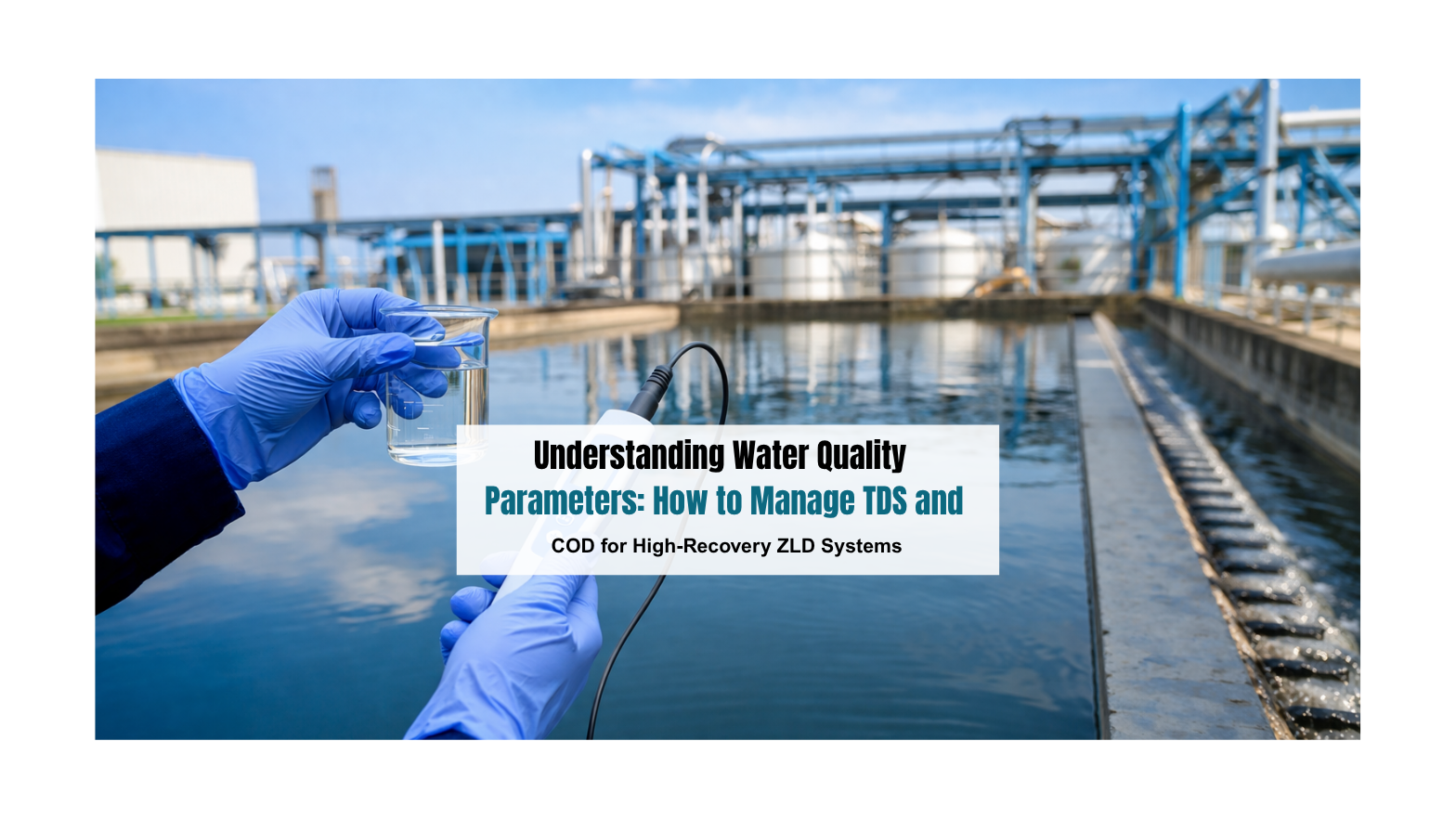

Understanding Water Quality Parameters: How to Manage TDS and COD for High-Recovery ZLD Systems
Walk into any large textile plant in Surat or a distillery on the outskirts of Lucknow, and you will find the same conversation happening in the plant manager’s office. It usually starts with a compliance notice pinned to a file, a membrane replacement quote that seems too high, and someone asking why the RO system is not delivering the recovery numbers it promised on paper.
The answer, almost always, comes back to two things: TDS and COD. Get those wrong, and nothing downstream works the way it should. By implementing efficient Zero Liquid Discharge (ZLD) Systems, these challenges are mitigated. Get them right, and a zero liquid discharge plant stops being a burden and starts behaving like an asset.
But before we get into the engineering of it, let us be honest about the situation Indian industry is actually operating in.
The Pressure Is Real, And It Is Not Going Away
Water scarcity in India is no longer a distant environmental concern. It is a present operational reality. Industries in Red Category classifications, textiles, pharma, chemicals, distilleries, are under closer CPCB and SPCB scrutiny than at any point in the last two decades. Consent renewals are being held up. Effluent discharge violations are triggering shutdowns, not just warnings. And in several industrial clusters, the message from regulators has shifted from “comply by this date” to “you should have complied already.”
For plant managers and sustainability heads navigating this environment, the stress is not just regulatory. It is financial. A shutdown costs more than a compliance upgrade. A membrane array replaced two years ahead of schedule costs more than the biological treatment that could have protected it. The economics of inaction, when you lay them out clearly, are far worse than the economics of investment.
This is the context in which Zero Liquid Discharge has to be understood, not as a government imposition, but as the smarter industrial strategy for anyone serious about long-term operations in India.
What ZLD Actually Demands From Your System
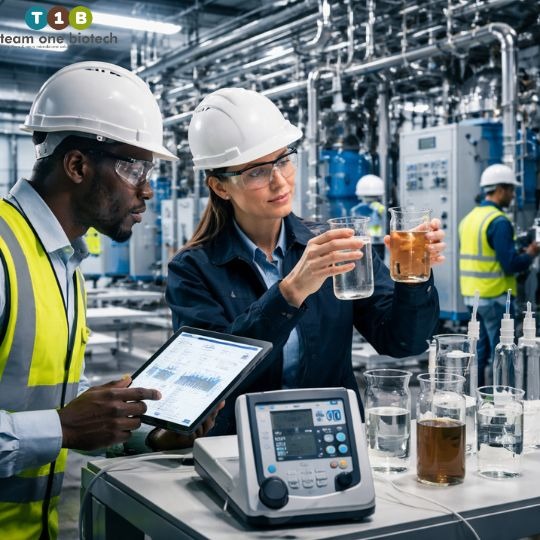
Zero Liquid Discharge means exactly what it says. No treated or untreated effluent crosses your plant boundary. Every drop of process water, cooling water, boiler blowdown, and wash water is captured, treated, and returned to your operations.
In practice, a ZLD water treatment system works in stages. Biological treatment in your ETP handles the bulk of the organic load. Advanced physico-chemical polishing follows. Then comes Reverse Osmosis for water recovery, and finally, thermal evaporation, Multi-Effect Evaporators or Mechanical Vapor Recompression systems, to manage the concentrated reject that RO cannot recover.
Each of these stages has a tolerance ceiling. Feed water that exceeds those tolerances does not just reduce efficiency. It degrades equipment, accelerates fouling cycles, and compresses the operational life of assets that cost crores to install.
And the two water quality parameters that most often push systems past those ceilings are Total Dissolved Solids and Chemical Oxygen Demand. They are distinct problems, but they share one consequence when mismanaged: they make every downstream stage of your ZLD system work harder, cost more, and fail sooner.
Total Dissolved Solids, What the Numbers Actually Mean for Your Plant
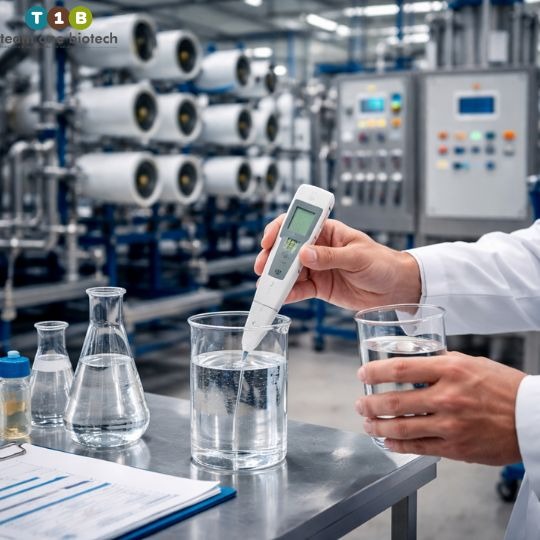
Understanding TDS in Industrial Effluent
Total dissolved solids in water is the aggregate of everything dissolved in your effluent, salts, minerals, ionic compounds, dissolved organics, trace metals. In a laboratory, it shows up as a single number. In an actual industrial plant, it is the cumulative signature of every chemical used, every salt addition made, and every process event that has touched the water before it reaches your ETP inlet.
The TDS profile varies sharply by industry. Textile dyeing units, particularly those processing reactive dyes, regularly generate raw effluent with TDS concentrations in the range of 8,000 to 25,000 mg/L. This is driven largely by the volumes of salt used in dye fixation, and it does not wash out easily. Pharmaceutical plants running multi-product batch operations typically see TDS in the range of 5,000 to 15,000 mg/L, with significant variation depending on which API is being synthesized at any given time. Distilleries sit at the most challenging end of the spectrum, spent wash streams can carry TDS concentrations ranging from 80,000 to 1,00,000 mg/L before any treatment has occurred.
These are not abstract figures. They are the incoming reality that your ZLD equipment has to handle.
Disclaimer: These values are general benchmarks and can vary significantly based on specific Effluent Treatment Plant (ETP) configurations and influent characteristics.
What High TDS Does to Your RO and Evaporation Assets
Here is where the engineering gets personal for anyone managing a zero liquid discharge plant.
Reverse Osmosis membranes operate within a defined osmotic pressure envelope. When TDS in the feed water climbs beyond the membrane’s design tolerance, typically somewhere in the 5,000 to 10,000 mg/L range for standard industrial RO configurations, the physics of the situation turns against you. The osmotic pressure required to push water through the membrane rises. You either reduce recovery rates to compensate, increase operating pressure and absorb the energy cost, or accept that your membranes will foul faster and need replacement sooner.
A TDS spike of 20% to 30% above design values can pull your membrane recovery down from a target band of 70% to 80% to somewhere between 50% and 60%. That gap in recovery represents water you are not reclaiming, and energy you are spending without return.
The effect carries through to your evaporation stage as well. When the RO reject entering your MEE or MVR unit carries a higher-than-designed TDS load, scaling on heat exchanger surfaces accelerates. Cleaning cycles become more frequent. Steam consumption rises. What was planned as a scheduled maintenance event becomes a reactive one, and reactive maintenance in a ZLD context is always more expensive than the problem it was supposed to prevent.
Most SPCBs mandate TDS limits in treated effluent as a condition of consent renewal, inland surface water discharge norms generally specify TDS not exceeding 2,100 mg/L, though many state boards apply tighter standards to specific industrial clusters. But within a ZLD framework, meeting the discharge limit is almost a secondary concern. The primary concern is protecting the recovery infrastructure you have invested in.
Disclaimer: These values are general benchmarks and can vary significantly based on specific Effluent Treatment Plant (ETP) configurations and influent characteristics.
Managing COD Through Bioremediation, The Case for Getting the Biology Right First
Why COD Is Where ZLD Economics Are Won or Lost
Chemical Oxygen Demand tells you how much oxygen it would take to chemically oxidize all the organic and inorganic matter in your effluent. In the context of a ZLD water treatment system, COD is the single most consequential parameter upstream of your membrane stage.
The reason is straightforward. Most industrial RO systems are designed to receive feed water with COD in the range of 100 to 250 mg/L. Raw effluent from textile, chemical, and pharmaceutical operations regularly arrives at the ETP inlet at 2,000 to 15,000 mg/L. Distillery spent wash, in untreated form, can present COD concentrations of 80,000 to 1,20,000 mg/L.
When COD is not adequately reduced before the RO stage, what follows is predictable and expensive. Organic fouling takes hold on membrane surfaces. Biofilm establishes itself. Chemical precipitation events become more frequent. Membranes that should last several years are being pulled and replaced in under two. And each replacement cycle adds to an operating cost burden that was never part of the original ZLD business case.
Disclaimer: These values are general benchmarks and can vary significantly based on specific Effluent Treatment Plant (ETP) configurations and influent characteristics.
What Bioremediation Actually Does, and Why Generic Products Fail in Indian Plants
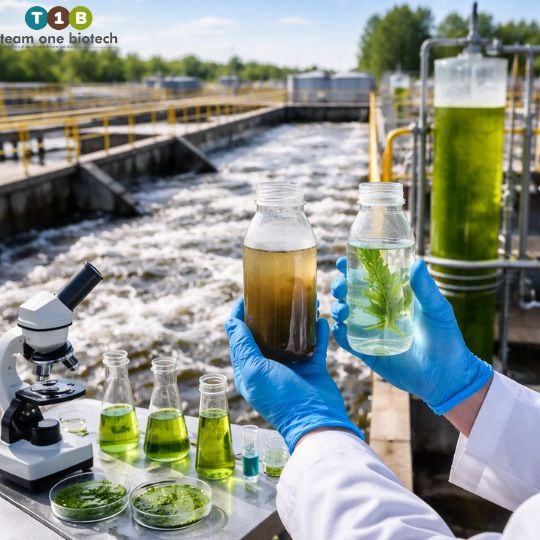
This is where biological treatment, and specifically bioremediation, enters the picture. The principle is not complicated: you deploy specialized microbial consortia, naturally occurring bacteria and enzyme complexes, or bio-augmented cultures developed for specific effluent profiles, to break down complex organic molecules before they reach your expensive downstream equipment.
What makes bioremediation genuinely valuable in a ZLD context is not just that it reduces COD. It is that it reduces COD at a fraction of the cost of thermal or chemical intervention. Every kilogram of COD that a well-configured biological system eliminates in the ETP stage is a kilogram that does not need to be managed by your RO membranes, your evaporators, or your chemical dosing systems. In a well-functioning biological treatment stage, COD reduction can range between 70% to 92%, depending on effluent composition, hydraulic retention time, and the specificity of the microbial cultures deployed.
But here is where a lot of Indian plants fall short, and it is worth being direct about this. Generic microbial products purchased off a catalogue and applied without any real understanding of the plant’s specific effluent matrix rarely deliver consistent results. Indian industrial environments are genuinely complex. Effluent quality shifts with seasonal variation in raw materials. Production schedules are irregular. Multi-product facilities create effluent compositions that can look completely different from one week to the next. A biological treatment strategy that does not account for this variability will underperform precisely when you need it most, during a high-load period, a product changeover, or a regulatory inspection cycle.
If your RO membranes are fouling faster than their design life, or if COD is breaking through into your membrane feed despite what looks like adequate ETP operation, the answer is almost certainly in the biology, and the biology needs to be understood at the site level, not guessed at from a product datasheet.
This is exactly what Team One Biotech’s site-specific bioremediation audits are designed to address. Our environmental engineers work alongside your ETP operators, analyze your actual effluent matrix, and develop microbial intervention strategies that are calibrated to your plant’s real operating conditions, not a theoretical average. Reach out to Team One Biotech to schedule an audit and find out where your biological treatment is leaving performance on the table.
How Managing Both Parameters Builds a High-Recovery System
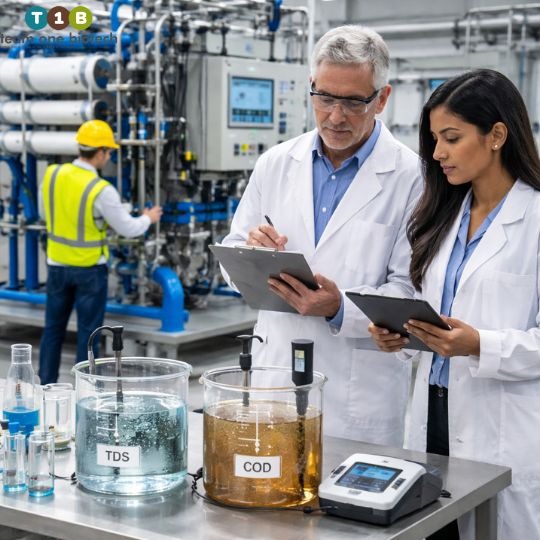
The most effective zero liquid discharge plant configurations operating in Indian industry today are not the ones with the most expensive equipment. They are the ones where each treatment stage is configured to protect the one that follows it.
When TDS and COD are both managed deliberately, a cascade of operational benefits follows:
- Biological Treatment Stage: A well-augmented ETP reduces COD from inlet concentrations of 3,000 to 10,000 mg/L down to the 200 to 500 mg/L range, while TSS reduction through settling reduces the suspended load carried forward. TDS is not significantly changed at this stage, but the organic fouling potential of the water drops substantially.
- Physico-Chemical Polishing: Coagulation, flocculation, pH correction, and media filtration refine what the biological stage has already improved. This stage is cheaper and more reliable to operate when the upstream biology has done its job.
- RO Membrane Stage: With COD managed upstream and TDS within the membrane’s design tolerance, recovery rates hold in the 70% to 85% range. Membrane life extends toward design specifications. Energy consumption stays within the operating budget rather than creeping above it.
- Thermal Evaporation (MEE/MVR): The concentrate arriving at the evaporator carries a predictable TDS load. Scaling is controlled. Cleaning cycles are planned events rather than emergency interventions. The system delivers consistent ZLD compliance without the operational firefighting that characterizes poorly integrated plants.
None of this happens by accident. It happens because someone took the time to understand each water quality parameter and its downstream consequences, and then built a treatment strategy around that understanding rather than around the lowest upfront cost.
Disclaimer: These values are general benchmarks and can vary significantly based on specific Effluent Treatment Plant (ETP) configurations and influent characteristics.
Water Independence Is a Strategy, Not Just a Compliance Target
The industries that will be in the strongest operational position five years from now are not those that installed a ZLD system to satisfy a regulatory condition and moved on. They are the ones that understood what their ZLD water treatment system actually needed to perform well, and invested in managing total dissolved solids in water and COD upstream, so the expensive hardware downstream could do its job reliably.
The compliance pressure from CPCB and state boards is real, and it is intensifying. But the smarter frame for this conversation is not “how do we avoid a shutdown.” It is “how do we build a water treatment architecture that gives us operational continuity, cost predictability, and genuine water independence.”
That architecture starts with getting the biology right.
Team One Biotech works with large-scale Indian industries, textile, pharma, chemical, distilleries, to deliver site-specific bioremediation strategies that protect ZLD infrastructure, reduce operating costs, and strengthen compliance standing. If your plant is navigating the challenges of TDS management, COD reduction, or ZLD system optimization, our team is ready to conduct a detailed on-site audit and help you build a treatment approach grounded in your actual operating conditions. Get in touch with Team One Biotech and take the first step toward water independence that is engineered, not improvised.
Looking to improve your ETP/STP efficiency with the right bioculture?
Talk to our experts at Team One Biotech for customised microbial solutions.
Contact: +91 8855050575
Email: sales@teamonebiotech.com
Visit: www.teamonebiotech.com
Discover More on YouTube – Watch our latest insights & innovations!-
Connect with Us on LinkedIn – Stay updated with expert content & trends!