


Solving STP Odor and Sludge Management in Housing Society STPs
Mukund’s phone rings. He’s the facility manager of a 450-unit housing society in Pune, and the voice on the other end belongs to Mrs. Kapoor from Tower B, angry, sleep-deprived, and threatening to escalate complaints to the municipal corporation.
“The smell from the STP is unbearable. My children can’t sleep with the windows open. If this isn’t fixed by tomorrow, I’m calling the pollution control board myself.”
Mukund knows what this means. A resident complaint to the State Pollution Control Board (SPCB) triggers an inspection. An inspection reveals what he’s been dreading: sludge accumulation that hasn’t been properly managed in months, inconsistent effluent quality, and maintenance records that won’t hold up to scrutiny, issues that could have been controlled early with better process management and the right bio cultures for wastewater treatment.
The next morning, he receives the other call he’s been fearing, not from an angry resident this time, but from the managing committee chairman: “The SPCB has issued a show-cause notice. We have 15 days to respond or face penalties and potential shutdown of the STP.”
This scenario plays out across hundreds of Indian housing societies every month. The question isn’t whether your STP will face this crisis, it’s when, and whether you’ll be prepared.
Cost of “Traditional” STP Maintenance: Why Chemicals Aren’t the Solution
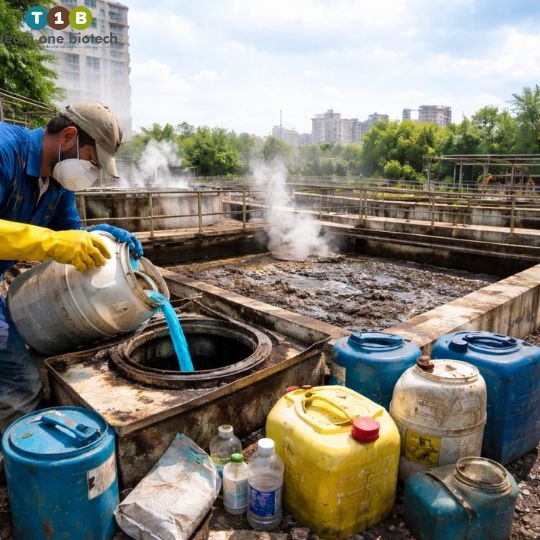
Most housing society STPs in India follow what operators call the “band-aid approach”, dosing increasing amounts of chemicals to mask problems rather than solving them at the source.
Here’s what this typically looks like:
Monthly Chemical Spend:
- Chlorine for odor suppression: ₹8,000–₹15,000
- Coagulants and flocculants: ₹12,000–₹20,000
- pH adjusters and neutralizers: ₹5,000–₹8,000
- Emergency deodorizers during complaint spikes: ₹10,000–₹25,000
Total monthly chemical costs: ₹35,000–₹68,000 for a mid-sized society
But here’s the problem: these chemicals don’t reduce sludge volume. They don’t address the root cause of odor (anaerobic decomposition of organic matter). They simply suppress symptoms while the underlying biological imbalance in your STP worsens.
The Biology You’re Fighting Against
Indian residential wastewater carries unique challenges:
- High organic load variability: Festival seasons, weekend gatherings, and monsoon dilution create wild fluctuations in BOD (Biological Oxygen Demand) levels, from 150 mg/L to 600 mg/L within the same week.
- Grease and oil from kitchens: Indian cooking introduces significantly higher fat content compared to Western wastewater profiles, leading to scum formation and reduced oxygen transfer efficiency.
- Temperature extremes: Summer temperatures above 40°C accelerate decomposition and odor generation, while winter slowdowns reduce microbial activity.
- Power fluctuations: Frequent power cuts disrupt aeration cycles, creating anaerobic pockets where hydrogen sulfide (that characteristic “rotten egg” smell) thrives.
Traditional chemical treatment cannot adapt to these variables. Biological systems can, if they’re properly designed and maintained with the right microbial communities.
How Poor Sludge Management Destroys Your Consent to Operate
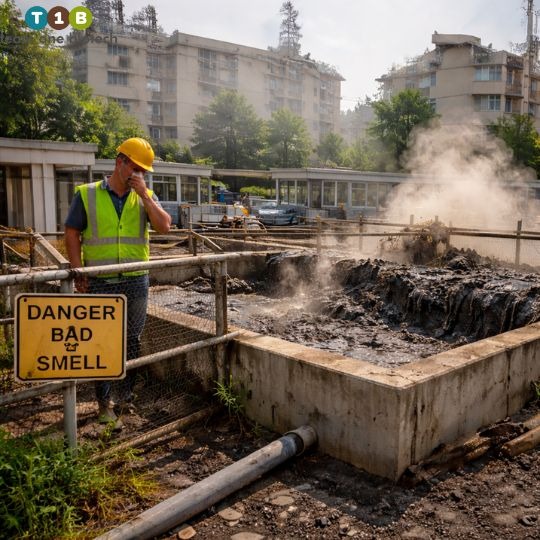
The legal framework governing STPs in India is unforgiving, and it’s getting stricter:
Current Regulatory Landscape:
- The Environment (Protection) Act, 1986 mandates specific discharge standards
- CPCB’s revised 2023 guidelines tighten BOD limits to 10 mg/L for discharge into water bodies
- State-level SPCBs conduct surprise inspections with increasing frequency
- New regulations require quarterly sludge characterization reports for STPs above certain capacities
What Triggers an SPCB Inspection?
- Resident complaints (the most common trigger in urban areas)
- Routine area surveillance during monsoon season
- Downstream water quality violations that trace back to your discharge point
- Failure to submit annual returns or Consent to Operate renewal documents
The Penalty Structure That Can Cripple Your Society:
- First offense: ₹10,000–₹50,000 fine + show-cause notice
- Repeated violations: ₹1 lakh–₹5 lakh + potential criminal proceedings against managing committee members
- Consent to Operate suspension: Complete STP shutdown until compliance is demonstrated
- Legal costs and consultant fees: ₹2 lakh–₹8 lakh to remediate and document compliance
But here’s what most facility managers don’t realize until it’s too late: the biggest compliance risk isn’t the effluent quality, it’s the sludge.
The Sludge Management Crisis
Indian housing societies generate approximately 40–60 grams of sludge per person per day. For a 500-unit society (assuming 2,000 residents), that’s 80–120 kg of wet sludge daily, or 2.4–3.6 tons per month.
Traditional disposal costs:
- Sludge dewatering and transport: ₹3,000–₹5,000 per ton
- Licensed disposal facility fees: ₹2,500–₹4,000 per ton
- Total monthly sludge management: ₹13,200–₹34,560
These costs are climbing yearly as environmental regulations tighten and disposal facilities become more selective. Several societies have faced situations where disposal facilities refuse sludge that doesn’t meet characterization requirements, leaving them with literally tons of waste and nowhere to put it.
The compliance trap emerges when:
- Sludge accumulates faster than it can be economically removed
- Operators reduce aeration to slow sludge production (creating odor problems)
- Sludge overflow or improper disposal triggers SPCB violations
- The society enters a crisis cycle of fines, emergency clean-ups, and escalating costs
The Bioremediation Alternative: Solving the Problem at Its Biological Source
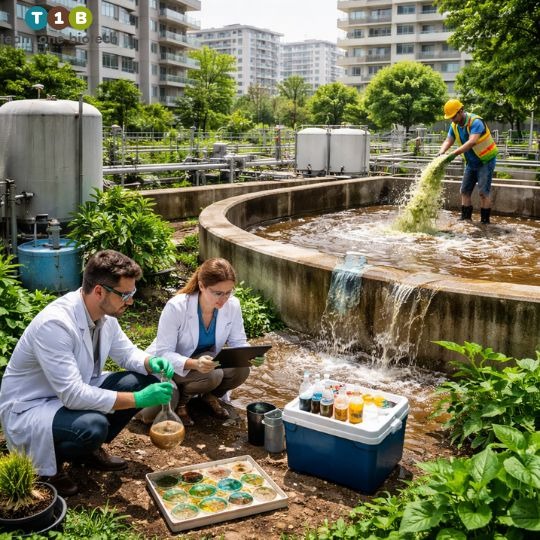
Here’s what changes when you shift from chemical suppression to biological optimization:
Instead of fighting your STP’s natural processes, bioremediation works with them, introducing specialized microbial consortia that:
1. Accelerate Organic Waste Degradation
High-efficiency bacterial strains (including Bacillus species, Pseudomonas, and specialized cellulolytic bacteria) break down complex organic compounds 3–5 times faster than native microbial populations. This means organic waste that would normally ferment anaerobically (producing odor) is converted aerobically into CO₂ and water.
2. Reduce Sludge Volume at the Source
The right microbial mix doesn’t just process waste faster, it processes it more completely. Instead of creating excess biomass (sludge), optimized bacterial populations achieve higher metabolic efficiency:
- Reduction in sludge generation: 35–45% compared to conventional treatment
- Improved sludge settleability: Better compaction means less volume to transport
- Enhanced nutrient removal: Lower nitrogen and phosphorus levels in both effluent and sludge
Real numbers: A society generating 3 tons of sludge monthly can reduce this to 1.6–1.9 tons, saving ₹7,000–₹15,000 monthly in disposal costs alone.
3. Eliminate Odor-Causing Compounds
Hydrogen sulfide, mercaptans, and volatile organic acids are the primary odor compounds in STP environments. Bioremediation addresses these by:
- Maintaining aerobic conditions that prevent sulfate-reducing bacteria (the H₂S producers)
- Rapidly metabolizing volatile fatty acids before they accumulate
- Creating a balanced microbial ecosystem that outcompetes odor-causing anaerobic species
The India-Specific Advantage of Bioremediation
Our formulations are specifically designed for Indian conditions:
Monsoon resilience: Microbial blends that maintain activity during dilution events and temperature drops
High-temperature tolerance: Strains selected for optimal performance in 35–45°C ranges common in Indian summers
Grease degradation specialists: Lipase-producing bacteria that specifically target the cooking oil content in Indian residential wastewater
Power-cut adaptation: Formulations that include facultative bacteria capable of surviving temporary anaerobic conditions during aeration interruptions
The Team One Biotech Solution: Engineering Biology for Compliance and Cost Reduction
Our bioremediation approach isn’t a one-time “magic dose”, it’s a systematic biological upgrade to your STP:
Phase 1: Baseline Assessment and Microbial Analysis (Week 1)
- Complete water quality testing: BOD, COD, TSS, TDS, nitrogen compounds, phosphates
- Sludge volume index (SVI) measurement and settling characteristics
- Microscopic examination of existing microbial population
- Hydraulic retention time verification and aeration efficiency testing
Phase 2: Targeted Bioaugmentation (Weeks 2–4)
- Introduction of customized microbial consortia based on your specific waste profile
- Gradual reduction of chemical dosing as biological processes stabilize
- Daily monitoring of key parameters to track biological establishment
Phase 3: Optimization and Maintenance Protocol (Ongoing)
- Monthly microbial replenishment dosing (significantly lower than initial treatment)
- Quarterly performance reviews and sludge characterization
- Operator training on biological indicators and simple maintenance procedures
The financial transformation:
| Cost Category | Before Bioremediation | After Bioremediation (6 months) | Annual Savings |
| Chemicals | ₹50,000/month | ₹8,000/month | ₹5,04,000 |
| Sludge disposal | ₹25,000/month | ₹14,000/month | ₹1,32,000 |
| Emergency interventions | ₹40,000/year | ₹0 | ₹40,000 |
| Total | ₹6,76,000 |
Initial bioremediation setup investment: ₹1,80,000–₹2,50,000 Payback period: 4–5 months
Real-World Transformation: The Kharadi Society Case
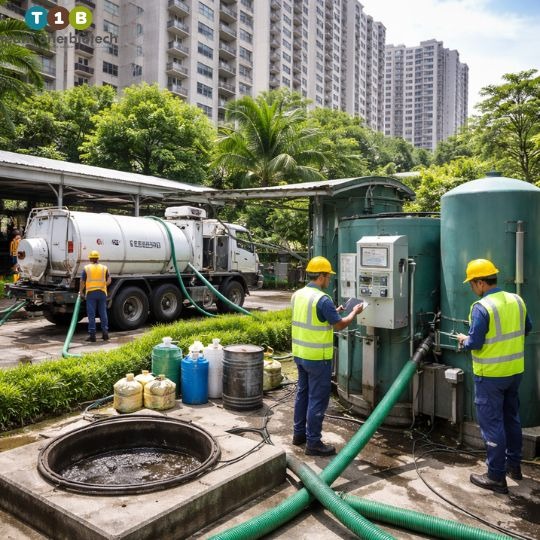
A 380-unit housing complex in Pune’s Kharadi area faced exactly the crisis described at the beginning of this article: resident complaints, SPCB show-cause notice, and ₹35,000 monthly chemical costs that weren’t solving the odor problem.
Their situation in March 2024:
- Visible sludge floating in the final clarifier
- H₂S odor detectable 50 meters from STP
- Effluent BOD consistently above 30 mg/L (limit: 10 mg/L for their discharge permit)
- 4.2 tons of sludge monthly requiring disposal
Post-bioremediation results (September 2024):
- Odor complaints: Zero for five consecutive months
- Effluent BOD: Stable at 6–8 mg/L
- Sludge generation: 2.3 tons monthly (45% reduction)
- Chemical costs: Reduced from ₹35,000 to ₹6,500 monthly
- SPCB compliance status: Consent to Operate renewed without conditions
The facility manager reported: “We went from dreading SPCB inspections to actually inviting them to document our improvement. That psychological shift alone was worth the investment.”
Why This Matters Beyond Your Balance Sheet
Effective STP management through bioremediation isn’t just about cost savings or avoiding fines, it’s about:
Community health: Eliminating hydrogen sulfide exposure that causes respiratory irritation and headaches among residents living near the STP
Environmental responsibility: Reducing the chemical load you discharge into municipal drains or water bodies
Property values: Well-maintained STPs with zero odor complaints become a selling point rather than a liability
Legal protection: Documented compliance creates a protective record if disputes arise with regulatory authorities
Operational peace of mind: Facility managers can focus on other society maintenance instead of firefighting STP crises
The Strategic Decision: Chemical Dependency vs. Biological Intelligence
The traditional approach to STP management, increasing chemical dosing when problems arise, creates a dependency cycle:
More chemicals → Temporary symptom suppression → Underlying biology deteriorates → More severe problems emerge → Even higher chemical doses required
Bioremediation breaks this cycle by addressing the root cause: establishing and maintaining a healthy, efficient microbial ecosystem that naturally prevents the conditions that lead to odor, excessive sludge, and compliance violations.
The question isn’t whether bioremediation works, decades of industrial and municipal applications prove its effectiveness. The question is whether you’ll implement it proactively or reactively.
Proactive implementation (before the crisis): Lower costs, smooth transition, no regulatory pressure
Reactive implementation (after SPCB notice): Higher urgency fees, pressure to show immediate results, legal documentation requirements
Next Steps: Your Compliance and Cost-Reduction Roadmap
If your housing society STP experiences any of these warning signs, a bioremediation assessment should be scheduled immediately:
- Odor complaints from residents more than once quarterly
- Monthly chemical costs exceeding ₹25,000
- Sludge disposal costs above ₹15,000 monthly
- Effluent parameters approaching (within 20% of) your discharge limits
- Visible floating sludge or foam in clarifiers
- Consent to Operate renewal approaching within 6 months
Team One Biotech offers complimentary STP assessments for housing societies in metro areas to:
- Evaluate your current biological performance and chemical dependency
- Quantify potential cost savings specific to your facility
- Develop a customized bioremediation protocol for your waste characteristics
- Create a compliance documentation package that satisfies SPCB requirements
The site audit takes approximately 3–4 hours and includes water sampling, sludge analysis, and operator interviews. Within 48 hours, you receive a detailed report outlining:
- Current biological performance gaps
- Projected cost reduction timeline
- Regulatory risk assessment
- Customized microbial formulation recommendations
The 2 AM Call You’ll Never Receive Again
When you solve STP problems at their biological source rather than masking symptoms with chemicals, everything changes.
No more midnight complaint calls about odor.
No more anxiety when the SPCB inspection vehicle pulls up.
No more escalating chemical costs eating into your maintenance budget.
Just a reliably functioning STP that meets compliance standards, protects community health, and operates at a fraction of traditional costs.
The question isn’t whether bioremediation works for housing society STPs in India, it’s whether you’ll implement it before or after the next crisis.
About Team One Biotech: We specialize in customized bioremediation solutions for industrial and residential wastewater treatment across India. Our microbial formulations are specifically engineered for Indian waste characteristics and environmental conditions, backed by 15+ years of field-proven results and complete regulatory compliance support.
Looking to improve your ETP/STP efficiency with the right bioculture?
Talk to our experts at Team One Biotech for customised microbial solutions.
Contact: +91 8855050575
Email: sales@teamonebiotech.com
Visit: www.teamonebiotech.com
Discover More on YouTube – Watch our latest insights & innovations!-
Connect with Us on LinkedIn – Stay updated with expert content & trends!