

Understanding Biofloc Technology: A Beginner’s Guide to Probiotics
Arvind had been running his shrimp farm in coastal Andhra Pradesh for seven years. He knew every corner of his 2-acre operation, understood the feeding patterns of his Litopenaeus vannamei, and had weathered several challenging seasons. But nothing prepared him for what happened on that humid July morning.
When he arrived at the farm at 5:30 AM for routine checks, something felt wrong. The water looked cloudy, different from the usual greenish tinge. By 8 AM, his shrimp were gasping at the surface. By noon, he had lost nearly 40% of his stock. The culprit? An ammonia spike that went from barely detectable to lethal in less than 48 hours. That single event cost him ₹18 lakhs.
This nightmare scenario plays out across Indian aquaculture farms more often than most would admit. Traditional pond systems operate on a razor’s edge, one bacterial imbalance, one sudden temperature shift, one overfeeding mistake can cascade into catastrophic losses. But there’s a biological shield that’s transforming how forward-thinking farmers protect their investment: Biofloc Technology powered by strategic probiotic management.
To learn more about implementing these systems and preventing similar losses, refer to The Complete Handbook for High-Yield Shrimp and Fish Farming
What Exactly Is Biofloc Technology?
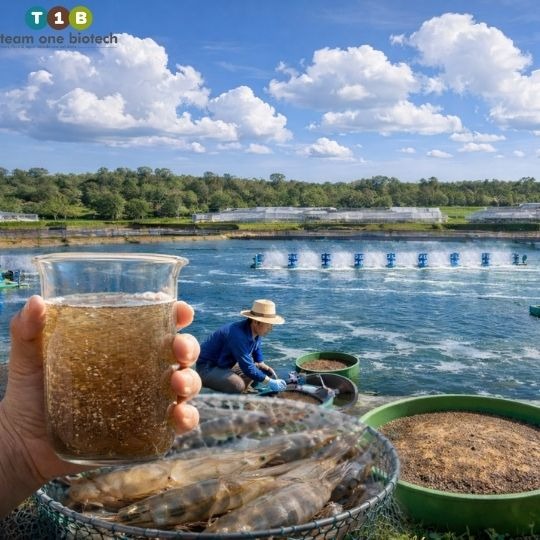
Biofloc Technology (BFT) represents a paradigm shift from traditional aquaculture systems. Instead of constantly flushing out waste products through water exchange, BFT harnesses the power of beneficial microbial communities to convert toxic metabolites into protein-rich microbial biomass, right inside your pond.
Think of it as creating a living, breathing biological factory within your water column. This factory operates 24/7, constantly purifying water while simultaneously producing supplemental nutrition for your fish or shrimp. The result? Higher stocking densities, reduced feed costs, minimal water exchange, and most importantly, a stable, disease-resistant environment that doesn’t collapse when minor variables shift.
The technology isn’t just theoretical. Farmers across Tamil Nadu, Gujarat, and West Bengal are already achieving stocking densities of 150-250 shrimp per square meter in biofloc systems, compared to the 30-60 range typical in conventional ponds, while maintaining better survival rates.
The Science Behind the Shield: Understanding C/N Ratio Management
At the heart of biofloc technology lies a deceptively simple principle: the Carbon to Nitrogen ratio. But mastering this ratio is what separates struggling farmers from those consistently achieving yields above 8 tonnes per hectare per crop.
Here’s what happens in your pond every single day. Your shrimp or fish consume protein-rich feed. As they metabolize this protein, they excrete nitrogen, primarily as ammonia (NH₃). In traditional systems, this ammonia accumulates unless you perform massive water exchanges or rely on slow-acting nitrifying bacteria to convert it through the nitrogen cycle.
Biofloc takes a completely different approach. By maintaining an optimal C/N ratio of approximately 10:1 to 15:1, you create conditions that favor heterotrophic bacteria, microorganisms that reproduce 10 times faster than nitrifying bacteria and consume ammonia as a nitrogen source for their growth.
The mechanism works like this:
- You add a carbon source (molasses, wheat flour, rice bran, or jaggery, all readily available in Indian agricultural markets)
- Heterotrophic bacteria use this carbon along with the ammonia in your water to build their cellular biomass
- These bacteria clump together with other microorganisms, forming visible “flocs” in the water column
- Your shrimp or fish consume these flocs as a protein-rich supplementary feed
- Ammonia levels remain consistently low without water exchange
The beauty of this system is its speed. Where nitrification might take 30-40 days to establish in a new pond, a properly managed biofloc system can achieve stable ammonia control within 7-10 days.
Why Probiotics Are the Game-Changer in Indian Conditions
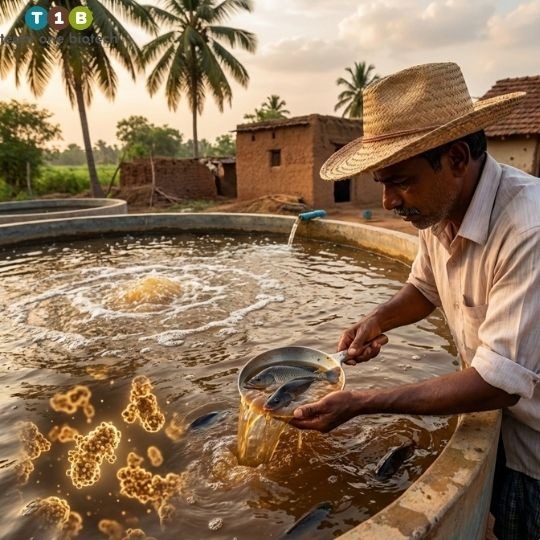
Indian aquaculture operates under uniquely challenging conditions. Water temperatures in Punjab’s fish farms can swing from 12°C in winter to 38°C in summer. Coastal Gujarat deals with fluctuating salinity from monsoon freshwater influx. Tamil Nadu farmers contend with alkaline groundwater with pH levels often exceeding 8.5.
This is where strategic probiotic supplementation becomes essential, not optional.
Team One Biotech’s probiotic formulations are specifically engineered to address the bottlenecks Indian farmers face. These aren’t generic bacterial consortiums, they’re strain-specific solutions that accelerate floc formation, outcompete pathogenic bacteria, and remain viable across the temperature and salinity ranges typical of Indian farming conditions.
The specific benefits include:
Faster System Maturation: Proprietary Bacillus strains jumpstart heterotrophic bacterial populations, reducing the typical 15-20 day pond preparation period to just 7-10 days. For farmers operating on tight seasonal windows, this time savings translates directly to additional crop cycles per year.
Temperature Resilience: Unlike naturally occurring bacterial populations that crash when temperatures dip below 25°C or spike above 34°C, specially selected thermotolerant strains maintain activity across 18-38°C ranges, critical for farmers in North Indian regions with extreme seasonal variations.
Pathogen Suppression: Competitive exclusion is real. When beneficial bacteria dominate your pond ecosystem, harmful vibrios, aeromonas, and other pathogens simply can’t establish the population densities needed to cause disease. Field trials across Andhra Pradesh shrimp farms show 70-80% reduction in Vibrio counts within 15 days of implementing targeted probiotic protocols.
Enhanced Nutrient Cycling: Beyond ammonia control, advanced probiotic strains produce extracellular enzymes that break down organic matter, preventing sludge accumulation and maintaining optimal dissolved oxygen levels even at high stocking densities.
The Economics That Actually Make Sense for Indian Farmers
Let’s talk money, because technology only matters if it improves your bottom line.
Feed represents 55-65% of operational costs in Indian aquaculture. In a traditional vannamei shrimp farm, you might achieve a Feed Conversion Ratio (FCR) of 1.6-1.8, meaning you need 1.6-1.8 kg of feed to produce 1 kg of shrimp. With commercial feed prices ranging from ₹80-120 per kg depending on your region and protein content, this adds up fast.
Biofloc systems consistently demonstrate FCR improvements of 15-25%. The microbial protein consumed by your stock, which your shrimp graze on continuously, reduces dependence on formulated feed. Farmers implementing proper biofloc protocols with quality probiotics routinely achieve FCRs of 1.2-1.4.
On a 1-acre intensive shrimp operation targeting 10 tonnes production:
- Traditional system: 16,000 kg feed × ₹100 = ₹16,00,000
- Biofloc system: 12,000 kg feed × ₹100 = ₹12,00,000
- Direct feed savings: ₹4,00,000 per crop
Factor in reduced water pumping costs (80-90% less water exchange), lower chemical treatment expenses (fewer disease outbreaks), and higher survival rates, and the economic case becomes compelling. The initial investment in aeration, carbon sources, and quality probiotics typically pays for itself within the first two crop cycles.
Implementing Biofloc: The Practical Roadmap
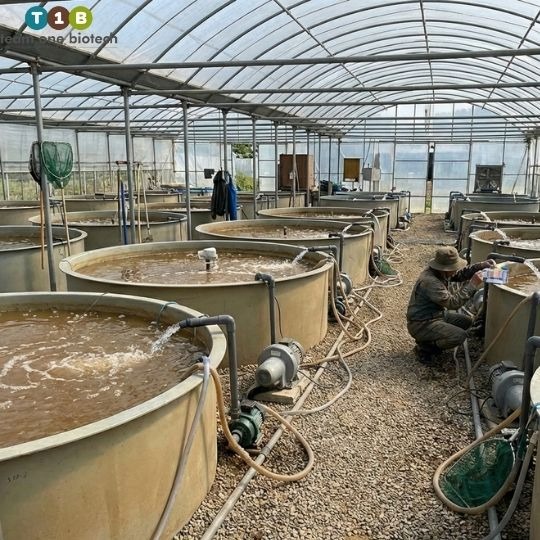
Theory means nothing without execution. Here’s what successful implementation actually looks like on the ground.
Pond Preparation Phase: Your pond needs adequate aeration, minimum 8-10 HP per acre for intensive biofloc systems. This is non-negotiable. Heterotrophic bacteria and your growing stock both consume oxygen, so dissolved oxygen levels must be maintained above 5 mg/L at all times. Many Indian farmers make the mistake of under-aerating, leading to system crashes despite perfect C/N ratios.
Biofloc Development: Ten days before stocking, fill your pond and begin carbon addition while introducing Team One Biotech’s biofloc-specific probiotic consortium. Target C/N ratio of 12:1 initially. Daily monitoring of ammonia, nitrite, and floc volume (measured using an Imhoff cone) tells you exactly when your system is mature and ready for stocking.
Stocking and Grow-Out: Post-larvae or fingerlings can be introduced when floc volume reaches 15-25 ml/L and ammonia remains below 0.5 mg/L for three consecutive days. Throughout grow-out, maintain C/N ratio through calculated carbon additions based on your feeding rate. A simple formula: for every kg of feed containing 35% protein, add approximately 0.5-0.6 kg of molasses or equivalent carbon source.
Ongoing Probiotic Supplementation: This is where many farmers falter. They establish biofloc initially but fail to maintain microbial diversity through the crop cycle. Weekly probiotic dosing at 1-2 ppm keeps beneficial bacterial populations dominant, preventing opportunistic pathogens from gaining foothold during stressful periods (full moon, weather changes, high feeding rates).
Regional Adaptations for Indian Climates
What works in Nellore won’t necessarily work in Ludhiana. Successful biofloc implementation requires regional customization.
Coastal Regions (Andhra Pradesh, Odisha, Tamil Nadu): Focus on salinity management during monsoon months. Prepare low-salinity probiotic batches for rapid response when freshwater influx occurs. Increase aeration during humid periods when oxygen solubility decreases.
Punjab and Haryana: Temperature is your primary challenge. Consider greenhouse coverings for winter crop cycles. Use cold-tolerant probiotic strains. Reduce feeding rates and carbon addition proportionally when temperatures drop below 22°C.
Gujarat and Maharashtra: Alkaline water requires pH management. Biofloc naturally buffers pH, but extreme cases may need periodic organic acid addition (commercially available products or fermented carbon sources). Salinity fluctuations in tidal areas demand flexible probiotic strategies similar to coastal Andhra.
West Bengal and Assam: Monsoon flooding risks require elevated pond construction. Heavy rainfall dilutes biofloc, have concentrated probiotic and carbon solutions ready to restore system quickly after rain events.
Common Mistakes That Destroy Biofloc Systems
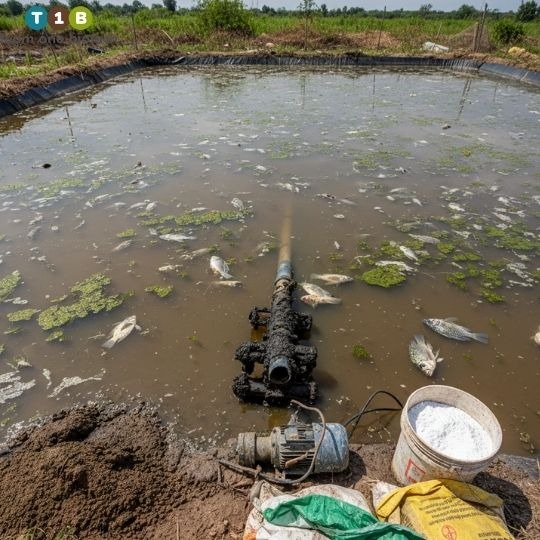
Understanding failures prevents repeating them. These are the mistakes that cost Indian farmers money and faith in the technology:
Insufficient Aeration: Trying to run intensive biofloc on 4-5 HP per acre. The system will crash. Period.
Irregular Carbon Addition: Adding carbon in large, infrequent doses rather than small, calculated daily amounts. This creates feast-famine cycles for bacteria, causing population crashes and ammonia spikes.
Using Cheap, Unverified Probiotics: The market is flooded with substandard products. Cell counts on labels often bear no relation to viable bacteria in the package. Using dead or contaminated probiotics doesn’t just waste money, it can introduce pathogens.
Ignoring Water Quality Testing: Running a biofloc system without daily ammonia testing and weekly comprehensive water analysis is like driving blindfolded. You need data to make informed decisions.
Overstocking Too Soon: Greed kills. Just because biofloc supports higher densities doesn’t mean you should maximize stocking immediately. Build your experience gradually, starting at moderate densities (100-120 shrimp/m² for first crop) before pushing boundaries.
The Path Forward: Your Biological Shield Awaits
Aquaculture in India stands at a crossroads. Traditional extensive systems can’t meet growing protein demands or compete economically. Intensive systems using water exchange face regulatory pressure and environmental constraints. Biofloc technology, powered by strategic probiotic management, offers a third path, one that’s economically viable, environmentally responsible, and technically achievable for farmers willing to invest in knowledge.
The farms achieving consistent 12-15 tonne per hectare yields aren’t relying on luck. They’re applying biological principles systematically, using tools like Team One Biotech’s scientifically validated probiotic solutions to maintain the microbial ecosystem that protects their investment.
Your pond can be either a fragile ecosystem that collapses under stress, or a robust biological shield that weathers challenges while producing exceptional yields. The choice is yours, but the tools to succeed are already within reach.
Looking to improve your ETP/STP efficiency with the right bioculture?
Talk to our experts at Team One Biotech for customised microbial solutions.
Contact: +91 8855050575
Email: sales@teamonebiotech.com
Visit: www.teamonebiotech.com
Discover More on YouTube – Watch our latest insights & innovations!-
Connect with Us on LinkedIn – Stay updated with expert content & trends!