The 2026 Industrial Wastewater & CPCB Compliance Handbook
On a Tuesday. Your phone vibrates with a message from your night shift supervisor: “SPCB team at gate. Surprise inspection. ETP discharge sample taken.”
Your heart sinks. You know the effluent quality has been inconsistent lately. The chemical dosing hasn’t been optimized. Your COD readings have been hovering dangerously close to the consent limits. Tomorrow morning, you might be explaining to your MD why production could halt, why legal notices are arriving, or worse, why the factory faces a closure order.
This scenario plays out across hundreds of Indian manufacturing facilities every month. The difference between factories that survive regulatory scrutiny and those that face crippling penalties often comes down to one thing: understanding and implementing proper wastewater compliance strategies before the inspection happens.
If your ETP is struggling with COD limits or chemical optimization, explore our proven Wastewater Treatment Solutions. Don’t wait for the next surprise inspection to secure your production’s future.
This handbook exists because India’s environmental enforcement landscape has fundamentally changed. The days of lenient inspections and negotiable standards are over. Real-time monitoring mandates, stricter discharge limits, public interest litigations, and National Green Tribunal interventions have created an environment where compliance is not optional, it’s existential.
Whether you manage a textile dyeing unit in Tiruppur, a pharmaceutical facility in Hyderabad, or a food processing plant in Punjab, this guide will walk you through everything you need to know about industrial wastewater compliance in 2026, the hidden costs draining your profitability, and the proven solutions that are helping Indian manufacturers stay ahead of regulations while cutting operational expenses.
The 2026 Regulatory Landscape, What Has Changed and Why It Matters

The New Normal: Stricter Standards Across the Board
The Central Pollution Control Board (CPCB) and State Pollution Control Boards have implemented the most stringent industrial effluent discharge standards in India’s regulatory history. These changes reflect both environmental necessity and legal pressure from courts and tribunals.
Latest Key Parameters for 2026
| Parameter | Previous Limit (General) | Impact |
| BOD (Biochemical Oxygen Demand) | 30 mg/L | 67% reduction required |
| COD (Chemical Oxygen Demand) | 250 mg/L | Up to 80% reduction |
| Total Suspended Solids (TSS) | 100 mg/L | 80% reduction required |
| pH Range | 5.5–9.0 | Tighter control needed |
| Heavy Metals (varies) | Sector-specific | Advanced treatment essential |
These numbers represent more than regulatory targets. They represent the difference between receiving your annual Consent to Operate (CTO) renewal and facing immediate shutdown orders.
Real-Time Monitoring: The Game Changer
Perhaps the most transformative change is the mandatory installation of Continuous Effluent Monitoring Systems (CEMS) for Red and Orange category industries. This requirement has eliminated the buffer that many facilities previously relied upon.
Under the new regime:
- Your effluent parameters are transmitted to SPCB servers every 15 minutes
- Deviations trigger automatic alerts to regulatory authorities
- Historical data is permanently stored and can be audited retroactively
- Manual tampering or data manipulation carries severe criminal penalties
For factory managers, this means your ETP performance is under constant surveillance. A single upset condition that previously might have gone unnoticed can now generate an automatic violation notice.
State-Level Variations: Know Your SPCB
While CPCB sets national standards, implementation varies significantly across states. Understanding your specific SPCB’s enforcement style is critical:
Maharashtra Pollution Control Board (MPCB): Known for aggressive enforcement in industrial clusters like Pune and Thane-Belapur. Frequent unannounced inspections, strict interpretation of discharge standards, and quick escalation to closure orders for repeat violations.
Gujarat Pollution Control Board (GPCB): Focus on industrial estates and SEZs. Mandatory quarterly self-monitoring reports. Strong emphasis on zero liquid discharge (ZLD) for water-stressed regions like Saurashtra.
Tamil Nadu Pollution Control Board (TNPCB): Particularly stringent in textile hubs like Tiruppur and dyeing clusters near Erode. History of court-mandated closures. Emphasis on groundwater protection.
Karnataka State Pollution Control Board (KSPCB): Bangalore industrial area faces special scrutiny. Lake pollution concerns drive stricter enforcement. Technology adoption encouraged with faster clearances.
Delhi Pollution Control Committee (DPCC): Yamuna pollution is a political flashpoint. Industries near the river face maximum scrutiny. Frequent PIL-driven interventions.
The NGT Factor: Environmental Justice Moves Faster
The National Green Tribunal has become the most feared entity in Indian environmental compliance. Unlike traditional courts, NGT operates with:
- Expedited hearing schedules (often within weeks, not years)
- Authority to order immediate closures without lengthy appeals
- Power to impose environmental compensation running into crores
- Suo moto cognizance of pollution incidents based on media reports or complaints
Recent NGT interventions have resulted in:
- Closure of entire industrial clusters in UP and Haryana
- Personal liability imposed on directors and CEOs
- Environmental compensation orders exceeding original penalties by 10-20x
- Criminal prosecution referrals for willful non-compliance
The lesson is clear: by the time your case reaches NGT, you have already lost. Prevention is the only viable strategy.
The Hidden Drain on Profits, Why Your ETP is Bleeding Money
The Chemical Dependency Trap
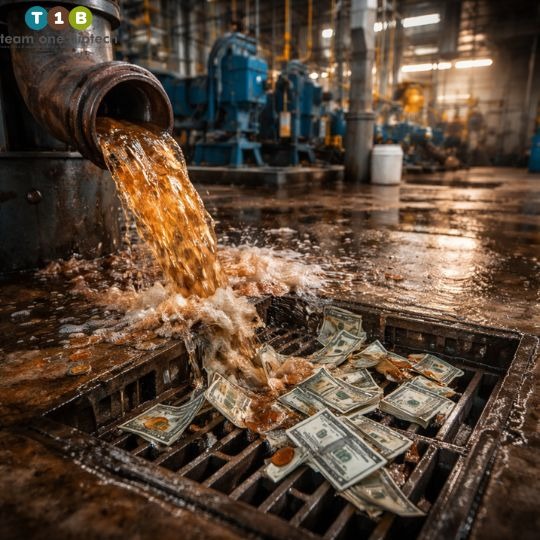
Most Indian ETPs operate on a chemical-intensive treatment model inherited from Western engineering practices developed in the 1970s and 80s. While these systems can achieve compliance, they do so at an extraordinary hidden cost that most factory managers have never properly calculated.
The True Cost of Chemical-Dependent Treatment:
A typical 500 KLD (kiloliters per day) ETP in a medium-scale textile or pharmaceutical facility spends approximately:
- Coagulants (Alum, Ferric Chloride): ₹1.2-1.8 lakhs per month
- Flocculants (Polyelectrolytes): ₹80,000-1.2 lakhs per month
- pH Adjusters (Caustic Soda, Sulfuric Acid): ₹60,000-90,000 per month
- Disinfectants (Chlorine, Hypochlorite): ₹40,000-60,000 per month
- Specialty Chemicals (Defoamers, etc.): ₹30,000-50,000 per month
Annual Chemical Expenditure: ₹36-50 lakhs
But the actual cost extends far beyond chemical procurement:
Hidden Cost #1: Sludge Generation and Disposal
Chemical coagulation generates 3-5 times more sludge than biological treatment. For every ton of chemicals added, you create approximately 1.2-1.8 tons of additional sludge that must be:
- Dewatered (energy cost)
- Transported to authorized disposal facilities (₹2,500-4,500 per ton)
- Disposed with proper manifests (regulatory burden)
Annual sludge disposal cost for the same 500 KLD facility: ₹18-28 lakhs
Hidden Cost #2: Energy Consumption
Chemical treatment requires:
- Continuous mixing for coagulation and flocculation
- High-pressure pumping for clarifiers and filter presses
- Extended aeration to compensate for reduced biological activity
The energy footprint of a chemical-dependent ETP is typically 40-60% higher than an optimized biological system. At industrial power tariffs (₹6-8 per unit in most states), this translates to an additional ₹8-15 lakhs annually.
Hidden Cost #3: Equipment Degradation
Harsh chemicals accelerate corrosion and wear on:
- Pumps and piping (requiring replacement every 3-5 years instead of 7-10)
- Sensors and monitoring equipment (calibration drift, sensor poisoning)
- Concrete structures (acid/alkali attack on clarifier tanks)
Replacement and maintenance costs: ₹5-8 lakhs annually
Hidden Cost #4: Inconsistent Performance
Perhaps the most expensive hidden cost is variability. Chemical treatment is highly sensitive to:
- Influent flow rate fluctuations (shift changes, batch production)
- Temperature variations (monsoon vs summer, day vs night)
- Influent composition changes (different raw materials, product lines)
This variability leads to:
- Over-dosing (wasting chemicals to ensure compliance)
- Under-dosing (risking violations)
- Constant operator intervention (labor inefficiency)
- Unpredictable discharge quality (regulatory risk)
The Compliance Anxiety Premium
There’s another cost that never appears on balance sheets but affects every factory manager dealing with a chemically-dependent ETP: stress and uncertainty.
When your compliance depends on precise chemical dosing that must be manually adjusted throughout the day, you carry constant anxiety about:
- Will the morning shift operator remember to increase polymer dose when the cooling water blowdown increases?
- Did the night shift properly account for the pH spike from the cleaning chemicals in the wastewater?
- Is the recent increase in COD due to a process change or chemical underdosing?
This operational uncertainty translates into:
- Over-conservative chemical dosing (wasting money to buy peace of mind)
- Excessive monitoring and testing (labor and lab costs)
- Deferred production decisions (waiting to confirm ETP can handle load changes)
The Bottom Line:
The same 500 KLD facility spending ₹50 lakhs on chemicals is actually spending ₹80-100 lakhs annually on total ETP operations when all hidden costs are included. For many SMEs, this represents 2-4% of total revenue, a material impact on profitability that compounds year after year.
The Bioremediation Solution, Why Microbes Outperform Chemicals in Indian Conditions
Understanding Bioremediation: Nature’s Treatment Engineers
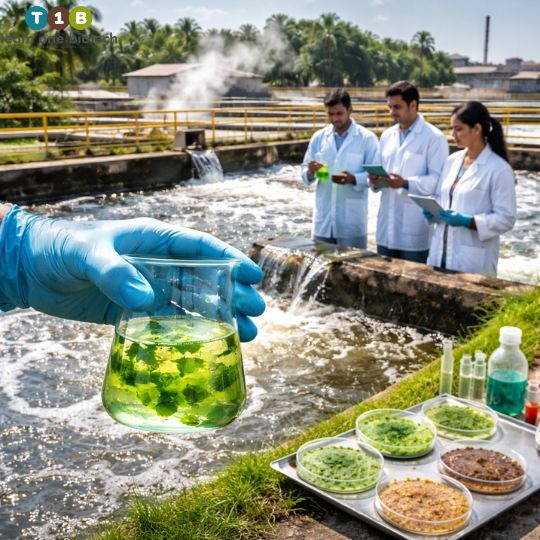
Bioremediation is the process of using naturally occurring or specially cultivated microorganisms to break down pollutants in wastewater. Unlike chemical treatment that physically separates contaminants, bioremediation actually consumes and converts organic pollutants into harmless byproducts: primarily carbon dioxide, water, and biomass.
The concept is simple, but the execution requires sophisticated understanding of microbial ecology, wastewater characteristics, and operational parameters.
How Bioremediation Works in an Industrial ETP:
Specialized bacterial consortia are introduced into the biological treatment stages of your ETP. These microbes include:
- Heterotrophic bacteria: Rapidly consume simple organic compounds (sugars, starches, proteins)
- Nitrifying bacteria: Convert ammonia to nitrites and nitrates (critical for nitrogen removal)
- Denitrifying bacteria: Convert nitrates back to nitrogen gas (completing nitrogen cycle)
- Phosphate-accumulating organisms: Remove phosphorus through cellular uptake
- Specialty degraders: Target specific industrial contaminants (phenols, surfactants, dyes, heavy metals)
When properly established, these microbial communities create a self-sustaining ecosystem that:
- Adapts to influent variations automatically
- Increases in population when organic load increases (self-regulating capacity)
- Produces minimal excess sludge (only microbial growth)
- Operates across a wide range of temperatures and pH levels
Why Bioremediation Excels in Indian Industrial Conditions
India’s industrial wastewater presents unique challenges that make bioremediation particularly effective:
Challenge #1: High Organic Load Variability
Indian manufacturing often involves batch production with significant load variations. A dyeing unit might process heavy cotton batches in the morning and light synthetics in the afternoon. A food processing unit experiences seasonal variations with different crops.
Chemical treatment struggles with variability because dosing must be constantly adjusted. Bioremediation naturally adapts because microbial populations increase when food (pollutants) is abundant and decrease when it’s scarce. This biological buffering creates stable discharge quality despite influent fluctuations.
Challenge #2: Tropical Climate Advantages
India’s warm climate (except in winter months in northern regions) is ideal for biological treatment. Microbial metabolic rates approximately double for every 10°C temperature increase up to optimal ranges.
While European and North American facilities struggle to maintain biological treatment efficiency during cold winters, Indian facilities operate in the optimal temperature range (25-40°C) for most of the year. This natural advantage is wasted in chemical-dependent systems but fully leveraged in bioremediation.
Challenge #3: Complex Industrial Pollutant Mixtures
Indian industrial effluent often contains complex mixtures that are difficult to treat chemically:
- Textile effluent: Azo dyes, surfactants, sizing agents, mercerizing chemicals
- Pharmaceutical effluent: Active pharmaceutical ingredients, solvents, high-salt content
- Food processing: High BOD from sugars, proteins, fats, seasonal composition changes
Specialized microbial consortia can be tailored to target these specific pollutant profiles. Certain bacteria strains excel at breaking down azo dyes. Others specialize in degrading pharmaceutical residues. A properly designed bioremediation program assembles the right team of microbes for your specific wastewater signature.
Challenge #4: Water Scarcity and Reuse Requirements
Many Indian industrial regions face acute water stress. Groundwater depletion in areas like Tiruppur, Ludhiana, and Surat has made water recycling a business necessity, not just an environmental preference.
Bioremediation produces treated water of significantly higher quality than chemical treatment, making it more suitable for recycling in cooling towers, gardening, or even certain process applications. The lower dissolved solids and minimal chemical contamination mean less scaling, corrosion, and fouling in recycled water systems.
The Economics of Bioremediation: Real Numbers from Indian Facilities
Let’s return to our 500 KLD facility example and compare actual operational costs:
Annual Operating Costs Comparison:
| Cost Component | Chemical Treatment | Bioremediation | Savings |
| Primary treatment chemicals | ₹48 lakhs | ₹12 lakhs | ₹36 lakhs |
| Microbial cultures | , | ₹8 lakhs | , |
| Sludge disposal | ₹25 lakhs | ₹8 lakhs | ₹17 lakhs |
| Energy consumption | ₹18 lakhs | ₹12 lakhs | ₹6 lakhs |
| Maintenance & equipment | ₹8 lakhs | ₹4 lakhs | ₹4 lakhs |
| Total Annual Cost | ₹99 lakhs | ₹44 lakhs | ₹55 lakhs |
Payback Period: Most bioremediation implementations in Indian facilities achieve full payback within 8-14 months, even accounting for any necessary equipment modifications or initial consulting costs.
Case Study: Textile Dyeing Unit in Tamil Nadu
A 750 KLD facility treating complex dye effluent was struggling with:
- Monthly chemical costs of ₹6.8 lakhs
- Inconsistent COD removal (discharge frequently 180-220 mg/L against limit of 160 mg/L)
- Two TNPCB violation notices in 18 months
- Considering ZLD installation (estimated cost ₹4.2 crores)
After implementing a tailored bioremediation program:
- Month 3: Chemical costs reduced to ₹2.1 lakhs (70% reduction)
- Month 6: Consistent discharge COD of 45-65 mg/L (well below limits)
- Month 9: Sludge generation reduced from 15 tons/month to 6 tons/month
- Month 12: ZLD project shelved as water recycling from ETP became viable
- Total first-year savings: ₹68 lakhs (against implementation cost of ₹12 lakhs)
Implementation Considerations: Getting Bioremediation Right
Successful bioremediation requires more than just adding bacteria to your ETP. Critical success factors include:
Factor #1: Baseline Assessment
Understanding your current wastewater characteristics, flow patterns, and ETP configuration. This involves:
- 7-day influent characterization (not just grab samples)
- ETP process audit (hydraulic retention times, aeration capacity, settling efficiency)
- Identifying shock load sources and frequency
Factor #2: Right Microbial Selection
Not all bacterial products are created equal. Industrial-grade consortia should be:
- Viable (living cells, not dormant spores that take weeks to activate)
- Proven in similar industrial applications (lab results don’t always translate to field performance)
- Adapted to Indian conditions (temperature ranges, typical pollutant profiles)
- Shelf-stable (proper packaging and storage requirements)
Factor #3: Proper Acclimatization Protocol
Introducing microbes into an ETP that has been chemically shocked for years requires a phased approach:
- Gradual reduction of chemical dosing while simultaneously building microbial population
- Monitoring of key indicators (MLSS, SVI, microscopic examination)
- Patience during the 4-6 week establishment period
Factor #4: Operational Support
The transition from chemical to biological treatment requires operator training:
- Understanding biological indicators (foam characteristics, sludge settling, odor)
- Adjusting aeration and nutrient supplementation
- Recognizing and responding to toxic shock events
Avoiding the Red Category Trap, Actionable Steps to Stay Compliant and Operational
Understanding Industry Categorization: Red, Orange, Green, White
The CPCB classifies industries based on Pollution Index scores that consider:
- Type and volume of pollutants generated
- Environmental impact potential
- Resource consumption intensity
Red Category (Pollution Index ≥60):
Highest scrutiny industries including pharmaceuticals, dye intermediates, pesticides, petroleum refining, tanneries, cement. These facilities face:
- Mandatory CEMS installation
- Quarterly SPCB inspections (minimum)
- Stringent consent conditions
- First targets for closure during pollution emergencies
Orange Category (Pollution Index 41-59):
Moderate polluters including many textile operations, food processing, chemicals manufacturing. Requirements include:
- Annual consent renewals
- Regular self-monitoring with certified labs
- Growing pressure to install real-time monitoring
Green Category (Pollution Index ≤40):
Lower-impact industries with less stringent requirements but still subject to inspections and enforcement.
If your industry falls in Red or Orange categories, the compliance burden is substantial and growing. Here’s how to stay ahead of enforcement.
The Compliance Checklist: Ten Non-Negotiable Requirements
Requirement #1: Consent to Establish (CTE) and Consent to Operate (CTO)
These are your license to operate. Operating without valid consent carries:
- Immediate closure orders
- Fines up to ₹1 lakh per day
- Criminal prosecution under Environmental Protection Act
Action Items:
- Set calendar reminders 90 days before CTO expiry
- Maintain organized files with all previous consents, amendments, and correspondence
- Never operate even one day without valid consent
Requirement #2: Functional ETP with Design Capacity
Your ETP must be:
- Designed by a qualified environmental engineer
- Sized for actual wastewater generation (not underestimated)
- Properly maintained with documented service records
Common Pitfall: Many facilities report lower wastewater volumes in their CTO applications to reduce compliance burden, then struggle when actual discharge exceeds consented capacity during inspections.
Requirement #3: Certified Laboratory Testing
Self-monitoring reports must come from NABL-accredited or CPCB-recognized labs. Using in-house testing or non-certified labs invalidates compliance documentation.
Best Practice: Establish relationships with 2-3 certified labs to ensure capacity during busy inspection seasons.
Requirement #4: Proper Record Maintenance
SPCBs require meticulous documentation:
- Daily ETP operation logs (operator signatures, chemical consumption, flow rates)
- Monthly discharge monitoring reports
- Sludge disposal manifests (tracking from generation to authorized disposal)
- Equipment maintenance records
- Chemical purchase invoices (to cross-verify consumption claims)
These records must be maintained for a minimum of three years and produced during inspections.
Requirement #5: Trained Operators
Red category industries must have operators with formal ETP training certification. Even for other categories, demonstrated competence is expected.
Recommendation: Send operators for CPCB-recognized training programs. Document all training with certificates on file.
Requirement #6: Emergency Response Preparedness
You must have documented procedures for:
- ETP breakdown scenarios (backup plans, emergency storage)
- Chemical spill response (containment, cleanup, reporting)
- Toxic shock recovery (rapid response protocols)
SPCB inspectors increasingly verify these procedures during audits.
Requirement #7: Groundwater Monitoring
Facilities in water-stressed regions or those using groundwater must install monitoring wells and conduct quarterly analysis for:
- Water table levels
- Groundwater quality parameters
- Evidence of contamination migration
Requirement #8: Air Emission Compliance (if applicable) Many industrial facilities have air emissions from ETP operations:
- Odor from biological treatment
- VOCs from aeration tanks
- Scrubber emissions
These require separate consents and monitoring.
Requirement #9: Hazardous Waste Management
ETP sludge is often classified as hazardous waste requiring:
- Storage in designated areas with proper signage
- Disposal through CPCB-authorized facilities only
- Annual returns filing on CPCB portal
- Maintenance of waste disposal manifests
Requirement #10: Online Compliance Portals
Most SPCBs now require electronic filing through state portals:
- Annual Environmental Statements
- Consent applications and renewals
- Self-monitoring data uploads
- Hazardous waste annual returns
Failure to file electronically on time results in automatic delays in consent processing.
The Inspection Survival Guide: What Happens and How to Respond
Despite best efforts, surprise inspections will occur. Here’s how to navigate them professionally:
During the Inspection:
Do’s:
- Immediately inform senior management
- Assign a knowledgeable escort (preferably ETP in-charge or compliance officer)
- Provide requested documents promptly
- Allow sampling but request duplicate samples for your own testing
- Note down sample collection time, location, and inspector details
- Remain professional and cooperative
Don’ts:
- Never deny entry to inspectors with valid authorization
- Don’t volunteer information beyond what’s asked
- Avoid making admissions of non-compliance
- Never offer or suggest anything that could be construed as bribery
- Don’t obstruct sampling or photography
Post-Inspection Protocol:
- Immediately test your own samples at a certified lab (use the duplicate samples)
- Document everything: who was present, what was inspected, what was sampled, what was discussed
- If a show cause notice is issued, respond within the specified timeframe (typically 7-15 days)
- Engage an environmental consultant or lawyer if violations are serious
- Implement immediate corrective actions and document them
When Things Go Wrong: Responding to Notices and Violations
Show Cause Notice (SCN):
This is your opportunity to explain. Your response should:
- Acknowledge receipt immediately
- Provide a detailed technical explanation (not excuses)
- Document corrective actions already taken
- Propose a timeline for additional improvements
- Include supporting evidence (lab reports, photographs, purchase orders)
Direction for Improvement:
Typically gives 30-90 days to rectify issues. Your response should:
- Submit a detailed action plan with milestones
- Provide weekly progress updates
- Engage qualified consultants to oversee improvements
- Request extension if needed (with justification) before deadline expires
Closure Notice:
This is the most serious. Immediate actions:
- Engage legal counsel experienced in environmental law
- Apply for interim stay if grounds exist
- Implement maximum corrective measures immediately
- Consider approaching NGT for appeal if closure is unjustified
Financial Penalties:
Pay promptly. Delayed payment increases amounts and makes future appeals difficult.
The Path Forward, Building a Sustainable Compliance Framework
Beyond Compliance: The Business Case for Environmental Excellence
The factories that thrive in India’s evolving regulatory landscape don’t view compliance as a burden, they recognize it as a competitive advantage.
Advantage #1: Operational Resilience
Facilities with robust ETPs and consistent compliance records experience:
- Uninterrupted production (no shutdown risks)
- Predictable operating costs (no emergency chemical purchases or expedited sludge disposal)
- Better employee morale (operators aren’t constantly stressed about violations)
Advantage #2: Market Access
International buyers increasingly require environmental compliance documentation. ISO 14001 certification, sustainability reports, and clean compliance records are becoming prerequisites for export contracts. Textile exporters to EU and US markets find that strong environmental credentials can command 3-5% price premiums.
Advantage #3: Financial Benefits
Banks and financial institutions consider environmental compliance in lending decisions. Facilities with clean records access:
- Lower interest rates on working capital
- Faster approvals for expansion financing
- Eligibility for green financing schemes with subsidized rates
Advantage #4: Community Relations
Facilities in industrial clusters with poor overall environmental records face community opposition to expansions. Being the “clean factory” in a polluted area provides social license to operate and grow.
Technology Roadmap: Where Indian ETP Technology is Heading
The next five years will see rapid adoption of:
Advanced Biological Treatment:
- MBBR (Moving Bed Biofilm Reactor) systems becoming standard for space-constrained facilities
- MBR (Membrane Bioreactor) for facilities requiring high-quality treated water for reuse
- Anaerobic treatment for high-COD waste streams (recovering biogas as energy source)
Automation and Control:
- AI-driven dosing optimization systems
- Predictive maintenance using IoT sensors
- Mobile apps for remote ETP monitoring
Resource Recovery:
- Phosphorus recovery from sludge (as fertilizer)
- Metal recovery from specific industrial waste streams
- Energy generation from biogas and waste heat
Facilities planning major ETP upgrades should consider these technologies now to future-proof investments.
Building Internal Capacity: The Human Element
Technology alone doesn’t ensure compliance. Successful facilities invest in:
Operator Development:
- Regular training programs (minimum quarterly)
- Exposure visits to best-practice facilities
- Certification programs for career advancement
- Performance incentives tied to compliance metrics
Cross-Functional Integration:
- Production teams understanding how process changes impact ETP
- Purchase teams sourcing raw materials with lower environmental impact
- Maintenance teams prioritizing ETP equipment
- Top management reviewing environmental performance monthly
Documentation Culture:
- Standard operating procedures for all ETP operations
- Digital record-keeping systems
- Regular internal audits
- Continuous improvement mindset
The Compliance Calendar: Monthly Action Items
A systematic approach prevents last-minute scrambles:
Monthly:
- Review ETP operation logs
- Analyze discharge monitoring data for trends
- Verify chemical inventory and consumption rates
- Inspect critical equipment (pumps, aerators, sensors)
- Update compliance dashboard
Quarterly:
- Certified lab testing of discharge
- SPCB portal uploads (where required)
- Operator training refresher
- Sludge disposal verification
- External consultant review (recommended)
Annually:
- CTO renewal application (start 90 days before expiry)
- Environmental statement filing
- Hazardous waste annual returns
- Comprehensive ETP audit
- Budget planning for next year’s compliance costs
Scaling Your Compliance, Team One Biotech as Your Partner
Why Specialized Bioremediation Expertise Matters
Transitioning from chemical-dependent treatment to bioremediation isn’t a simple product purchase, it’s a transformation that requires:
- Deep understanding of microbial ecology in industrial wastewater
- Experience with Indian industrial conditions and regulatory requirements
- Ability to troubleshoot and optimize during the critical acclimatization period
- Long-term support as your operations evolve
This is where Team One Biotech (T1B) has established itself as India’s leading bioremediation partner for industrial facilities.
The T1B Difference: Proven Results Across Indian Industries
Team One Biotech brings over a decade of specialized experience in industrial wastewater bioremediation across India’s most challenging sectors:
Textile and Dyeing: Successful implementations in Tiruppur, Surat, and Ludhiana treating complex dye chemistry with consistent COD reductions exceeding 85%.
Pharmaceutical and Chemical: Expertise handling high-salt effluent, antibiotic residues, and solvent-laden waste streams in Hyderabad, Vadodara, and Bangalore facilities.
Food Processing: Seasonal load management for sugar mills, dairy facilities, and beverage plants across Maharashtra, Punjab, and Tamil Nadu.
Pulp and Paper: Lignin and color removal in paper mills with significant reduction in chemical consumption and sludge generation.
Our Approach: Customized Solutions, Not Off-the-Shelf Products
T1B doesn’t believe in one-size-fits-all solutions. Our process includes:
Phase 1: Comprehensive Assessment (Week 1-2)
- Site visit and ETP audit by qualified microbiologist
- Wastewater characterization and load profiling
- Operator interviews to understand operational challenges
- Preliminary feasibility report with cost-benefit analysis
Phase 2: Customized Program Design (Week 3-4)
- Selection of microbial consortia specific to your waste profile
- Dosing protocol development
- Operational parameter optimization (aeration, retention time, nutrient supplementation)
- Training program design for your operators
Phase 3: Implementation and Acclimatization (Month 2-3)
- Phased introduction of bioremediation cultures
- Weekly monitoring of biological indicators
- Progressive reduction of chemical dependency
- Real-time troubleshooting support
Phase 4: Performance Validation (Month 4-6)
- Discharge quality verification through certified labs
- Cost savings documentation
- Operational stability confirmation
- Handover to routine maintenance mode
Phase 5: Ongoing Support
- Monthly supply of microbial cultures
- Quarterly performance reviews
- Annual refresher training for operators
- Emergency support for shock load events or upsets
Quality Assurance: What Sets T1B Products Apart
High Viable Cell Counts: Minimum 10^9 CFU/gram (most competitors provide 10^6-10^7)
Rapid Activation: Proprietary packaging maintains cell viability; cultures activate within 48 hours (not 2-3 weeks like spore-based products)
Proven Strains: All organisms isolated from Indian industrial environments, not imported strains that may not adapt to local conditions
Shelf Stability: Guaranteed 12-month shelf life with proper storage; no refrigeration required
Technical Documentation: Complete characterization data, safety data sheets, and application guidelines with every order
Third-Party Validation: Performance verified by NABL-accredited laboratories in customer facilities
Accessing T1B Products: Introducing Our Alibaba Store
Understanding that modern procurement requires flexibility and transparency, Team One Biotech has launched our official presence on Alibaba.com, the world’s largest B2B marketplace.
Why T1B on Alibaba Benefits You:
Global Standard Pricing: Transparent pricing accessible to facilities of all sizes, from small SMEs to large industrial groups.
Bulk Procurement Convenience: Order anything from trial quantities (5 kg) to bulk shipments (500+ kg) through a single, streamlined platform.
Secure Transactions: Alibaba’s Trade Assurance protects your payment until delivery confirmation.
Verified Supplier Status: T1B maintains Alibaba’s Gold Supplier certification with verified business credentials and quality assessments.
International Reach: For corporate groups with manufacturing facilities across South Asia, Middle East, or Africa, unified procurement through one trusted partner.
Documentation and Support: Every order includes complete technical documentation, application guidelines, and access to our technical support team.
Beyond Products: T1B’s Commitment to Your Success
Our relationship doesn’t end with product delivery. T1B provides:
24/7 Technical Helpline: WhatsApp support group connecting you directly to our microbiologists for urgent troubleshooting.
Knowledge Resources: Regular webinars on ETP optimization, compliance updates, and emerging technologies. Access to our technical library with application notes and case studies.
Compliance Assistance: While we’re not legal consultants, our team has extensive experience navigating SPCB requirements and can guide documentation for bioaugmentation programs.
Performance Guarantees: We stand behind our products. If discharge parameters don’t improve within the guaranteed timeframe under proper implementation, we’ll reformulate your consortium at no additional charge.
Compliance as Competitive Advantage in 2026
The industrial landscape in India has irrevocably changed. The regulatory environment that once allowed flexibility and negotiation has been replaced by automated monitoring, strict enforcement, and severe consequences for non-compliance.
But this transformation, while challenging, also presents unprecedented opportunities for forward-thinking manufacturers. The gap between compliant and non-compliant facilities has never been wider, and that gap represents competitive advantage for those who embrace environmental excellence.
The facilities that will lead Indian manufacturing in the next decade are those that:
- View compliance as investment, not expense: Every rupee spent on proper ETP operations returns multiples in avoided fines, uninterrupted production, and market access.
- Adopt proven, efficient technologies: Bioremediation isn’t experimental, it’s the established standard in advanced economies and increasingly in India’s best-performing facilities.
- Build institutional knowledge: Training operators, documenting processes, and creating organizational memory around environmental management.
- Partner with specialists: Just as you wouldn’t handle complex taxation without a qualified CA or legal matters without counsel, environmental compliance deserves specialized expertise.
The choice before every factory manager, ETP operator, and CEO is clear: manage compliance reactively with chemical band-aids and constant anxiety about the next inspection, or invest in sustainable systems that deliver both regulatory certainty and operational savings.
Team One Biotech exists to make that second path accessible, affordable, and achievable for Indian manufacturers of all sizes. Whether you’re a small-scale unit taking the first steps toward reliable compliance or a large industrial group optimizing multiple facilities, our expertise in bioremediation combined with our commitment to your operational success makes us the partner of choice.
Secure Your CTO Status Today. Reduce Your ETP Costs Tomorrow. Build Sustainable Operations for the Future.
Looking to improve your ETP/STP efficiency with the right bioculture?
Talk to our experts at Team One Biotech for customised microbial solutions.
Contact: +91 8855050575
Email: sales@teamonebiotech.com
Visit: www.teamonebiotech.com
Discover More on YouTube – Watch our latest insights & innovations!-
Connect with Us on LinkedIn – Stay updated with expert content & trends!