
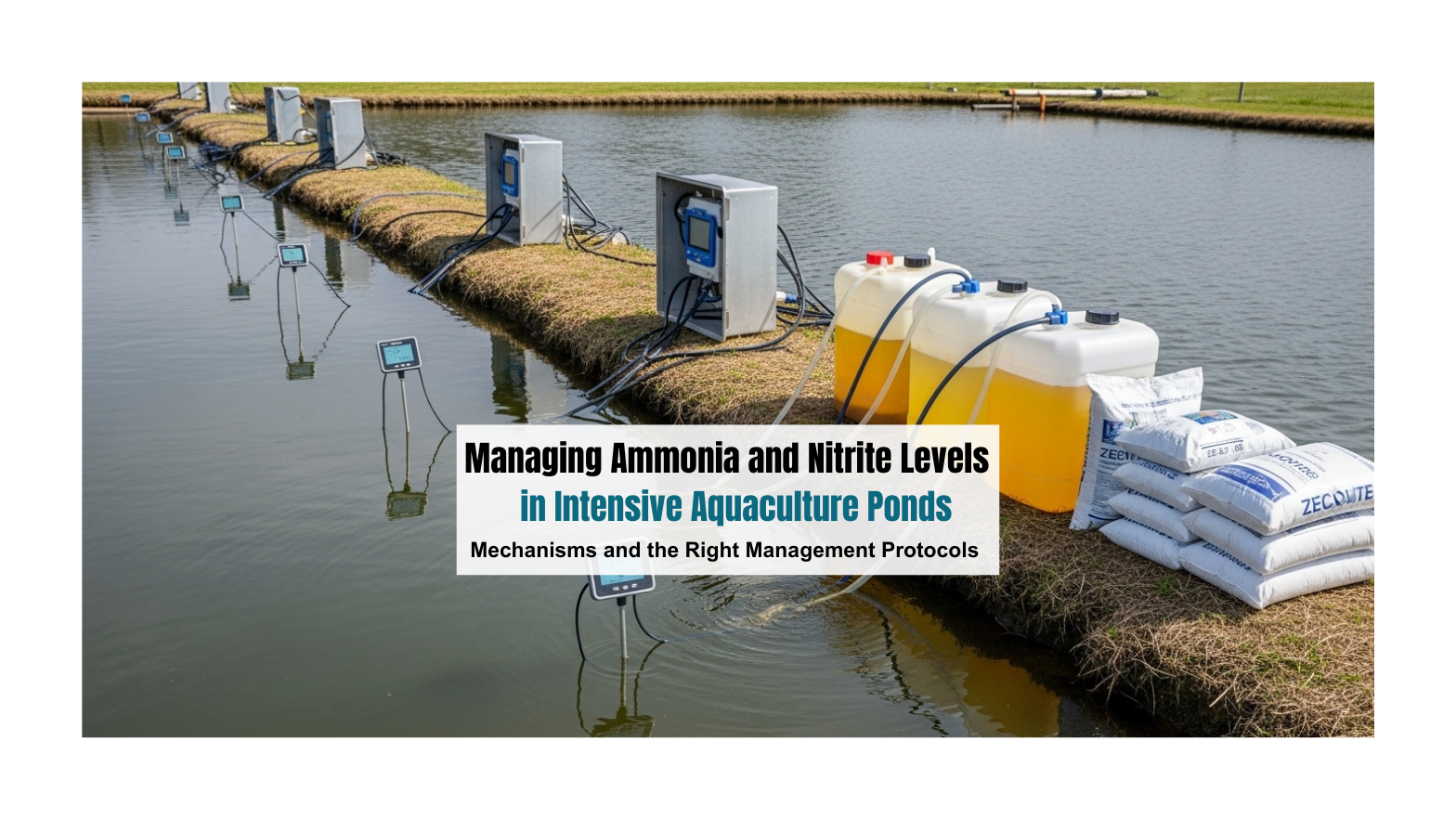

Managing Ammonia and Nitrite Levels in Intensive Aquaculture Ponds
The call came at 2 AM. Rajesh, a Vannamei shrimp farmer from Nellore, watched helplessly as his 60-day crop began gasping at the surface. Water tests revealed ammonia levels at 4.2 ppm, well into the lethal zone. By dawn, he’d lost 40% of his stock. Three months of investment, feed costs, and sleepless nights vanished because of an invisible enemy he never saw coming.
Related Resource: Master these protocols with The Complete Handbook for High-Yield Shrimp and Fish Farming.
This isn’t an isolated incident. Across coastal Andhra Pradesh, Gujarat, and West Bengal, intensive aquaculture farmers face this same silent killer every season. The irony? Most ammonia and nitrite crises are completely preventable once you understand the underlying mechanisms and implement the right management protocols.
Understanding the Nitrogen Cycle in High-Density Farming Systems
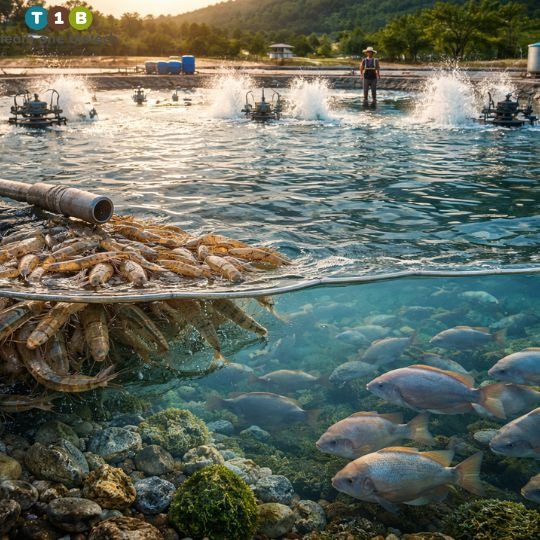
In intensive aquaculture, you’re essentially running a biological factory. Every kilogram of feed you introduce sets off a chain reaction. Fish and shrimp consume protein, metabolize it, and excrete ammonia directly through their gills and as waste. Uneaten feed and fecal matter decompose, releasing even more ammonia into your pond ecosystem.
Here’s where the chemistry becomes critical. Total Ammonia Nitrogen (TAN) exists in two forms: ionized ammonium (NH4+) and unionized ammonia (NH3). The unionized form is the deadly one, it crosses gill membranes easily, disrupts oxygen transport in the blood, damages gill tissue, and suppresses the immune system. At concentrations as low as 0.5 ppm, NH3 causes chronic stress. Above 2 ppm, you’re looking at mass mortality.
The conversion between these forms depends on two factors you deal with daily: pH and temperature. In Indian conditions, particularly during summer months when pond temperatures climb to 32-35°C and pH rises above 8.0 due to algal photosynthesis, a dangerous proportion of your TAN exists as toxic NH3. A pond that seems safe at dawn can become lethal by mid-afternoon.
The nitrogen cycle doesn’t end with ammonia. Beneficial bacteria, specifically Nitrosomonas species, oxidize ammonia into nitrite (NO2−). This is progress, but only partial progress. Nitrite is its own poison. It binds to hemoglobin in fish and shrimp, creating methemoglobin that can’t carry oxygen. The result? Your stock suffocates even in oxygen-rich water. Farmers call it “brown blood disease,” and it’s particularly devastating in species like Rohu and Catla that are sensitive to nitrite concentrations above 0.5 ppm.
Only when Nitrobacter bacteria convert nitrite to nitrate (NO3−) does the cycle reach a relatively safe endpoint. Nitrate is far less toxic and can be managed through partial water exchanges and plant uptake.
The Reality of Intensive Stocking in Indian Pond Conditions
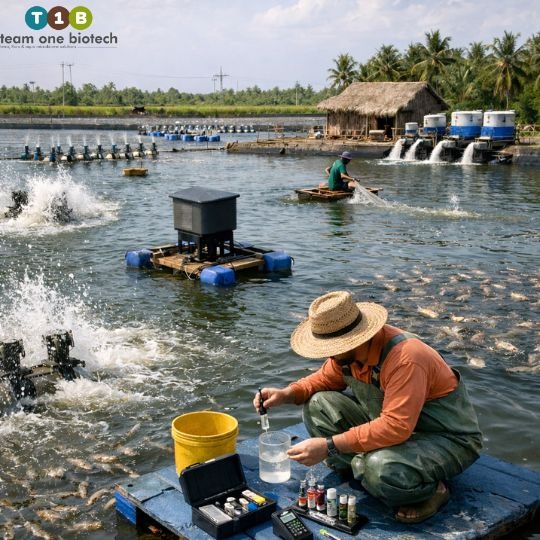
Indian aquaculture has shifted dramatically over the past decade. Where farmers once stocked 15-20 post-larvae per square meter, intensive Vannamei operations now push 80-120 PL/m². Pangasius and tilapia farms operate at similarly aggressive densities. The economic logic is sound, more biomass per unit area means better returns on land investment.
But this intensification compresses the entire nitrogen cycle into a pressure cooker. Consider the math: a 1-hectare pond stocked at 100 shrimp/m² at harvest weight produces approximately 40-50 kg of ammonia daily during peak feeding periods. In traditional extensive systems, natural processes, algae uptake, bacterial conversion, atmospheric diffusion, could handle this load. In intensive systems, these natural mechanisms are overwhelmed within weeks.
The Indian climate adds multiple complications. Summer temperatures accelerate metabolic rates, meaning your stock produces more ammonia per kilogram of body weight while simultaneously shifting more TAN into the toxic NH3 form. Monsoon season brings its own challenges, sudden drops in salinity stress your bacterial colonies, heavy rainfall dilutes dissolved oxygen, and agricultural runoff introduces external ammonia sources from fertilizer leaching.
Regional water quality varies dramatically. Coastal farmers in Kerala and Tamil Nadu work with brackish water that has natural buffering capacity. Freshwater farmers in Punjab and Haryana deal with hard water that can push pH to alkaline extremes. Each scenario requires tailored management strategies.
The species you’re farming matters enormously. Vannamei shrimp can tolerate short-term ammonia spikes better than Litopenaeus monodon, but sustained exposure above 0.1 ppm NH3 still causes molting problems and shell deformities. Among fish, air-breathing species like Magur show higher tolerance than pure water-breathers like Rohu. Understanding your species’ threshold is the first line of defense.
[CTA: Download our free Water Quality Reference Chart specifically calibrated for Indian aquaculture conditions, including safe limits for Vannamei, Rohu, Catla, and Pangasius across temperature ranges. Get your copy here.]
Why Traditional Management Methods Fall Short
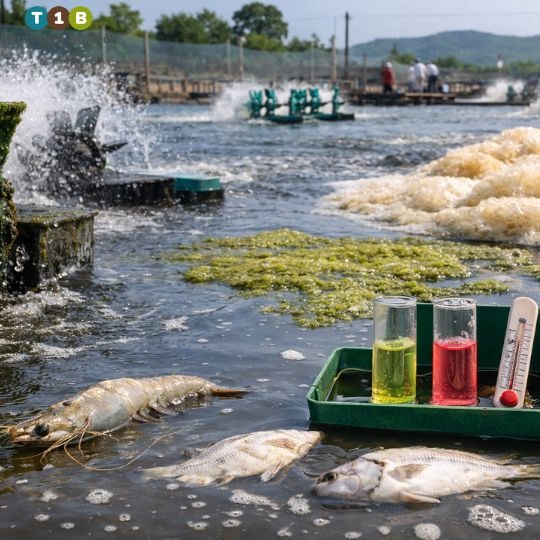
The conventional response to ammonia spikes is water exchange. Pump out 20-30% of pond volume, replace it with fresh water, and dilute the problem. This approach has serious limitations in modern intensive systems.
First, water availability is increasingly constrained. Coastal aquaculture competes with agriculture and municipal demand. During summer peaks, source water quality deteriorates, the very water you’re pumping in may carry its own ammonia load from upstream farms or agricultural runoff.
Second, every water exchange disrupts your pond ecosystem. You’re not just removing ammonia; you’re removing the bacterial biomass you’ve worked to establish, beneficial algae populations, and trace minerals. You’re also adding stress through salinity and temperature fluctuations. In Vannamei farming, sudden salinity changes are a leading trigger for white spot syndrome virus outbreaks.
Third, water exchange is economically and environmentally unsustainable at intensive stocking densities. When you need to exchange 20% of water daily just to maintain minimally safe ammonia levels, you’re looking at enormous pumping costs and contributing to coastal pollution through discharge of nitrogen-rich effluent.
Chemical treatments, zeolite, activated carbon, commercial ammonia binders, provide temporary relief but don’t address root causes. They’re bandages, not cures. Zeolite saturates within 72 hours in high-bioload systems and requires constant replacement. Chemical oxidizers like potassium permanganate can reduce ammonia but also kill beneficial bacteria, setting you back to square one.
The Bioremediation Approach: Working With Biology, Not Against It
The sustainable solution lies in microbial bioremediation, deliberately cultivating and maintaining robust populations of beneficial bacteria that convert ammonia and nitrite at rates matching or exceeding your production rate.
This isn’t about hoping natural populations develop. In intensive systems, you must actively inoculate and feed specific bacterial consortia. Team One Biotech’s probiotic formulations are designed precisely for this purpose, containing concentrated Nitrosomonas, Nitrobacter, Bacillus species, and complementary heterotrophic bacteria in ratios optimized for Indian pond conditions.
The mechanism is straightforward: you’re bioaugmenting your pond’s bacterial population to create excess conversion capacity. Instead of your bacterial community struggling to keep pace with ammonia production, you maintain a surplus that processes ammonia in real-time, preventing accumulation.
The critical difference from random probiotic products is strain specificity and viability. Team One Biotech’s formulations use bacteria isolated from successful Indian aquaculture systems, pre-adapted to local temperature ranges, salinity variations, and organic load conditions. Each dose delivers minimum 10^9 CFU per gram in spore form, meaning the bacteria remain viable through storage and activate rapidly upon pond application.
Beyond ammonia oxidation, these bacterial consortia provide multiple benefits. Bacillus species compete with pathogenic Vibrio, reducing disease pressure. Heterotrophic bacteria break down accumulated organic sludge, improving bottom quality. Some strains produce B-vitamins and growth-promoting compounds that enhance feed conversion ratios.
The economic case is compelling. A typical 1-hectare intensive shrimp pond requires approximately 5-8 kg of bioremediation product per week during peak periods. Cost: roughly ₹3,000-5,000 weekly. Compare this to water exchange electricity costs of ₹8,000-12,000 weekly plus the lost productivity from stress and disease. The payback period is measured in days, not months.
[CTA: Facing persistent ammonia issues despite water management efforts? Consult with our Team One Biotech aquaculture specialists for a customized bioremediation protocol based on your specific pond parameters and stocking density. Schedule your free consultation.]
Practical Implementation: Your Weekly Pond Management Checklist
Managing nitrogen compounds isn’t a one-time intervention, it’s a disciplined weekly routine integrated into your overall farm management. Here’s the systematic approach used by our most successful partner farms:
Monday Morning (6-7 AM):
- Measure dissolved oxygen, temperature, pH, and salinity at multiple points
- Collect water samples for ammonia and nitrite testing
- Record feeding rates and observed consumption from previous week
- Check aerator function and clean any clogged diffusers
Tuesday:
- Apply weekly bioremediation dose (adjust based on Monday’s test results)
- For ammonia >0.5 ppm or nitrite >0.2 ppm, apply additional emergency dose
- Reduce feeding by 30% if ammonia approaches 1.0 ppm
- Increase aeration by activating standby units
Wednesday:
- Monitor feeding behavior, sluggish feeding indicates stress from nitrogen compounds
- Test ammonia and nitrite at mid-week to verify treatment effectiveness
- Inspect pond bottom for sludge accumulation (use white disc in shallow areas)
- Document any mortality and examine gills for damage
Thursday:
- Apply carbon source (molasses or commercial product) to support heterotrophic bacteria
- This enhances the biofloc system and accelerates organic matter breakdown
- Ratio: 10-15 parts carbon to 1 part nitrogen (calculate based on your feed protein content)
Friday:
- Conduct comprehensive water quality assessment
- Compare parameters to Monday baseline
- Adjust weekend feeding schedule based on trends
- If ammonia remains elevated, plan reduced feeding through Sunday
Saturday:
- Focus on mechanical maintenance, clean screens, service pumps, calibrate test kits
- Prepare bioremediation products for Monday application
- Review weather forecast for coming week (adjust management for predicted heat or rain)
Sunday:
- Health monitoring, net sample from multiple pond sections
- Examine for stress indicators: pale coloration, antennae loss in shrimp, erratic swimming in fish
- Test one final time before new week begins
- Plan intervention strategies if levels remain problematic
This checklist assumes you’re testing with reliable field kits. Invest in quality colorimetric test kits specifically designed for aquaculture. The cheap pool-testing kits give dangerously inaccurate readings in brackish water. Team One Biotech can recommend validated testing equipment that provides accuracy within ±0.1 ppm for ammonia and ±0.05 ppm for nitrite.
Emergency Response: When Levels Spike Despite Prevention
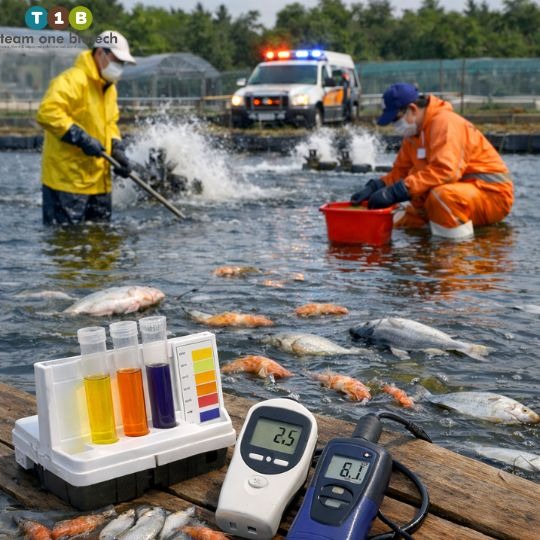
Even with excellent management, emergencies happen. A power failure stops aeration overnight. Feed contamination causes a die-off of beneficial bacteria. Heavy rain floods your pond with ammonia-rich runoff. Knowing how to respond in the critical first 6-12 hours makes the difference between a manageable setback and total crop loss.
Immediate Actions (First 2 Hours):
Maximize aeration immediately. Deploy all available aerators and paddlewheels. If you have emergency backup generators, activate them. Oxygen is your first defense, it helps stock tolerate ammonia stress and supports rapid bacterial activity.
Stop all feeding. Any additional protein load will worsen the crisis. Your stock won’t starve in 48-72 hours, but ammonia poisoning kills within hours.
Apply emergency bioremediation dose at 3-5x normal rate. Yes, this seems expensive, but it’s far cheaper than replacing lost stock. The bacterial bloom you create will process existing ammonia within 18-24 hours if conditions are favorable.
Next 6-12 Hours:
Partial water exchange becomes necessary if ammonia exceeds 3 ppm, at that concentration, you need immediate dilution while waiting for bacteria to activate. Exchange 20-30% of water volume slowly over 4-6 hours to minimize salinity and temperature shock.
Add commercial ammonia binder (zeolite or similar) as a temporary measure. This buys time for your bacterial intervention to take effect. Application rate: 50-80 kg per hectare for emergency situations.
Monitor continuously. Test every 3-4 hours to track whether ammonia is declining. If levels plateau or continue rising after 12 hours, consult with specialists immediately, you may be dealing with a more complex problem like pond bottom oxygen debt or bacterial inhibition.
Recovery Phase (24-72 Hours):
Once ammonia drops below 1 ppm and shows steady decline, gradually resume feeding at 30-40% of normal rate. Watch consumption carefully. Poor appetite indicates lingering stress.
Continue elevated bioremediation dosing for one week post-crisis. You’re rebuilding bacterial populations to prevent immediate relapse.
Investigate root cause. Equipment failure? Feed quality problem? Overcrowding relative to your aeration capacity? Address the underlying issue or you’ll face repeated crises.
The Long-Term Strategy: Building Resilient Pond Ecosystems
The ultimate goal isn’t firefighting ammonia spikes, it’s creating a stable, self-regulating pond ecosystem that maintains nitrogen balance without constant intervention.
This starts with pond preparation. Before stocking, establish robust bacterial colonies through pre-stocking probiotic application and organic carbon addition. Give your beneficial bacteria a two-week head start before introducing any animals. This foundational biomass prevents the lag period where ammonia accumulates faster than bacteria can colonize.
Feed management is equally critical. High-quality feed with optimal protein levels (32-35% for Vannamei, 28-32% for Indian major carps) reduces ammonia production per kilogram of growth. Overfeeding is the single largest cause of preventable ammonia problems, feed only what your stock consumes within 2 hours.
Consider biofloc technology for truly intensive operations. By maintaining C:N ratios around 12-15:1 through carbon source addition, you stimulate heterotrophic bacterial growth that assimilates ammonia directly into bacterial protein. Your stock can consume this bacterial biomass as supplemental nutrition. Team One Biotech offers biofloc-specific probiotic formulations and management protocols.
Infrastructure investment pays long-term dividends. Adequate aeration capacity, minimum 5-8 HP per hectare for intensive shrimp, 3-5 HP for fish, ensures your bacteria have the oxygen they need for ammonia oxidation. Backup power during grid failures prevents catastrophic overnight oxygen crashes that kill your bacterial population.
Regular bottom soil management prevents the accumulation of organic sludge that serves as an ammonia reservoir. Periodic siphoning of settled solids, combined with probiotic treatment targeting sludge degradation, maintains clean pond bottoms that don’t release ammonia surges during turnover events.
Securing Your Investment Through Proven Bioremediation
Indian aquaculture is evolving from traditional farming to precision agriculture. The farmers who thrive in this new era are those who understand the invisible biological processes in their ponds as thoroughly as they understand feeding schedules and stocking densities.
Ammonia and nitrite management isn’t mysterious or impossibly complex. It’s applied microbiology backed by consistent monitoring and disciplined intervention. The technology exists. The protocols are proven across thousands of hectares of successful intensive farms.
Team One Biotech has spent years developing bioremediation solutions specifically for Indian conditions, products that work in 35°C heat, fluctuating salinity, and the high organic loads of intensive systems. Our formulations aren’t generic probiotics; they’re targeted bacterial consortia proven to establish stable nitrogen cycling in ponds ranging from freshwater Catla operations in Bihar to brackish Vannamei farms in coastal Andhra Pradesh.
The question isn’t whether bioremediation works. The question is whether you’re willing to shift from reactive crisis management to proactive ecosystem cultivation.
Your next crop depends on decisions you make today. The bacteria you inoculate this week determine the water quality your stock experiences sixty days from now. The monitoring discipline you establish prevents the 2 AM phone calls that signal disaster.
Secure your harvest today. Explore Team One Biotech’s complete range of aquaculture bioremediation products, customized for Indian intensive farming systems. Visit our product line or contact our technical team for farm-specific recommendations. Your sustainable, high-yield future starts with the right biological partners.
Looking to improve your ETP/STP efficiency with the right bioculture?
Talk to our experts at Team One Biotech for customised microbial solutions.
Contact: +91 8855050575
Email: sales@teamonebiotech.com
Visit: www.teamonebiotech.com
Discover More on YouTube – Watch our latest insights & innovations!-
Connect with Us on LinkedIn – Stay updated with expert content & trends!