Global Demand for Sustainable Aquaculture in 2026: Export Opportunities for Indian Biotech
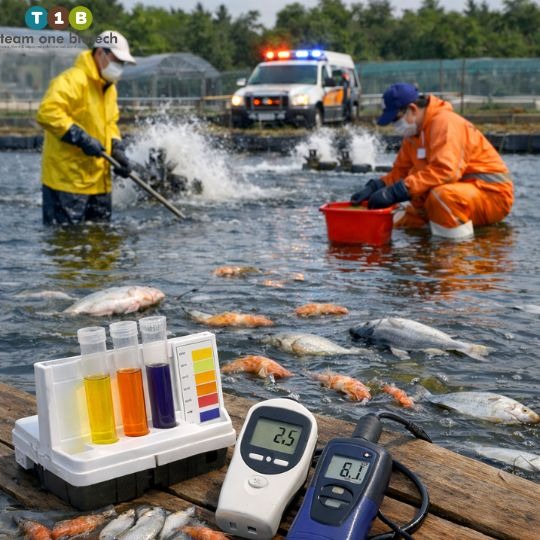
The rejection email arrives at 3 AM. A Malaysian shrimp exporter watches his entire season’s harvest, 200 metric tons, fail EU residue testing. Antibiotic traces detected at 12 parts per billion. The shipment is refused entry. His buyers in Rotterdam cancel standing orders worth $1.2 million. This scenario repeats across Asian aquaculture operations daily, and it represents the central crisis driving the $39 billion global aquaculture industry toward biological solutions in 2026.
International farmers face an impossible equation: intensive production systems demand disease prevention, yet importing nations enforce zero-tolerance policies on chemical residues. The European Food Safety Authority (EFSA) maintains detection thresholds for oxytetracycline at 100 μg/kg in muscle tissue. The United States FDA enforces similar standards through its Import Alert system. One failed test triggers automatic detention of all future shipments from that facility.
India’s biotechnology sector has quietly positioned itself to resolve this global bottleneck. The same environmental pressures that challenge domestic aquaculture, high salinity fluctuations, extreme organic loading, temperature variability, have forced Indian manufacturers to develop exceptionally robust microbial formulations. These products now represent the technical foundation for export-grade, chemical-free aquaculture worldwide.
The 2026 Market Reality: Consumer Demands Reshape Global Supply Chains

The aquaculture market exceeded $39.4 billion in 2025 and continues accelerating toward projected valuations of $58 billion by 2030. This growth trajectory masks a fundamental restructuring of what constitutes acceptable production methods. European retailers now require “clean label” certifications from suppliers. Whole Foods Market, Carrefour, and Tesco have publicly committed to antibiotic-free seafood across their supply chains by 2027.
The regulatory landscape has hardened considerably. The European Union’s Farm to Fork Strategy explicitly targets antimicrobial resistance, with member states implementing enhanced surveillance at border inspection posts. Between January and September 2025, EU authorities rejected 1,847 aquaculture shipments from non-member countries due to residue violations. Each rejection represents not just lost revenue but damaged trade relationships that take years to rebuild.
North American markets mirror this trend. The US imported 2.3 billion pounds of shrimp in 2024, with 94% originating from Asia and Latin America. The FDA’s Veterinary Feed Directive and the ongoing expansion of the Seafood Import Monitoring Program have created compliance requirements that extend far beyond the point of harvest. Importers now demand full traceability documentation showing farm management practices from stocking through processing.
The Economics of Rejection
Export rejections carry cascading financial consequences that extend throughout the value chain. A single container of frozen shrimp represents approximately $180,000 to $240,000 in product value. When rejected at port, the exporter faces:
- Immediate product loss (most rejected seafood cannot be economically redirected)
- Demurrage charges averaging $200-300 per container per day
- Legal costs associated with disputing findings or negotiating settlements
- Permanent damage to importer relationships in premium markets
- Potential facility-level import bans affecting all future shipments
A Vietnamese processing facility that appeared on the FDA Import Alert list in 2024 lost 68% of its US customer base within 90 days. Rebuilding market access required 14 months of enhanced testing protocols, third-party audits, and sustained compliance demonstration. The total cost exceeded $2.1 million, far surpassing any savings achieved through antibiotic use.
These market forces have created urgent demand for sustainable aquaculture solutions that eliminate regulatory risk while maintaining production efficiency. Farmers who successfully transition to biological systems gain immediate competitive advantages in procurement negotiations with international buyers.
Understanding Bioremediation: The Science Behind Antibiotic-Free Systems

Bioremediation solutions represent a fundamentally different approach to aquaculture management. Rather than suppressing pathogenic bacteria through chemical intervention, these systems establish competitive microbial communities that prevent disease organisms from gaining footholds in the culture environment.
The core mechanism operates through multiple pathways:
Competitive Exclusion
Beneficial bacteria occupy ecological niches that would otherwise support pathogenic species. When properly formulated probiotic consortia are introduced at densities of 10^6 to 10^8 CFU per gram, they consume available nutrients and attachment sites, creating conditions inhospitable to Vibrio species, Aeromonas, and other common aquaculture pathogens.
Research from Thailand’s National Center for Genetic Engineering and Biotechnology demonstrated that ponds maintained with continuous bioremediation protocols showed 83% reduction in Vibrio harveyi populations compared to control systems, without any antibiotic administration.
Nitrification and Nitrogen Cycling
Intensive aquaculture generates massive nitrogen loads through uneaten feed and metabolic waste. A single hectare of shrimp ponds at 40 animals per square meter produces approximately 180-220 kg of total ammonia nitrogen over a 120-day cycle. Accumulation of ammonia (NH₃) and nitrite (NO₂⁻) creates toxic conditions that stress cultured animals and trigger disease vulnerability.
Effective bioremediation formulations contain autotrophic bacteria, primarily Nitrosomonas and Nitrobacter species, that oxidize ammonia to nitrite and subsequently to nitrate through a two-stage process:
NH₃ → NO₂⁻ → NO₃⁻
This nitrification cascade maintains ammonia concentrations below 0.5 mg/L, the threshold where physiological stress becomes measurable in penaeid shrimp. The conversion process simultaneously stabilizes pH and prevents the sudden water quality crashes that typically precipitate disease outbreaks.
Organic Matter Decomposition
Heterotrophic bacteria in advanced formulations accelerate the breakdown of accumulated organic sediments. Species from Bacillus, Lactobacillus, and Rhodopseudomonas genera produce extracellular enzymes, proteases, lipases, amylases, that convert complex organic materials into simpler compounds available for uptake by phytoplankton.
Ponds treated with T1B Acqua S and similar comprehensive bioremediation products show measurably reduced sludge accumulation. Field trials in Andhra Pradesh documented 41% reduction in bottom sediment depth over 90-day shrimp cycles compared to conventional management, directly correlating with reduced hydrogen sulfide production and improved dissolved oxygen profiles.
Immune Enhancement Through Gut Colonization
Beyond water quality management, probiotics for aquaculture directly improve host resistance when administered through feed incorporation. Bacterial metabolites including bacteriocins, organic acids, and immune-stimulating compounds enhance the shrimp’s innate defense mechanisms.
Studies measuring hemocyte counts, phenoloxidase activity, and lysozyme levels consistently demonstrate that animals receiving probiotic supplementation show 20-35% enhanced immune response to pathogen challenge compared to control groups. This immunomodulation reduces disease incidence without creating the selective pressure for antimicrobial resistance.
T1B Acqua S: Engineering Solutions for Export-Grade Production

T1B Acqua S represents the practical application of bioremediation science to commercial aquaculture challenges. The formulation contains a precisely balanced consortium of eight bacterial strains selected for synergistic activity across the range of conditions encountered in tropical and subtropical pond systems.
The product addresses the specific failure points that drive farmers toward antibiotic dependency:
Early Morning Oxygen Depletion
Dissolved oxygen crashes between 4 AM and 6 AM account for approximately 40% of unexplained mortality events in intensive shrimp culture. These crashes occur when overnight respiration by phytoplankton, bacteria, and cultured animals depletes oxygen faster than atmospheric diffusion can replenish it.
T1B Acqua S contains photosynthetic bacteria that reduce biological oxygen demand while producing oxygen during daylight hours. When applied at recommended dosages of 1-2 kg per hectare every 7-10 days, these organisms measurably improve dawn oxygen levels. Continuous dissolved oxygen monitoring in treated ponds shows 15-22% higher minimum overnight DO compared to untreated controls.
Mid-Cycle Vibrio Blooms
Vibriosis typically emerges between days 45-75 of shrimp production cycles, coinciding with peak feeding rates and organic accumulation. Traditional management relies on antibiotic treatment at first signs of infection, precisely the practice that creates export residue problems.
The competitive exclusion mechanism in T1B Acqua S prevents Vibrio populations from reaching pathogenic thresholds. Farms implementing prophylactic bioremediation protocols report 72-86% reduction in Vibrio-related losses without therapeutic antibiotic use, based on aggregated data from over 400 hectares of production in India, Bangladesh, and Indonesia.
White Feces Syndrome Management
White feces syndrome (WFS), associated with microsporidian parasites and dysbiotic gut conditions, has emerged as a major production constraint across Asia. The condition causes growth retardation, feed conversion degradation, and secondary bacterial infections.
Integrating T1B Acqua S with feed-based probiotics addresses both the environmental triggers and gut health components of WFS. The protocol involves:
- Water column treatment: 1.5 kg/hectare every 5 days during high-risk periods
- Feed incorporation: Probiotic supplementation at 2-3 g/kg feed
- Organic load reduction: Enhanced bottom aeration in conjunction with bacterial treatment
Farms in Thailand implementing this combined approach documented 63% reduction in WFS incidence and maintained average daily growth rates of 0.18-0.21 grams per day even in high-density systems exceeding 60 animals per square meter.
Indian Expertise: From Domestic Challenges to Global Solutions
India’s position as a leading developer of bioremediation solutions stems directly from the severity of its domestic aquaculture challenges. The country produces approximately 800,000 metric tons of shrimp annually, with the vast majority cultured in coastal regions where environmental variability tests the limits of conventional management approaches.
Salinity Fluctuation Tolerance
Indian shrimp farms regularly experience salinity swings of 15-20 ppt within 48-hour periods during monsoon transitions. These fluctuations stress both cultured animals and microbial populations. Bacterial strains that survive and remain metabolically active across this range possess exceptional environmental tolerance.
Team One Biotech’s development process specifically screens candidate organisms for performance across salinity gradients from 5 ppt to 45 ppt. The resulting formulations maintain nitrification efficiency and competitive exclusion activity in conditions that would inactivate less robust products. This tolerance translates directly to reliability in Middle Eastern installations where evaporation drives salinity above 40 ppt, and Southeast Asian brackishwater systems where tidal influence creates constant flux.
High Organic Loading Resilience
Indian aquaculture operates at some of the highest stocking densities globally, with commercial farms routinely exceeding 50-70 post-larvae per square meter. These densities generate organic loading rates that overwhelm marginal bioremediation products. Formulations developed for Indian conditions inherently possess the metabolic capacity to function in intensive systems worldwide.
Field validation in Gujarat and Tamil Nadu, regions with particularly challenging water chemistry, has refined Team One Biotech’s understanding of minimum effective bacterial densities, application frequencies, and co-factor requirements (trace minerals, carbon sources) needed for sustained performance under stress.
Temperature Extremity Performance
Summer pond temperatures in Rajasthan and Gujarat regularly exceed 38°C, while winter temperatures in northern regions drop to 18-20°C. This thermal range exceeds what most aquaculture regions globally experience, but it has driven selection for bacterial strains with wide operational temperature windows.
The Bacillus species in T1B Acqua S remain viable and metabolically active from 15°C to 42°C, ensuring consistent performance whether deployed in Norwegian salmon systems, Mediterranean seabass operations, or equatorial shrimp farms. This thermal flexibility eliminates the seasonal performance degradation that plagues temperature-sensitive formulations.
Logistics and Supply Chain: The Competitive Advantage of Shelf-Stable Formulations

The physical format of bioremediation products profoundly impacts their viability in international trade. Shelf-stable powdered formulations offer decisive advantages over liquid alternatives in every aspect of global distribution.
Stability During Extended Transit
Ocean freight from Mumbai to Rotterdam requires 28-35 days door-to-door. Shipments to South American destinations average 40-50 days. Throughout this period, products experience:
- Temperature fluctuations from -5°C in refrigerated containers to 45°C on deck in tropical crossings
- Humidity variations affecting packaging integrity
- Physical vibration and handling stress during trans-shipment
Liquid probiotic formulations typically maintain bacterial viability for 30-60 days under refrigeration. At ambient temperatures, degradation accelerates dramatically. A liquid product with 10^9 CFU/mL at manufacture may decline to 10^6 CFU/mL after 45 days at 28°C, a 99.9% reduction in active cell count.
Team One Biotech’s spray-dried powdered formulations utilize protective matrices that preserve bacterial viability for 24 months at ambient temperature. Independent laboratory testing documents less than 0.5 log reduction in CFU count over 18-month storage at 25°C. This stability eliminates cold chain requirements, reduces logistics costs by approximately 40-60%, and ensures customers receive products at full specification regardless of transit duration.
Shipping Economics
A standard 20-foot container holds approximately 10 metric tons of powdered product or 18-20 metric tons of liquid formulation. However, the concentration differential reverses this apparent advantage. Powdered products typically contain 10^10 to 10^11 CFU per gram, while liquids range from 10^8 to 10^9 CFU per milliliter.
Calculating on an active ingredient basis:
- Powder: 10,000 kg × 10^11 CFU/g = 10^18 total CFU per container
- Liquid: 20,000 kg × 10^9 CFU/mL = 2 × 10^16 total CFU per container
The powdered format delivers 50 times more biological activity per container, dramatically reducing per-acre treatment costs for end users and improving the economics of long-distance shipping.
Regulatory Compliance
Many importing nations classify live bacterial cultures as controlled biological materials requiring phytosanitary certification, import permits, and quarantine inspection. The dried spore format of Team One Biotech’s formulations often qualifies for simplified regulatory categorization as “microbial soil amendments” or “aquaculture feed supplements,” expediting customs clearance and reducing administrative burden.
The water activity (aw) of properly processed powder formulations remains below 0.4, creating conditions incompatible with contamination by pathogenic bacteria or fungi. This microbiological stability satisfies import authority concerns about biosecurity risk and facilitates market access in jurisdictions with stringent border controls.
White Label Probiotics: Building Global Brands on Indian Manufacturing Excellence
The white label probiotics model addresses a critical gap in international aquaculture markets. Regional distributors and national feed companies possess market access, customer relationships, and brand equity but lack the technical capability and capital investment required for in-house probiotic manufacturing.
Team One Biotech’s white labeling services provide complete solutions:
Custom Formulation Development
Not all aquaculture environments require identical bacterial consortia. Antibiotic-free shrimp farming in Ecuador faces different challenges than tilapia culture in Egypt or salmon production in Chile. Team One Biotech works with partners to develop region-specific formulations optimized for local conditions.
The development process includes:
- Environmental assessment: Water chemistry analysis, disease pressure profiles, typical management practices
- Strain selection: Matching bacterial species to specific ecological and pathogenic challenges
- Concentration optimization: Determining minimum effective dosages for target conditions
- Stability testing: Validating performance under expected storage and application conditions
This collaborative approach creates products that outperform generic formulations while building partners’ technical credibility in their markets.
Manufacturing and Quality Control
Team One Biotech operates ISO-certified fermentation facilities with 200,000-liter annual production capacity for aquaculture biologicals. The manufacturing process follows Good Manufacturing Practices (GMP) protocols including:
- Seed culture maintenance in cryopreserved stocks to ensure genetic stability
- Multi-stage fermentation with continuous monitoring of pH, dissolved oxygen, and metabolite production
- Spray drying under controlled temperature profiles to maximize spore survival
- Blending and homogenization to achieve uniform CFU distribution
- Third-party verification of bacterial counts, species identification, and contamination screening
Partners receive complete Certificates of Analysis documenting microbial counts, moisture content, viable spore percentage, and absence of pathogenic contamination. This documentation supports their own regulatory filings and customer quality assurance requirements.
Packaging and Labeling Flexibility
White label partners can specify packaging formats from 100-gram retail sachets to 20-kilogram commercial buckets to 500-kilogram bulk bags for industrial operations. Custom labeling incorporates partner branding, application instructions in local languages, and regulatory-compliant claims specific to target markets.
This flexibility allows a single manufacturing relationship to serve multiple customer segments:
- Retail aquarium and ornamental fish markets with small-format consumer packaging
- Small-scale farmers purchasing through agricultural supply dealers
- Commercial shrimp farms requiring bulk quantities with technical support
- Feed mill integration for partners incorporating probiotics into manufactured feeds
Technical Support and Training
Team One Biotech provides partners with comprehensive technical resources including:
- Application protocols: Dosage recommendations, mixing instructions, timing guidelines for different production systems
- Troubleshooting guides: Diagnostic approaches for addressing water quality problems and disease challenges
- Sales training materials: Technical presentations explaining bioremediation mechanisms for distributor sales teams
- End-user education: Farmer training programs and demonstration farm partnerships
This support infrastructure accelerates market development and builds sustainable demand for partner brands. Distributors in Nigeria, Peru, and Myanmar have successfully launched white-labeled pond stabilizers and gut health products using Team One Biotech’s platform, achieving market penetration rates of 15-30% within 18 months of launch.
Market Entry Strategy: Positioning Indian Biotech in Premium Segments
Indian biotech exports face perception challenges in some international markets where “Indian manufacturing” connotes price competition rather than technical leadership. Team One Biotech addresses this positioning through several strategic approaches:
Third-Party Validation
Independent testing by internationally recognized laboratories provides objective verification of product performance. Team One Biotech submits formulations to facilities including:
- SGS laboratories for microbial enumeration and species verification
- University research partnerships with institutions in Thailand, Vietnam, and Ecuador for field efficacy trials
- Comparative performance studies published in peer-reviewed aquaculture journals
These validations create defensible technical claims and overcome skepticism about product quality. A 2024 field trial at Vietnam’s Research Institute for Aquaculture No. 1 documented that T1B Acqua S delivered nitrification performance equivalent to leading European products at 60% of the application cost, demonstrating the value proposition clearly.
Sustainability Certifications
Best Aquaculture Practices (BAP), Aquaculture Stewardship Council (ASC), and GlobalG.A.P. certifications increasingly require farms to document disease management approaches that minimize antibiotic use. Products that demonstrably support these certifications gain preference in procurement decisions.
Team One Biotech maintains documentation packages showing that farms using T1B Acqua S consistently achieve the water quality parameters and reduced therapeutic antibiotic use required for certification compliance. This documentation has supported successful ASC certification for partner farms in Indonesia and India, creating case studies that drive adoption in certification-focused markets.
Economic Performance Guarantees
Technical superiority means little if it fails to deliver economic results. Team One Biotech works with select partners to implement performance-based pricing models where product costs partially correlate with achieved outcomes in feed conversion ratio, survival rate, and production efficiency.
These risk-sharing arrangements demonstrate confidence in product performance and align manufacturer interests with farmer success. Early adopters in Bangladesh implementing guaranteed-performance programs achieved 8.4% improvement in feed conversion ratios and 12% reduction in production costs per kilogram, creating compelling economic arguments for expansion.
The 2026 Opportunity: Convergence of Regulation, Technology, and Market Demand
Multiple trends converge in 2026 to create unprecedented opportunities for sustainable aquaculture solutions:
Regulatory Tightening
The EU’s revised Veterinary Medicinal Products Regulation, fully implemented as of January 2026, restricts prophylactic antibiotic use and requires detailed justification for all antimicrobial prescriptions in aquaculture. Farms supplying European markets must demonstrate comprehensive disease prevention strategies centered on biosecurity and water quality management rather than therapeutic intervention.
Consumer Transparency Demands
Blockchain-enabled traceability systems now allow consumers to scan QR codes on seafood packaging and review complete production histories including feed formulations, water quality records, and disease management protocols. Products from farms documenting antibiotic-free production command price premiums of 12-18% in North American and European retail.
Climate Adaptation Requirements
Rising water temperatures and increased weather volatility are destabilizing traditional aquaculture management approaches. Biological systems that enhance environmental resilience while reducing chemical dependency align with both climate adaptation strategies and sustainability mandates.
Investment Flow
Impact investors and environmental, social, and governance (ESG) funds are directing capital toward aquaculture operations that demonstrate measurable sustainability metrics. Farms transitioning to biological management systems access lower-cost financing and qualify for green bonds and sustainability-linked loans with interest rate reductions of 0.5-1.5%.
The global market for probiotics for aquaculture reached $680 million in 2025 and projects growth to $1.2 billion by 2030, representing a compound annual growth rate exceeding 12%. Indian manufacturers capturing even modest market share translate this into substantial export revenue while establishing technological leadership in a strategic sector.
Taking Action: Connect With Team One Biotech
The transformation toward antibiotic-free shrimp farming and sustainable aquaculture requires reliable partners who understand both the science and the business of biological solutions. Team One Biotech combines proven formulations, manufacturing excellence, and global supply chain capability to support this transition.
International buyers, distributors, and aquaculture operations can explore bulk pricing, technical specifications, and white labeling opportunities through the official Team One Biotech Alibaba Store. The platform provides transparent pricing for container-quantity orders, detailed product documentation, and direct communication with technical specialists.
Whether you represent a commercial farm seeking to eliminate export rejection risk, a distributor building a portfolio of sustainable aquaculture solutions, or an entrepreneur launching branded products in emerging markets, Team One Biotech’s platform provides the foundation for success in the global shift toward biological aquaculture management.
The question facing aquaculture stakeholders in 2026 is not whether to transition away from antibiotic dependency, market forces and regulatory requirements have made this inevitable. The question is which biological solutions and manufacturing partners will enable this transition while maintaining profitability and production efficiency. The answer increasingly comes from Indian biotechnology companies that have transformed domestic challenges into global expertise.
Looking to improve your ETP/STP efficiency with the right bioculture?
Talk to our experts at Team One Biotech for customised microbial solutions.
Contact: +91 8855050575
Email: sales@teamonebiotech.com
Visit: www.teamonebiotech.com
Discover More on YouTube – Watch our latest insights & innovations!-
Connect with Us on LinkedIn – Stay updated with expert content & trends!