
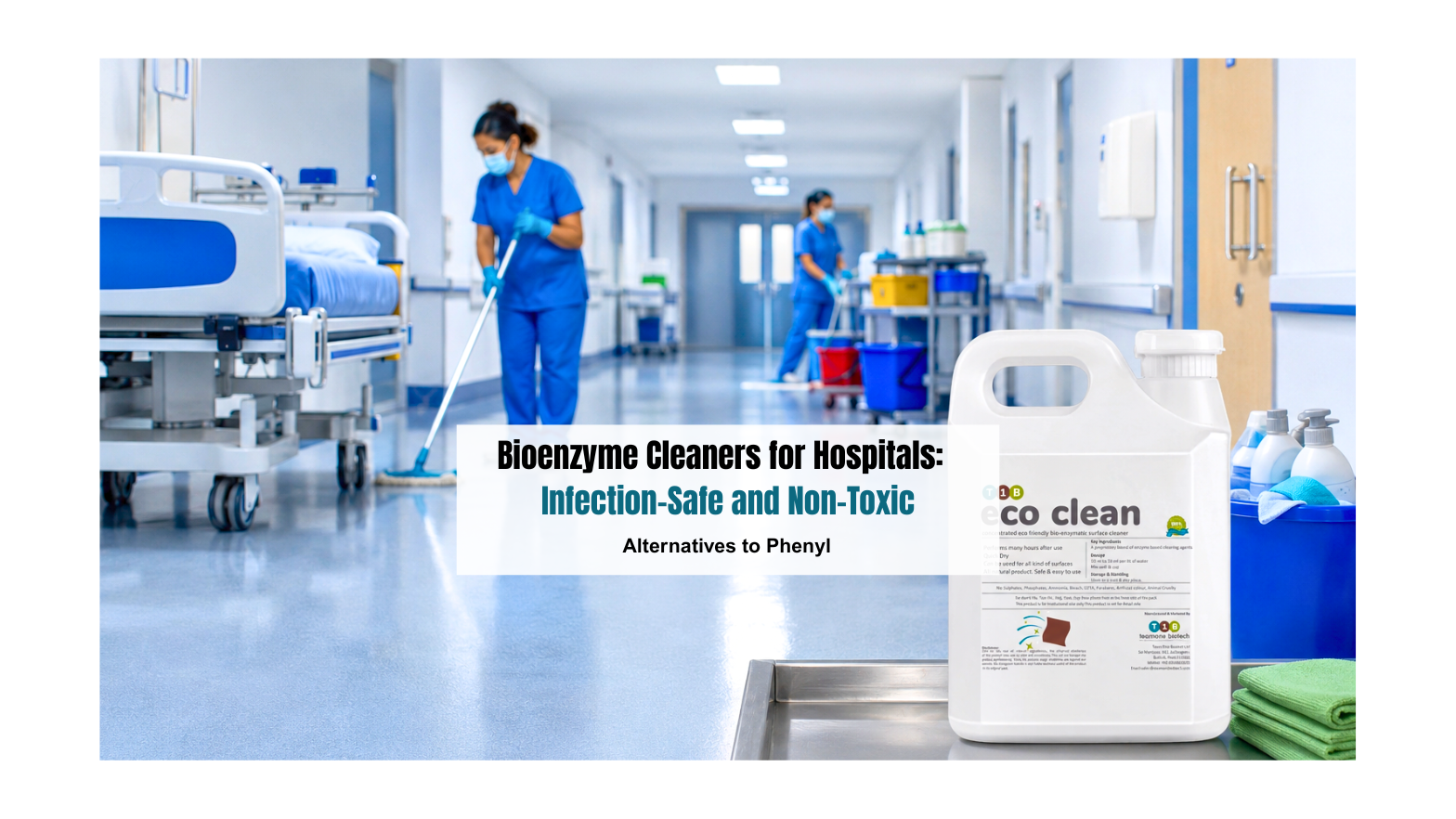

Bioenzyme Cleaners for Hospitals: Infection-Safe and Non-Toxic Alternatives to Phenyl
The Scent of Safety Is a Lie We Were Sold
Walk into almost any hospital corridor across India and you will encounter it, that sharp, almost aggressive sting of phenyl cutting through the air. For decades, that smell has been culturally coded as “clean.” Patients find comfort in it. Administrators take pride in it. Procurement heads buy more of it because complaints go down when the ward smells like something was done.
But here is the uncomfortable truth that facility managers across Indian healthcare institutions are beginning to reckon with: phenyl does not clean. It masks. It suppresses. It overwhelms your sensory perception of a problem while leaving the biological reality of that problem very much intact.
The question facing every hospital administrator, every procurement head, and every facility management professional responsible for high-footfall institutions, whether that is a 500-bed hospital, a corporate hub with 3,000 daily occupants, or a school with hundreds of children, is no longer whether traditional chemical cleaners work. The question is whether you can afford the true cost of continuing to use them.
Team One Biotech exists precisely at this inflection point. And what follows is the science, the strategy, and the institutional logic behind making the shift to a bioenzyme cleaner for hospital model that is both infection-safe and genuinely non-toxic.
What Phenyl Actually Does, And What It Doesn’t
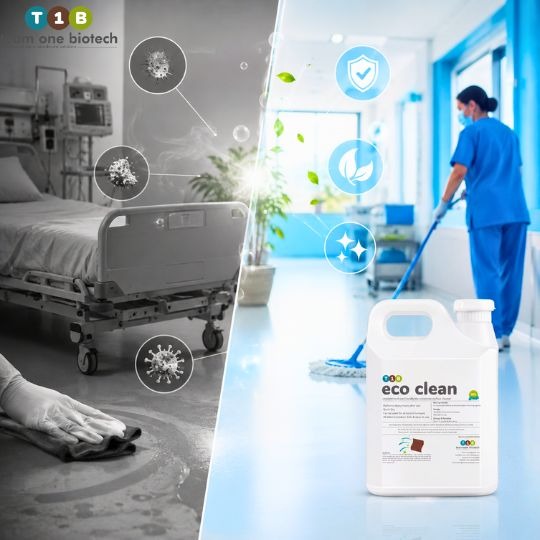
Phenyl and phenolic compounds function through chemical toxicity. They disrupt microbial cell membranes on contact, which sounds effective until you understand the operational limitations of that mechanism.
Phenolic cleaners are broad-spectrum biocides. They kill, indiscriminately and superficially. The moment the chemical evaporates or is diluted by foot traffic, mopping water, or natural humidity, its efficacy plummets. The biofilm, that invisible, multi-layered colony of bacteria that adheres to tiles, grout lines, and drains, remains structurally intact. Phenyl kills the top layer and the colony rebuilds within hours.
In Indian healthcare environments specifically, this cycle is particularly dangerous. Tropical humidity between 70% and 90% for large portions of the year accelerates microbial regrowth. High patient turnover in government and private hospitals means floors are stressed with organic load, blood, urine, food particles, saliva, far beyond what a surface-level biocide can manage across a full operational day.
The phenyl does not reach what it needs to reach. And it never did.
The Bioenzyme Difference: Cleaning at the Molecular Level
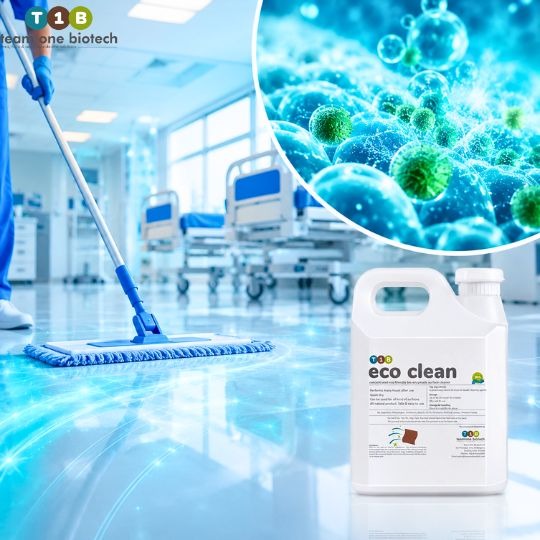
This is where enzymatic science changes the conversation entirely.
A bioenzyme cleaner hospital grade solution does not kill microbes through chemical shock. It deploys a consortium of naturally derived biological catalysts, enzymes, that are precision-engineered to break down the organic substrates that bacteria feed on and colonize.
The Three Enzymes Your Facility Needs to Understand
Protease targets protein-based waste. In a hospital context, that means blood residue, pus, skin cells, and mucus. These are the organic materials that standard cleaners smear across surfaces without truly degrading them.
Lipase breaks down lipid and fat-based compounds. Relevant in hospital cafeterias, patient wards where dietary supplements are administered, and surgical areas where biological fats are present in significant quantities.
Amylase degrades starch and carbohydrate-based organic matter, the food residues in dining areas, pediatric wards, and high-traffic corridors that create sticky films on tiles, inviting bacterial adhesion.
Together, these three enzyme classes, along with supporting bacterial cultures, do not just suppress the symptoms of contamination. They consume the substrate. When the food source for pathogenic organisms is digested at a molecular level, the ecological basis for bacterial proliferation is removed. This is sustainable sanitation in its truest scientific definition.
The enzymes continue working long after application, persisting in grout lines, drain pipes, and porous surfaces for extended periods depending on ambient conditions. This residual activity is something no phenolic compound can match without repeated, costly reapplication.
Facility Managers, This Is Your Compliance Problem Too
If you are responsible for a hospital, a corporate campus, or an institutional facility with an Effluent Treatment Plant (ETP), the regulatory landscape in India is tightening in ways that phenyl-dependent operations are not equipped to handle.
Phenolic compounds are persistent environmental contaminants. When mop water loaded with phenol derivatives enters your ETP, you are introducing compounds that interfere with the biological treatment processes within the plant itself. The very microorganisms that your ETP depends on to process organic effluent are suppressed by the same chemicals you are using to clean your floors.
The result is a documented pattern across institutional facilities in India: ETPs running below biological efficiency, requiring more frequent chemical dosing, and producing effluent that struggles to meet CPCB (Central Pollution Control Board) discharge norms. Facilities that undergo green audits, increasingly common for NABH-accredited hospitals and ISO-certified corporate campuses, are finding phenolic chemical loads flagged in their environmental compliance reports.
Bioremediation for Indian healthcare is not a futuristic concept. It is a present-day regulatory and operational imperative.
Enzymatic floor cleaners vs phenyl is no longer just a cleaning debate. It is an environmental audit conversation.
Ready to understand how Team One Biotech’s enzymatic solutions integrate with your existing ETP and facility protocols? Connect with our institutional team today for a no-obligation site assessment.
The Comparison Your Procurement Team Has Been Waiting For
| Parameter | Bioenzyme Cleaner | Phenyl / Phenolic Compounds |
| Mechanism of Action | Enzymatic degradation of organic substrate | Chemical toxicity, surface-level microbial kill |
| Residual Activity | Continues post-application in porous surfaces | Ceases upon evaporation or dilution |
| Biofilm Elimination | Addresses root substrate layer | Kills surface layer only; biofilm rebuilds |
| Toxicity Profile | Non-toxic, biodegradable | Toxic to humans, aquatic organisms, ETP bacteria |
| Staff Health Risk | Negligible with standard handling | Skin irritation, respiratory sensitization with prolonged exposure |
| ETP Compatibility | Supports biological ETP function | Suppresses ETP microbial activity |
| Environmental Audit Impact | Supports Green Vertical compliance | Flagged in CPCB and green audit reports |
| Odor Profile | Low-odor to neutral | Strong chemical odor (often mistaken for cleanliness) |
| Applicable Surfaces | Tiles, grout, drains, porous floors, corridors | Hard non-porous surfaces |
| Long-Term Cost Efficiency | Reduces reapplication frequency by approximately 40% to 60% | Requires consistent reapplication due to no residual activity |
| Regulatory Alignment | Aligned with NABH green standards | Increasingly non-compliant in green audit contexts |
Disclaimer: These are general performance values and results may vary based on specific ETP configurations and site-specific microbial loads.
Why Indian Healthcare Has a Unique Obligation to Make This Shift
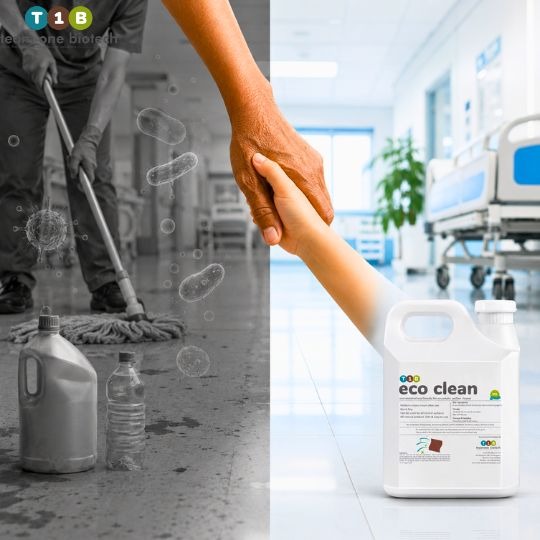
The Indian institutional context, and particularly the healthcare environment, carries specific burdens that Western facility management frameworks do not fully account for.
Footfall density in Indian government and private hospitals routinely exceeds international benchmarks. A 300-bed district hospital in a Tier-2 Indian city may receive between three and five times the patient-facing footfall of a comparably sized European facility. The organic load on floors, drains, and surfaces is proportionally higher. Cleaning protocols built around hourly phenyl application are not failing because of poor execution, they are failing because the chemistry is insufficient for the scale of the biological challenge.
Tropical humidity compounds this. Bacterial doubling times in warm, humid environments are significantly shorter than in temperate climates. A surface cleaned with phenyl at 7 AM may carry measurable microbial load by mid-morning without the enzymatic substrate elimination that a non-toxic hospital grade cleaner provides.
Additionally, contract housekeeping staff, the frontline of institutional cleaning across Indian hospitals, malls, schools, and corporate hubs, face cumulative exposure to phenolic compounds that occupational health frameworks are beginning to take seriously. Respiratory sensitization, dermatological impact, and neurological effects of chronic low-level phenol exposure are documented concerns that institutional employers carry liability for.
The shift toward facility management solutions built on bioenzyme platforms is therefore not altruism. It is institutional risk management.
Green Verticals and the Audit-Ready Hospital
NABH accreditation standards, green building certifications like IGBC and GRIHA, and institutional CSR frameworks are collectively pushing Indian healthcare and corporate campuses toward what is being termed the “Green Vertical”, an operational philosophy where environmental performance is embedded in daily facility management, not treated as a separate sustainability initiative.
Enzymatic cleaners sit naturally within this framework. Their biodegradable formulations introduce no persistent chemical load into water systems. Their compatibility with biological ETPs means your effluent treatment continues functioning as designed. Their low-VOC profiles improve indoor air quality, a metric increasingly captured in green audits for hospitals and enclosed commercial spaces.
For procurement heads evaluating facility management solutions against both operational and compliance criteria, enzymatic alternatives represent a defensible, audit-ready choice. The documentation trail, safety data sheets, biodegradability certifications, ETP compatibility assessments, is cleaner than anything a phenolic supplier can provide in the current regulatory environment.
Procurement decision approaching? Team One Biotech offers institutional procurement support including bulk supply programs, staff training on enzymatic application protocols, and compliance documentation packages. Speak to our B2B solutions team.
Addressing the Operational Objections
“Our cleaning staff is trained on phenyl-based protocols.”
Enzymatic application methods are comparable in equipment requirements and slightly simpler in dilution management. Training timelines for housekeeping staff on bioenzyme protocols are typically completed within a standard onboarding cycle.
“We need immediate kill for infection control.”
Enzymatic cleaners address the foundational driver of hospital-acquired infection risk, the organic substrate that supports pathogen colonization. For acute disinfection needs in surgical or isolation areas, enzymatic maintenance cleaning and targeted medical-grade disinfection are not mutually exclusive. The enzymatic system handles the sustained biological environment; targeted disinfectants handle acute events. This layered approach represents best-practice infection control, not a compromise.
“Phenyl is cheaper.”
The reapplication frequency required to maintain phenyl’s limited residual effect, combined with ETP remediation costs, staff health liabilities, and green audit penalties, routinely makes phenolic systems more expensive at the institutional scale when total cost of ownership is calculated honestly.
The Standard of Clean That Actually Protects
The pungent smell of phenyl is not the scent of safety. It is the scent of a chemical transaction that ends the moment the bucket is put away. Real cleanliness in a hospital ward, a school corridor, or a corporate atrium is biological, not olfactory. It is the absence of the substrate that pathogens need to survive, and that absence is only achievable through enzymatic action that works at the molecular level.
For facility managers, hospital administrators, and procurement heads navigating the complexity of Indian institutional environments, the footfall, the humidity, the regulatory pressure, the staff welfare obligations, the case for a bioenzyme cleaner hospital framework is no longer emerging. It has arrived.
Team One Biotech has built its institutional bioremediation practice on the premise that facilities should not have to choose between effective cleaning and responsible chemistry. The science has matured. The regulatory environment is moving. The only remaining variable is whether your facility gets ahead of that curve or catches up to it.
Team One Biotech provides institutional-grade bioenzyme cleaning solutions purpose-built for Indian healthcare, corporate, and educational facilities. Contact our facility management solutions team to schedule a site assessment, request a product trial, or access our compliance documentation library. Your facility’s biological environment deserves better than a surface-level solution.
All performance ranges cited in this article are general indicative values. Results may vary based on specific ETP configurations, ambient temperature and humidity conditions, application frequency, and site-specific microbial loads. Team One Biotech recommends a formal site assessment prior to protocol implementation.
Looking to improve your ETP/STP efficiency with the right bioculture?
Talk to our experts at Team One Biotech for customised microbial solutions.
Contact: +91 8855050575
Email: sales@teamonebiotech.com
Visit: www.teamonebiotech.com
Discover More on YouTube – Watch our latest insights & innovations!-
Connect with Us on LinkedIn – Stay updated with expert content & trends!