
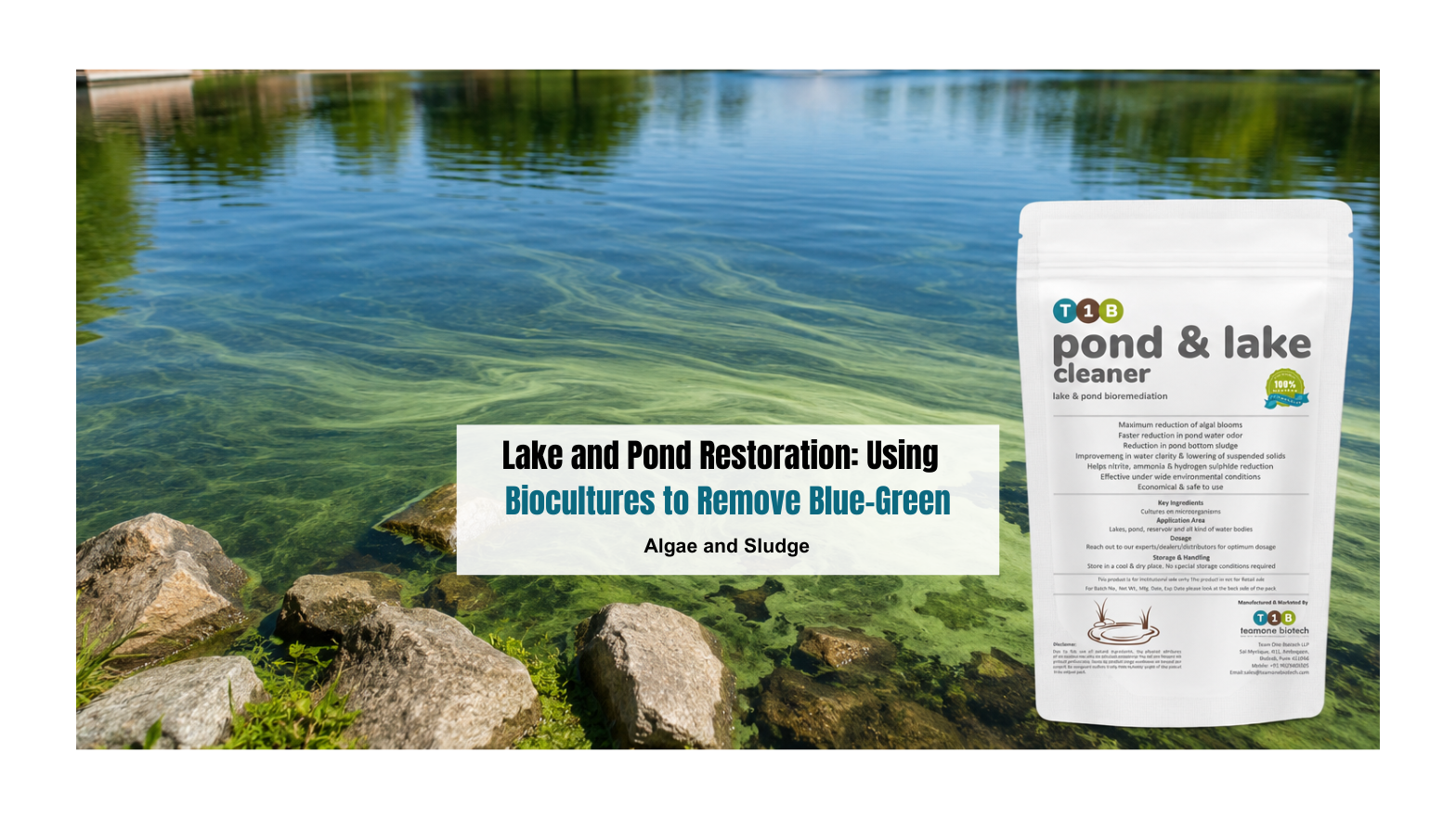

Lake and Pond Restoration: Using Biocultures to Remove Blue-Green Algae and Sludge
It happens before dawn. You walk to the pond edge at first light and the water is wrong, the surface is eerily still, a greenish-grey film stretched across it, and just below, hundreds of Rohu and Catla are gasping at the surface in a desperate search for oxygen. By the time you’ve assessed the damage, a significant portion of your stock is gone. No disease outbreak. No predator. Just a pond that silently suffocated overnight.
This is not a hypothetical. For commercial fish farmers across India, from the floodplain districts of West Bengal to the grow-out systems of Andhra Pradesh, sudden fish kills driven by dissolved oxygen crashes are an operational reality. The usual culprit? An unmanaged blue-green algae bloom that died off rapidly, crashed to the pond bottom, and consumed every molecule of available oxygen as it decomposed.
The instinctive response is to reach for an algicide. But chemical fixes applied in crisis mode create their own chain of problems: stress on surviving fish, disruption of beneficial microbial communities, residual toxicity, and, critically, zero resolution of the root cause. The dead organic matter is still there. The nutrient surplus feeding the next bloom is still there. The benthic sludge is still building.
This is precisely where biological treatment for pond restoration changes the entire calculus. Instead of suppressing symptoms, it targets the underlying biogeochemical imbalance that makes ponds catastrophically vulnerable in the first place.
How Algae Becomes Sludge Becomes a Death Trap
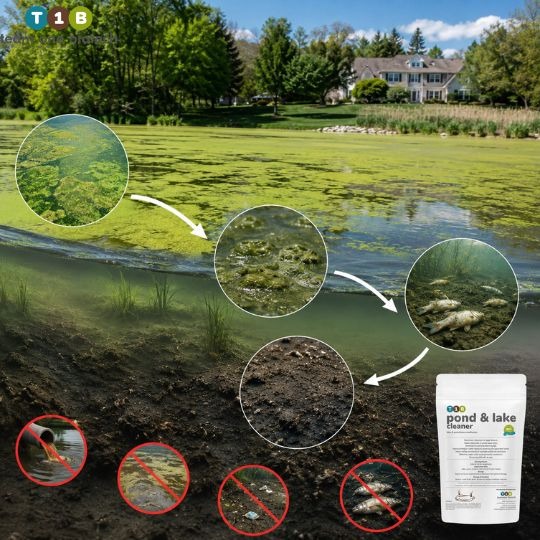
Blue-green algae, correctly called cyanobacteria, are not true algae. They are photosynthetic bacteria with a remarkable and troublesome set of survival traits. Unlike green algae, they can fix atmospheric nitrogen, allowing them to thrive even when dissolved nitrogen is low. They produce gas vesicles that let them migrate vertically through the water column, hoarding light and blocking it from competitors. Under Indian summer conditions, water temperatures routinely exceeding 30°C from March through June, cyanobacteria like Microcystis aeruginosa, Anabaena spp., and Oscillatoria spp. can double their population in a matter of days.
When conditions shift, a heavy overnight cloud cover, a sudden monsoon rain cooling the surface, or simply the exhaustion of available nutrients, the bloom collapses. Billions of cells sink to the pond floor. The microbial decomposition of this biomass is aerobic initially, stripping dissolved oxygen from the water column at rates that can outpace natural replenishment entirely. What remains after decomposition under anaerobic conditions is the characteristic black, sulfurous benthic sludge familiar to any experienced farmer: a toxic, oxygen-depleted layer that continues emitting hydrogen sulfide and ammonia for weeks or months.
The cycle then repeats. Decomposing sludge releases the phosphorus and nitrogen that were locked inside algal cells, directly fueling the next bloom.
Species-Specific Risks in Indian Aquaculture Systems
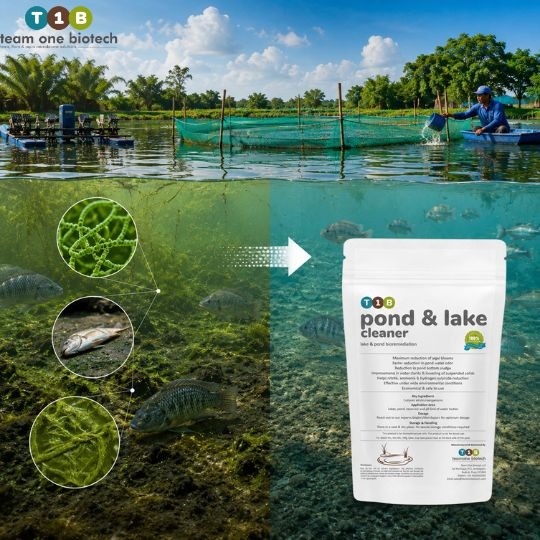
Understanding which species face the greatest physiological stress from this cycle matters enormously for farm management decisions.
Indian Major Carps (Rohu, Catla, Mrigal)
Among IMC, Mrigal (Cirrhinus mrigala) is particularly exposed. As a natural bottom-feeder, Mrigal forages directly in the sediment layer, the precise zone where hydrogen sulfide concentrations are highest and dissolved oxygen is lowest in a sludge-heavy pond. Chronic sub-lethal exposure manifests as suppressed immunity, poor feed conversion, and reduced growth rates, often misdiagnosed as nutritional deficiency. Catla, a surface feeder, faces a different threat: it is among the first species to show visible distress when a dying algal mat depletes surface-layer oxygen overnight.
Pangasius and Tilapia in High-Density Systems
Pangasius (Pangasianodon hypophthalmus) farming in India typically operates at stocking densities that generate substantial daily organic waste loads. In these systems, uneaten feed and fecal matter accumulate faster than natural microbial communities can process them. The result is accelerated sludge formation, often progressing from clean pond bottom to significant benthic organic accumulation within a single production cycle. Tilapia, though comparatively hardier, is not immune: in intensive systems with inadequate aeration, ammonia toxicity from sludge decomposition can suppress growth performance across an entire batch.
Hatchery Environments: The Most Unforgiving Scenario
Fry and fingerlings operate on zero margin. Their gill surface area relative to body weight is far higher than grow-out fish, meaning ammonia and nitrite exposure translates to physiological damage at concentrations that mature fish would tolerate. Chemical algicide treatments, particularly copper sulfate, carry real risks in hatchery environments due to species-specific toxicity windows. This makes biological treatment not merely preferable in hatchery settings, but often the only genuinely safe intervention option.
The Bioculture Solution: Restoring Microbial Balance From the Bottom Up
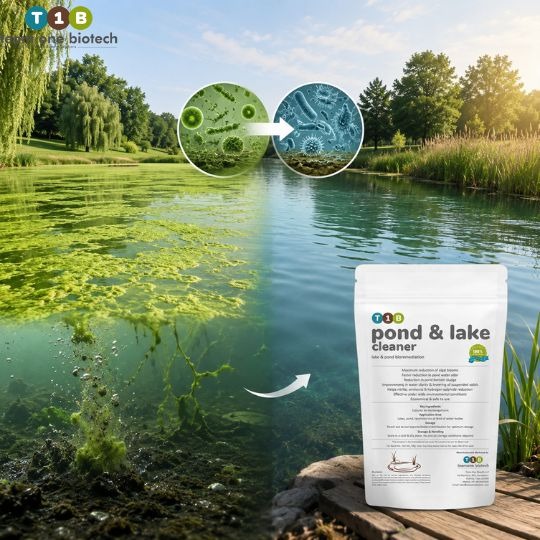
Pond restoration biological treatment works through three interlocking mechanisms that address the root causes rather than surface symptoms.
Organic Carbon Degradation: Formulated biocultures containing heterotrophic bacteria, including strains of Bacillus, Pseudomonas, and Nitrosomonas groups, colonize the benthic layer and begin enzymatically breaking down the organic sludge. Complex proteins, lipids, and cellulose from feed waste and decomposed algae are metabolized into carbon dioxide and water rather than toxic gases. Over a sustained treatment schedule, benthic sludge depth reduces measurably, and hydrogen sulfide emissions drop significantly. Under typical Indian grow-out conditions, this process may reduce sludge accumulation by roughly 40% to 70% over a full production cycle. Note: These are general values and operational outcomes will vary based on the specific pond ecosystem, stocking density, biomass load, feeding rates, and unique parameters of individual aquaculture systems or Effluent Treatment Plants (ETPs).
Nutrient Competition Against Cyanobacteria: Healthy, high-density bacterial populations in the water column compete directly with cyanobacteria for dissolved inorganic phosphorus and ammonium, the primary nutrients driving bloom formation. By reducing the bioavailable nutrient pool, biocultures can suppress bloom intensity and delay bloom onset during high-risk temperature windows. This competitive exclusion mechanism is far more durable than chemical algicide application, which eliminates active competition along with target organisms.
Nitrification and Ammonia Control: Nitrifying bacterial communities convert toxic ammonia (NH₃) to nitrite and then to relatively benign nitrate. In well-managed biological treatment programs, total ammonia nitrogen may decrease by roughly 50% to 75% across a treatment cycle, with corresponding improvements in fish behavior, feed uptake, and survival rates by around 15% to 30%. Note: These are general values and operational outcomes will vary based on the specific pond ecosystem, stocking density, biomass load, feeding rates, and unique parameters of individual aquaculture systems or Effluent Treatment Plants (ETPs).
If you are managing active sludge accumulation or early bloom signals in your ponds right now, contact Team One Biotech for an immediate water quality assessment and a targeted bioculture application protocol designed for your specific system.
Chemical Algicides vs. Biological Treatment: A Direct Comparison
| Factor | Chemical Algicide Treatment | Pond Restoration Biological Treatment |
| Speed of visible action | Fast (24–72 hours) | Progressive (2–4 weeks for measurable improvement) |
| Root cause resolution | None, treats symptom only | Yes, degrades sludge, reduces nutrient load |
| Species safety | Variable; toxic windows for some species | Broad-spectrum safe, including fry stages |
| Effect on beneficial microbiome | Disruptive; kills non-target bacteria | Supportive; introduces and amplifies beneficial strains |
| Residual toxicity risk | Present; accumulates with repeated use | Negligible |
| Long-term bloom recurrence | High, nutrients remain available | Reduced, nutrient competition limits rebloom |
| Regulatory compliance risk | Moderate to high depending on compound | Low |
| Cost trajectory | Escalating (dependency cycle) | Stabilizing over time |
Indian Climate Realities: The Challenges Biocultures Are Built For
Indian aquaculture operates in one of the most demanding climatic envelopes in the world for pond management.
Pre-Monsoon Heat Stress: Between April and June, surface water temperatures in many Indian farming states regularly exceed 32°C to 35°C. At these temperatures, cyanobacteria growth accelerates dramatically while dissolved oxygen saturation capacity of water drops, a dangerous convergence. Proactive bioculture dosing beginning in late March creates an established competing microbial population before bloom pressure peaks.
Monsoon Nutrient Loading: The first heavy monsoon rains flush enormous quantities of agricultural runoff, carrying nitrogen and phosphorus from fertilized fields, directly into aquaculture water bodies. This sudden nutrient pulse can trigger explosive eutrophication within days. Bioculture programs with active nutrient assimilation capacity buffer this loading event, processing incoming nitrogen and phosphorus before cyanobacteria can exploit it.
Feed Management and Waste Accumulation: Indian aquaculture feeding practices, particularly in smaller semi-intensive operations, often involve manual broadcast feeding with variable precision. Uneaten feed settling to the pond floor is a consistent and major driver of benthic sludge accumulation. Biocultures that actively degrade settled organic matter reduce this accumulation continuously rather than allowing it to compound across months.
From Reactive Crisis Management to Preventive Biological Maintenance
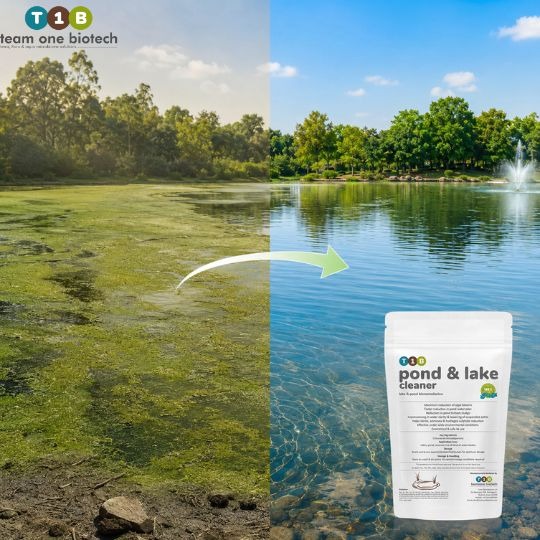
The farmers who experience the worst fish kills are almost universally those managing their ponds reactively, responding to crises as they emerge rather than maintaining the biogeochemical conditions that prevent crises from developing.
A preventive biological maintenance schedule built around aquaculture bioremediation involves routine bioculture applications calibrated to stocking density and feeding rates, periodic dissolved oxygen and ammonia monitoring, and pre-positioned treatment protocols for high-risk periods like peak summer and early monsoon. This shift from emergency response to biological maintenance is what separates consistently profitable aquaculture operations from those that recover ground each season.
The science is established. The results, across thousands of commercial ponds in India, are consistent.
Work With Team One Biotech: Custom Protocols for Your Pond System
Every pond is a distinct ecosystem. Stocking species, density, feed quality, water source, and local climate all shape the biological dynamics that determine treatment outcomes.
Team One Biotech’s aquaculture specialists provide site-specific water quality analysis, species-matched bioculture formulations, and ongoing technical support designed for the realities of Indian aquaculture management, from hatchery operations to high-density Pangasius grow-out systems.
Reach out to our technical team today to schedule a pond assessment and develop a biological treatment protocol that protects your stock, reduces your chemical dependency, and builds long-term productivity into your water management system.
Looking to improve your ETP/STP efficiency with the right bioculture?
Talk to our experts at Team One Biotech for customised microbial solutions.
Contact: +91 8855050575
Email: sales@teamonebiotech.com
Visit: www.teamonebiotech.com
Discover More on YouTube – Watch our latest insights & innovations!-
Connect with Us on LinkedIn – Stay updated with expert content & trends!