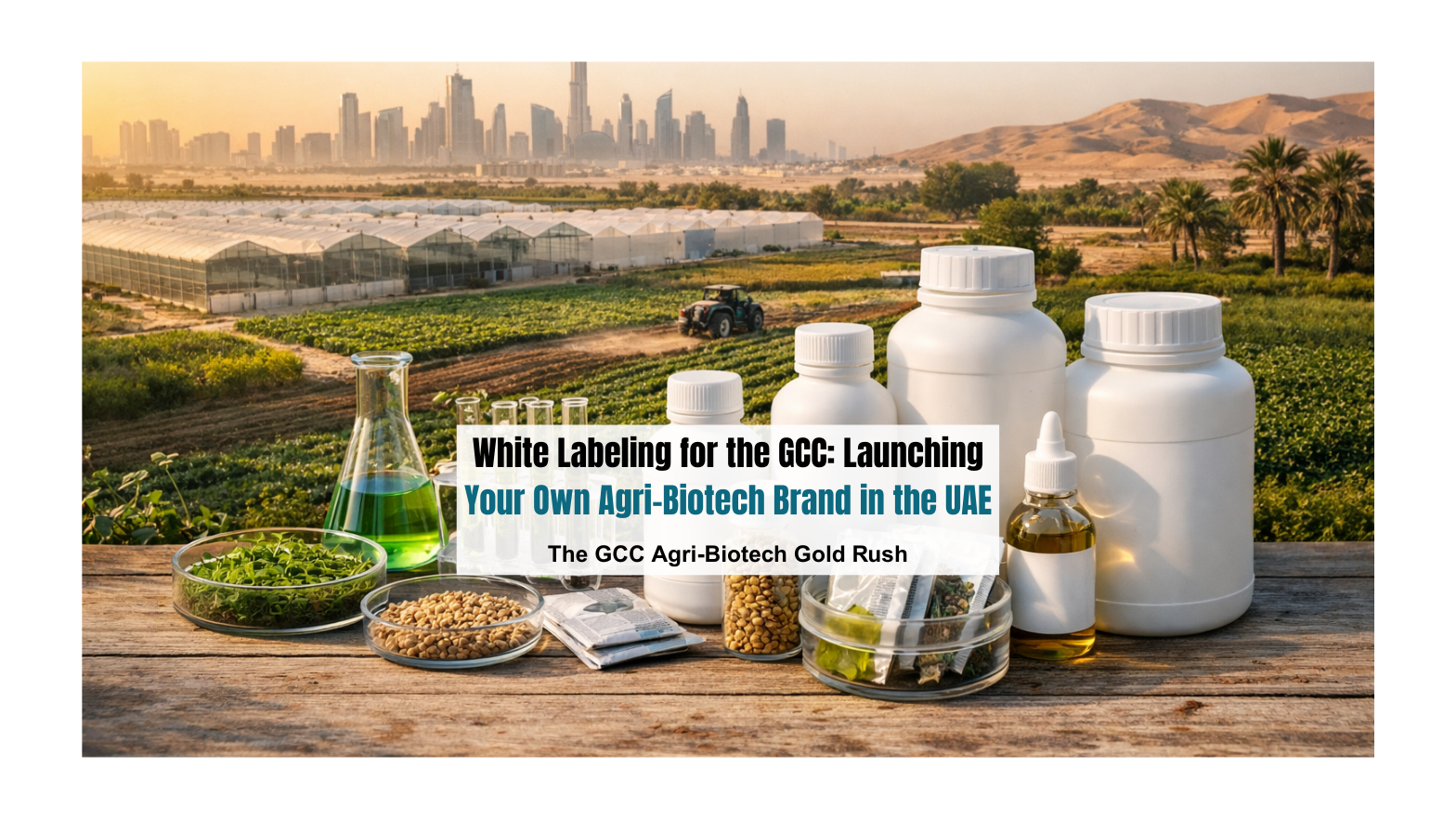
White Labeling for the GCC: Launching Your Own Agri-Biotech Brand in the UAE

The United Arab Emirates is rewriting the rulebook on food production. In a nation where less than 1% of land is arable, vertical farms rise from desert sand, aquaculture facilities operate in former oil infrastructure, and government mandates are driving billions into agricultural innovation. This is not incremental progress, this is a fundamental reimagining of food security in one of the world’s most resource-constrained environments.

For investors and farm operators across the GCC, the moment has arrived. UAE Vision 2031 and the National Food Security Strategy 2051 have created a policy environment where sustainable Agri-Tech is not just encouraged, it’s essential. The question is no longer whether to invest in biological solutions for farming and aquaculture, but how to capture market share before the opportunity window closes.

The answer lies in Agri-Biotech white labeling UAE, a strategic pathway that allows you to launch your own branded bioremediation and probiotic solutions without the decade-long R&D cycle, regulatory navigation, or manufacturing infrastructure typically required.

The GCC Agri-Biotech Gold Rush: Why This Moment Matters

The GCC Agri-Biotech Gold Rush: Why This Moment Matters

The convergence of three powerful forces has created an unprecedented opportunity for Agri-Tech entrepreneurs in the Emirates:

Policy-Driven Demand
The UAE government has committed to increasing local food production from 30% to 50% by 2031. Dubai’s Food Security Strategy specifically prioritizes sustainable farming technologies that reduce water consumption and chemical dependence. These are not aspirational goals, they are backed by sovereign wealth fund investment and regulatory incentives.

Environmental Necessity
Traditional agriculture faces insurmountable challenges in the GCC climate. Summer temperatures routinely exceed 45°C, groundwater salinity levels can reach 15,000 ppm, and water scarcity makes conventional chemical-intensive farming economically unsustainable. Bioremediation for aquaculture and probiotic soil amendments are not premium add-ons, they are survival requirements.

Market Vacuum
While demand for biological solutions is exploding, most international biotech brands treat the Middle East as an afterthought. Distribution is fragmented, products are often poorly adapted to extreme salinity and heat conditions, and technical support is minimal. The entrepreneur who establishes a credible “Made in UAE” biotech brand with localized formulations will dominate this emerging market.

What Is White Labeling? Your Fast Track to Market Leadership

What Is White Labeling? Your Fast Track to Market Leadership

White labeling allows you to sell proven, scientifically validated products under your own brand name. Rather than spending years developing formulations, navigating biosafety approvals, and building manufacturing capacity, you partner with an established biotech producer who handles the complex backend while you focus on brand building and customer relationships.

Here is what Agri-Biotech white labeling UAE specifically means for your business:

Skip the Lab Phase
Team One Biotech (T1B) has already invested in the R&D infrastructure, microbial strain selection, fermentation protocols, and stability testing required for commercial-grade bioremediation products. Your partnership grants immediate access to formulations proven in field trials across Asia, Africa, and the Middle East.

Regulatory Shortcut
Product registrations with UAE Ministry of Climate Change and Environment (MOCCAE) and similar GCC regulatory bodies can take 18-24 months. T1B’s existing compliance frameworks and documentation accelerate this timeline significantly, getting your branded products into customers’ hands faster.

Customization Without Complexity
Need specific bacterial strain combinations for high-salinity shrimp ponds? Want packaging sizes optimized for UAE vertical farms? White label partnerships allow formulation customization and regional adaptation without building your own lab team.

Capital Efficiency
Manufacturing biotechnology products requires bioreactor facilities, quality control laboratories, cold chain logistics, and specialized personnel. White labeling converts these massive capital expenditures into manageable operational costs, preserving your investment capital for marketing and customer acquisition.

The Aquaculture Opportunity: Where Biotech Delivers Immediate ROI

The Aquaculture Opportunity: Where Biotech Delivers Immediate ROI

The GCC’s sustainable farming GCC revolution is particularly pronounced in aquaculture. The UAE alone has committed to tripling domestic seafood production by 2030, with major expansions in shrimp farming, seabass cultivation, and recirculating aquaculture systems (RAS).

This creates massive demand for probiotic water treatment UAE solutions that address the sector’s most pressing operational challenges:

Water Quality Management
In intensive aquaculture systems operating in the Arabian Gulf’s high-salinity conditions, ammonia and nitrite accumulation can reach toxic levels within 48 hours. Probiotic bioremediation products containing Bacillus and Lactobacillus strains rapidly convert these toxic compounds into harmless nitrates, maintaining stable water parameters even at stocking densities that would crash conventional systems.

Feed Conversion Ratio Improvement
Feed costs represent 60-70% of aquaculture operating expenses. Probiotic supplements added to feed or water improve gut health in shrimp and fish, enhancing nutrient absorption and reducing feed requirements by 12-18%. For a mid-scale operation producing 500 tons annually, this translates to AED 400,000+ in annual savings.

Disease Suppression
Vibrio outbreaks, Early Mortality Syndrome (EMS), and white spot syndrome virus (WSSV) can destroy entire harvest cycles. Probiotic water treatment establishes beneficial bacterial populations that outcompete pathogenic species through competitive exclusion, dramatically reducing disease incidence without antibiotics.

Sludge Reduction
Organic waste accumulation in pond bottoms creates anaerobic conditions that produce hydrogen sulfide and methane, toxic gases that stress aquatic animals and reduce yields. Specialized bioremediation products accelerate sludge decomposition, maintaining healthy pond environments and extending operational cycles before cleanout becomes necessary.

For an Agri-Tech investment Dubai portfolio, aquaculture biotech offers something rare: measurable, immediate returns. Farm operators can quantify improvements in water quality, survival rates, and feed efficiency within a single production cycle, making the value proposition undeniable.

Beyond Aquaculture: Terrestrial Agriculture Applications

Beyond Aquaculture: Terrestrial Agriculture Applications

While aquaculture represents the fastest ROI opportunity, the broader agricultural sector in the GCC is equally hungry for biological solutions:

Desert Soil Rehabilitation
Emirate soils are predominantly sandy, low in organic matter, and high in salt content. Microbial soil amendments containing nitrogen-fixing bacteria, phosphate-solubilizing organisms, and organic matter decomposers transform marginal soils into productive growing media for greenhouse operations and controlled-environment agriculture.

Vertical Farm Optimization
The UAE leads the Middle East in indoor farming infrastructure. However, closed-loop hydroponic and aeroponic systems face unique challenges with biofilm formation and root disease pressure. Probiotic inoculants designed for soilless systems prevent Pythium and Fusarium outbreaks while maintaining optimal nutrient availability.

Date Palm Plantation Management
As the UAE’s agricultural heritage crop, date cultivation faces increasing pressure from red palm weevil infestations and declining soil fertility. Biological control agents and soil probiotics offer sustainable solutions that preserve the cultural and economic value of this critical sector.

The White Label Launch Roadmap: Your 6-Month Path to Market

Establishing your branded Agri-Biotech presence in the UAE requires strategic execution across six critical phases:

Phase 1: Market Positioning and Brand Development (Month 1)

Define your target customer segment: Are you serving commercial shrimp farms, greenhouse operators, or government agricultural initiatives? Your brand identity, messaging, and product portfolio must align with specific customer pain points.

Develop brand assets: company name, logo, packaging design that communicates both scientific credibility and regional relevance. The most successful UAE biotech brands balance modern biotechnology imagery with cultural authenticity.

Phase 2: Product Selection and Customization (Month 1-2)

Partner with T1B to identify which formulations best match your market segment and environmental conditions. For GCC aquaculture, prioritize products proven in high-salinity, high-temperature conditions.

Specify any regional customizations: packaging sizes, application instructions in Arabic, concentration adjustments for local water chemistry. This is where white labeling’s flexibility delivers competitive advantage.

Phase 3: Regulatory Navigation (Month 2-4)

Initiate product registration processes with UAE MOCCAE and equivalent bodies in target GCC markets (Saudi Food and Drug Authority, Kuwait EPA). Your white label partner should provide technical documentation, safety data sheets, and efficacy studies to support applications.

For aquaculture products specifically, engage with local fish health authorities early. Demonstrating antibiotic-free disease management aligns perfectly with GCC food safety priorities.

Phase 4: Manufacturing and Quality Verification (Month 3-4)

Place your initial production order with specifications for branded packaging. For UAE market entry, most entrepreneurs start with container-load quantities (20-foot refrigerated container) to balance inventory investment with per-unit costs.

Before committing to large-scale orders, leverage the Team One Biotech Official Alibaba Store to sample products and verify quality. This strategic gateway allows you to test formulations in your specific environmental conditions, conduct small-scale trials with target customers, and validate efficacy claims before investing in branded bulk orders.

Phase 5: Market Entry and Customer Acquisition (Month 4-6)

Launch with a focused pilot program: identify 3-5 early adopter customers willing to conduct side-by-side trials comparing your products against current solutions. Document improvements in water quality parameters, survival rates, or crop yields with data and testimonials.

Invest in technical sales support. GCC farm operators are sophisticated buyers who demand proof. Your ability to provide application guidance, troubleshoot challenges, and quantify ROI will differentiate your brand from generic import competitors.

Phase 6: Scale and Geographic Expansion (Month 6+)

Once you have established case studies and customer references in the UAE, geographic expansion into Saudi Arabia, Oman, Qatar, and Kuwait becomes substantially easier. GCC countries share similar environmental challenges, creating natural product-market fit across the region.

Consider vertical integration into complementary services: water quality testing, farm management consulting, or integrated pest management programs that position your branded products within comprehensive solutions.

Why Team One Biotech Is Your Ideal White Label Partner

The success of your Agri-Biotech white labeling UAE strategy depends entirely on your manufacturing partner’s capabilities. Team One Biotech offers several critical advantages:

Proven Middle Eastern Experience
Unlike biotech manufacturers focused exclusively on Asian or Western markets, T1B has extensive operational history in high-salinity, high-temperature environments similar to the GCC. Products are proven in conditions that mirror UAE aquaculture and agricultural realities.

Flexible Minimum Order Quantities
Many international biotech companies require prohibitively large initial orders. T1B’s white label program accommodates emerging brands with realistic MOQs that allow market validation before massive capital commitment.

Technical Support Infrastructure
Your brand’s reputation depends on effective customer support. T1B provides technical training, application protocols, and troubleshooting guidance that enables your team to deliver professional service even without extensive microbiology backgrounds.

Formulation Customization
The ability to adjust strain combinations, concentration levels, and carrier formulations for specific GCC applications creates genuine differentiation. Your competitors selling off-the-shelf imports cannot match products optimized for local conditions.

The Gateway: T1B Official Alibaba Store

Before committing to full white label partnership, prudent entrepreneurs validate product quality and market fit. The Team One Biotech Official Alibaba Store serves as your strategic entry point:

Sample and Test
Order commercial samples of T1B’s core aquaculture and agriculture products. Conduct trials in your target customers’ actual operations to generate preliminary efficacy data before branding investment.

Build Confidence
Alibaba’s transaction security, product ratings, and verified supplier status reduce risk for international partners. Review existing customer feedback and product performance data from global buyers.

Establish Relationship
Use initial sample orders to evaluate T1B’s responsiveness, technical knowledge, and willingness to customize solutions. The best white label partnerships are built on trust and communication, start small and scale strategically.

The Vision: Building a Regional Biotech Powerhouse

The UAE’s transformation from resource importer to agricultural innovator represents more than food security policy, it is a fundamental economic diversification strategy. The entrepreneurs who establish credible, locally-relevant Agri-Biotech brands in this environment are positioning themselves at the center of a multi-billion dirham market expansion.

Agri-Tech investment Dubai is no longer about betting on uncertain technologies. The science is proven. The regulatory environment is supportive. The customer demand is urgent and growing.

What remains is execution: partnering with the right biotech manufacturer, building a brand that resonates with GCC values and priorities, and delivering measurable value to farm operators facing unprecedented environmental challenges.

White labeling eliminates the traditional barriers, time, capital, expertise, that have kept regional entrepreneurs out of the biotech sector. The pathway is clear. The opportunity window is open.

The question is simple: Will you watch the GCC Agri-Biotech revolution unfold, or will you build a brand that defines it?

Ready to Launch Your Agri-Biotech Brand?

Team One Biotech partners with visionary entrepreneurs and farm operators across the GCC who are ready to establish market-leading biological solutions for agriculture and aquaculture.

Contact us today to discuss white label opportunities, request product samples through our Official Alibaba Store, or schedule a consultation about customized formulations for UAE environmental conditions.

The future of sustainable farming in the Emirates is biological. Your branded presence in this market starts now.

Looking to improve your ETP/STP efficiency with the right bioculture?
Talk to our experts at Team One Biotech for customised microbial solutions.

Contact+91 8855050575

Email:  sales@teamonebiotech.com

Visit: www.teamonebiotech.com

Discover More on YouTube – Watch our latest insights & innovations!-

Connect with Us on LinkedIn – Stay updated with expert content & trends!

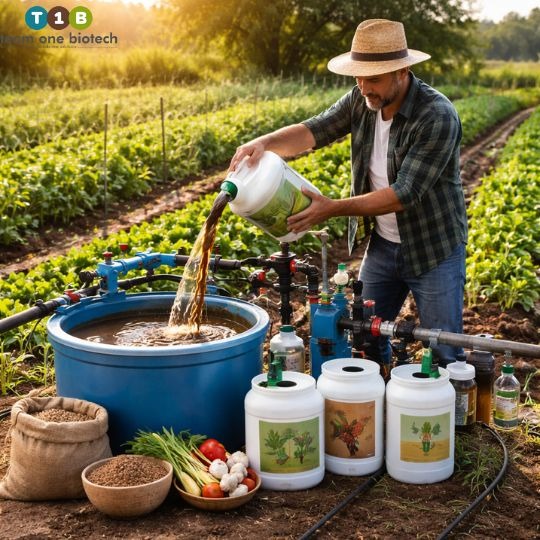
Bio-fertilizers for Drip Irrigation: Benefits and Best Practices

Ramesh Patil had done everything right. Or so he thought.

The 48-year-old sugarcane farmer from Sangli district had invested heavily in drip irrigation five years ago, convinced it would solve his water problems and boost yields. He’d followed the advice of every fertilizer dealer in the market, pumping his fields with potassium nitrate, phosphoric acid, and urea through those precision emitters. His soil test reports showed adequate NPK levels. Yet, season after season, his yields plateaued and then began to decline.

The earth had become hard. Unresponsive. Dead.

What Ramesh didn’t know, what thousands of Indian farmers are only now discovering, is that he’d been feeding the plant while starving the soil. His drip system, that marvel of modern agriculture, had become a delivery mechanism for a slow poisoning. The chemical salts had built up. The soil pH had crashed. And most critically, the billions of microorganisms that once made his soil alive had simply disappeared.

This is the hard earth reality facing Indian agriculture today. But it’s also the doorway to a profound transformation, one that begins not with more chemicals, but with restoring the biological intelligence of our soils through bio-fertilizers in drip irrigation.

To understand how to implement these biological solutions in your own fields, read our full report: The Future of Indian Farming: A Guide to Bio-fertilizers and Soil Health.

The Silent Crisis in Indian Soils

Let’s speak plainly about what’s happening beneath our feet.

The Punjab breadbasket, which fed the Green Revolution, now suffers from such severe micronutrient deficiency and organic carbon depletion that wheat yields have stagnated for over a decade. In Maharashtra’s grape belt, soil salinity has rendered thousands of hectares marginal. Cotton farmers in Vidarbha pump more DAP every year while watching their input costs devour their profits and their soil structure collapse into powder.

The government’s Soil Health Card scheme has confirmed what traditional farmers always knew: healthy soil is living soil. Current data shows that over 60% of Indian agricultural soils are deficient in organic carbon, with levels below the critical 0.5% threshold. When organic matter dies, so does the soil’s capacity to hold water, cycle nutrients, or support plant immunity.

Chemical fertilizers deliver nutrients, yes, but they’re hardware without software. They don’t build soil structure. They don’t create nutrient banks. They don’t protect roots from pathogens or help crops withstand drought stress. They’re a transaction, not a relationship.

Bio-fertilizers, by contrast, are the soil’s software engineers.

Understanding the Science of Bio-Fertigation

Understanding the Science of Bio-Fertigation

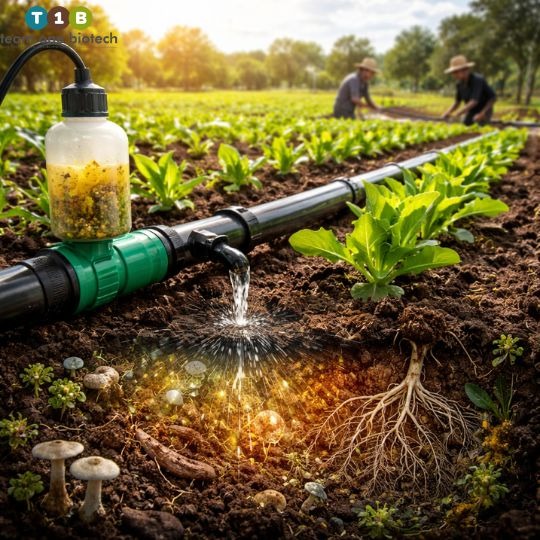
Fertigation, the practice of delivering fertilizers through irrigation systems, revolutionized precision agriculture. When you combine this precision with biological inputs rather than chemical ones, you create something entirely new: a living delivery system that rebuilds soil health while feeding crops.

Here’s how the science works:

Nitrogen Fixation Through the Drip Line

Liquid bio-fertilizers containing Azotobacter and Rhizobium species don’t just supply nitrogen, they colonize the root zone and manufacture it from atmospheric sources. When delivered through drip irrigation, these bacteria establish themselves in the exact zone where root activity is highest. In a properly managed system, these microbes can fix 20-30 kg of nitrogen per hectare per season, reducing chemical nitrogen dependence by up to 25%.

Phosphorus Solubilization at the Emitter Point

Phosphate-solubilizing bacteria (PSB) like Bacillus megaterium and Pseudomonas species work differently than DAP. They don’t add phosphorus, they unlock what’s already there. Indian soils often contain 300-500 kg of bound phosphorus per hectare that plants cannot access. PSB produce organic acids that release this locked phosphate, making it bioavailable exactly where the drip emitter creates that moist, active root zone.

The Potassium Connection

Potash-mobilizing bacteria work on the same principle, transforming insoluble potassium minerals in the soil into plant-available forms. This is particularly crucial for crops like pomegranate and grapes, which are heavy potassium feeders.

The beauty of bio-fertigation is precision meets biology. You’re not broadcasting microbes across a field and hoping they survive. You’re placing them, with water, directly into the active root zone where they can immediately begin their work.

The Technical Challenge: Making Biology Work in Drip Systems

The Technical Challenge: Making Biology Work in Drip Systems

Here’s where many farmers stumble, and understandably so. Drip irrigation systems are engineered for liquid chemicals, inert, stable, predictable. Living organisms are none of these things. They need oxygen. They can clump. They can potentially clog those tiny emitter holes that cost thousands of rupees per acre to install.

But these challenges are entirely solvable with proper technique.

Filtration is Non-Negotiable

Your drip system should already have screen or disc filters for preventing sediment clogging. For bio-fertilizers, these same filters work, but you need to be more vigilant. Use filters in the 120-200 mesh range. After applying bio-fertilizers, flush the system with clean water for 10-15 minutes. This prevents any bacterial biomass from settling in the laterals overnight.

Quality liquid bio-fertilizers formulated for fertigation should have minimal suspended solids. If you’re seeing thick sludge or sediment in the bottle, that’s a red flag about manufacturing quality.

Timing Matters More Than You Think

Apply bio-fertilizers during the cooler parts of the day, early morning before 9 AM or late evening after 5 PM. This isn’t just folklore. UV radiation kills beneficial bacteria. High temperatures stress them. Applying during midday in the Indian summer is essentially sterilizing your product in the field.

Moreover, cooler temperatures mean the irrigation water itself is cooler, and these microorganisms are sensitive to thermal shock. Water temperature above 35°C significantly reduces bacterial survival.

The Farmer’s Manual: Best Practices for Bio-Fertigation

The Farmer's Manual: Best Practices for Bio-Fertigation

Let me give you a protocol that works, tested across thousands of acres from Nashik’s grape farms to Davangere’s cotton fields.

Pre-Application: The Jar Test

Before you inject any bio-fertilizer into your system, do this simple compatibility test. Take a clean glass jar. Add 100 ml of your irrigation water. Add the recommended dose of bio-fertilizer. If you’re using any other inputs, add them in sequence. Wait 30 minutes.

What you’re looking for: the solution should remain uniformly mixed without precipitation, flocculation, or phase separation. If you see particles settling or layers forming, you have a chemical incompatibility. Bio-fertilizers are generally incompatible with strongly acidic fertilizers (pH below 4) or heavy metal-containing compounds.

Application Protocol

Step 1: Irrigate First Run your drip system with plain water for 15-20 minutes. This primes the soil, creates uniform moisture, and ensures your emitters are functioning properly.

Step 2: Prepare the Bio-Fertilizer Solution In a clean container, mix the liquid bio-fertilizer with water at the manufacturer’s recommended dilution. For most products, this is 2-5 liters per acre diluted in 50-100 liters of water. Never mix concentrated bio-fertilizer directly into your fertilizer tank.

Step 3: Inject and Monitor Using your venturi system or fertilizer tank, inject the bio-fertilizer solution over 30-45 minutes. This slow injection ensures even distribution. Walk your field and check that all emitters are flowing uniformly.

Step 4: Flush the System This is the step farmers skip, and it’s costly. After bio-fertilizer injection, continue irrigation with clean water for another 15-20 minutes. This pushes the solution out of the laterals and into the root zone, preventing microbial buildup in the lines.

Storage Discipline

Liquid bio-fertilizers are living products with shelf lives. Store them in a cool, shaded location, never in direct sunlight or in a tin shed where summer temperatures exceed 40°C. Most products remain viable for 12-18 months if stored properly, but check expiration dates. A dead bio-fertilizer is just expensive water.

Frequency and Dosage

For crops like sugarcane and cotton with 5-6 month growth cycles, apply bio-fertilizers through drip every 20-30 days during active growth phases. For perennials like pomegranate and grapes, monthly applications during the growing season yield best results. The key is consistency, you’re building a microbial community, not delivering a one-time nutrient hit.

Chemical Fertigation vs. Bio-Fertigation: The Real Comparison

ParameterChemical FertigationBio-Fertigation
Nutrient DeliveryImmediate, directGradual, continuous through microbial activity
Soil ImpactIncreases salinity, reduces pH, depletes organic matterImproves structure, increases organic carbon, balances pH
Cost Over TimeEscalating (resistance, degradation)Decreasing (builds soil fertility)
Water RequirementHigh (leaching needed)Lower (improved moisture retention)
Crop ImmunityNoneEnhanced through root colonization
Compatibility IssuesAcidic products can corrodeMinimal if pH managed
Residual EffectNoneMicrobial populations persist season-to-season
Environmental ImpactGroundwater contamination, emissionsRegenerative, carbon-sequestering

This table tells a story. Chemical fertigation is a sprint that exhausts the runner. Bio-fertigation is training that builds endurance.

The Bioremediation Dimension: Healing Damaged Soils

The Bioremediation Dimension: Healing Damaged Soils

Here’s where we need to talk about soils that are already compromised, and there are millions of hectares in this category across India.

Bioremediation is the use of living organisms to restore degraded environments. In agriculture, it means using specific microbial consortia to reverse chemical damage, break down pesticide residues, and rebuild soil organic matter.

Consider a cotton field in Yavatmal that’s received heavy applications of chemical fertilizers and pesticides for 20 years. The soil is compacted, acidic, and biologically depleted. You can’t fix this overnight with compost or organic matter alone, you need microbial intervention to restart the biological processes that make soil healthy.

This is where specialized bio-fertilizers go beyond simple nutrient provision. Products containing diverse microbial communities, nitrogen fixers, phosphate solubilizers, potash mobilizers, and cellulolytic bacteria, work together to:

  • Break down accumulated chemical residues
  • Restore soil pH through organic acid production
  • Rebuild soil structure through bacterial exopolysaccharides
  • Restart nutrient cycling that has been dormant

Think of it as rebooting the soil’s operating system. You’re not just adding inputs, you’re restoring function.

The beauty of delivering these bioremediation agents through drip irrigation is precision. You can target specific problem areas. You can monitor recovery through root zone sampling. And because you’re delivering regularly with irrigation, you maintain consistent microbial populations rather than relying on a single broadcast application that degrades over time.

Why This Matters Now: The Economic and Ecological Imperative

Let’s return to Ramesh Patil, our sugarcane farmer. After learning about bio-fertigation, he made a simple calculation.

His annual chemical fertilizer bill through drip: ₹45,000 per acre. His yield: 85 tons per acre, declining. His soil: degraded, requiring increasing inputs each year.

He switched to an integrated approach, 60% of his previous chemical fertilizers plus regular bio-fertilizer applications. First season cost: ₹38,000 per acre. Yield: 87 tons. Soil organic carbon: increased from 0.42% to 0.51% (measured via Soil Health Card).

Second season: ₹35,000 per acre. Yield: 92 tons. Water requirement: reduced by 12% due to improved soil moisture retention.

Third season: ₹32,000 per acre. Yield: 95 tons. Disease pressure: noticeably reduced.

The economics work because biology compounds. Chemical inputs deplete and require more. Biological inputs build and require less.

Moving Forward: Your Soil’s Future Starts Today

The transition to bio-fertigation isn’t about abandoning modern agriculture, it’s about upgrading it. Your drip system isn’t the problem; it’s the solution delivery mechanism. The question is: what are you delivering?

Indian farming stands at an inflection point. We can continue down the path of increasing chemical dependence, declining soil health, and marginal economics. Or we can recognize that the most sophisticated agricultural technology isn’t in a factory, it’s in the soil, waiting to be awakened.

Bio-fertilizers through drip irrigation represent the convergence of precision agriculture and biological intelligence. They’re not a return to the past, but a step into a more sophisticated future where we work with nature’s systems rather than against them.

Your soil is not dead. It’s dormant. And every time you run that drip line, you have a choice: suppress or support, deplete or restore, extract or regenerate.

Ready to transform your soil from hard earth to living ecosystem? Team One Biotech specializes in bioremediation and soil health solutions designed specifically for Indian farming conditions. Our liquid bio-fertilizer range is engineered for drip irrigation systems, combining nitrogen fixers, phosphate solubilizers, and potassium mobilizers in formulations that won’t clog your emitters or compromise your investment. Visit our website or contact our agronomy team for a customized soil restoration plan. Because healthy soil isn’t just about this season’s yield, it’s about the next generation’s inheritance.

Looking to improve your ETP/STP efficiency with the right bioculture?
Talk to our experts at Team One Biotech for customised microbial solutions.

Contact+91 8855050575

Email:  sales@teamonebiotech.com

Visit: www.teamonebiotech.com

Discover More on YouTube – Watch our latest insights & innovations!-

Connect with Us on LinkedIn – Stay updated with expert content & trends!
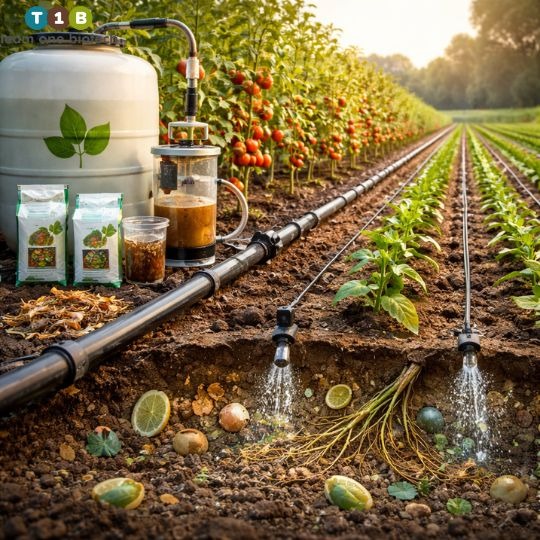
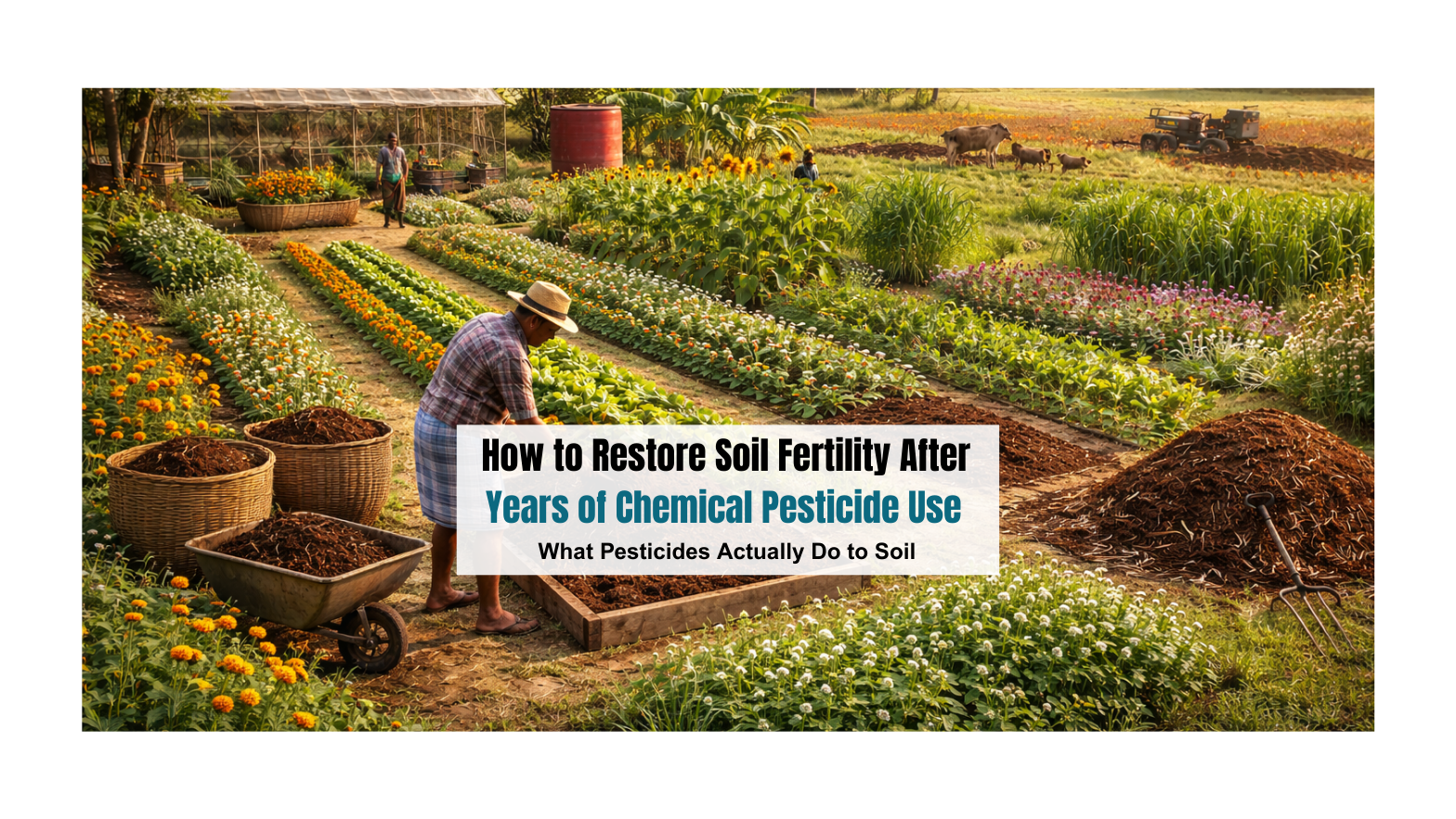
How to Restore Soil Fertility After Years of Chemical Pesticide Use

Amit Kumar stood at the edge of his fifteen-acre wheat field in Bathinda, Punjab, watching the morning sun illuminate what should have been a promising crop. His grandfather had worked this same land, pulling abundant harvests from soil so rich it crumbled like dark chocolate between your fingers. Now, despite applying more urea, more pesticides, and more money than ever before, Amit’s yields had dropped thirty percent in just five years. The earth beneath his feet had become compacted, lifeless, a pale shadow of what it once was.

This isn’t just Amit’s story. Across India, from the waterlogged fields of the Indo-Gangetic plains to the red laterite soils of Karnataka, commercial farmers are confronting an uncomfortable truth: decades of chemical-intensive agriculture have fundamentally altered the biological foundation of their land. The Green Revolution, which saved millions from hunger and transformed India into a food-surplus nation, came with a hidden cost that’s now coming due.

One of the most effective ways to reverse this trend is by transitioning toward biological soil management. For a step-by-step roadmap, read: The Future of Indian Farming: A Guide to Bio-fertilizers and Soil Health.

The question isn’t whether soil degradation is happening, it’s whether we can reverse it before it’s too late.

The Damage: What Pesticides Actually Do to Soil

The Damage: What Pesticides Actually Do to Soil

Before we can restore soil fertility, we need to understand precisely what’s been lost. Chemical pesticides don’t simply kill target pests and disappear. They fundamentally disrupt the underground ecosystem that makes agriculture possible.

The Soil Microbiome Collapse

Healthy soil contains approximately one billion bacteria in a single teaspoon, more living organisms than there are people on Earth. This microscopic world includes nitrogen-fixing bacteria, mycorrhizal fungi that extend root systems by hundreds of meters, and decomposers that convert organic matter into plant-available nutrients. Chemical pesticides, particularly organophosphates and synthetic pyrethroids, don’t discriminate between harmful pests and beneficial soil organisms.

Research from the Indian Agricultural Research Institute demonstrates that continuous pesticide application over fifteen years can reduce bacterial diversity by up to seventy-five percent. When these microbes disappear, so does the soil’s ability to cycle nutrients, retain water, and maintain structure.

The Indian Reality: Region-Specific Degradation

Punjab and Haryana: The Salinity Trap

The intensive wheat-rice rotation system in northwestern India, combined with heavy pesticide use, has created a perfect storm. Excessive irrigation coupled with chemical residues has pushed soil pH levels above 8.5 in many districts. Sodium accumulation creates a cement-like hardpan that prevents root penetration and water infiltration. Farmers apply more water to compensate, which worsens the salinity, a vicious cycle that’s rendering thousands of hectares unproductive.

Deccan Plateau: The Organic Carbon Crisis

Maharashtra, Telangana, and Karnataka face a different challenge. The black cotton soils that once held two to three percent organic carbon now register below 0.5 percent in intensively farmed areas. Without organic matter, these soils lose their water-holding capacity, critical in rain-fed agriculture. Pesticide residues have eliminated the earthworm populations that once turned this organic matter into humus.

Indo-Gangetic Plains: Chemical Accumulation

The alluvial soils of Uttar Pradesh and Bihar show alarming levels of persistent organic pollutants. Studies reveal that DDT metabolites, despite being banned for decades, still contaminate agricultural land. Newer pesticides like neonicotinoids accumulate in soil aggregates, remaining bioactive for years and continuing to suppress beneficial microbial populations long after application.

The Science of Bioremediation: Nature’s Reset Button

The Science of Bioremediation: Nature's Reset Button

Bioremediation represents our most powerful tool for reversing pesticide-induced soil degradation. Rather than adding more chemicals to solve problems created by chemicals, bioremediation harnesses living organisms to detoxify soil and restore biological function.

How Bioremediation Works

Certain bacteria and fungi possess enzymatic pathways capable of breaking down pesticide molecules into harmless compounds. Pseudomonas species can metabolise organophosphates. Bacillus strains degrade carbamate pesticides. These microorganisms literally consume toxic residues as food, converting them into carbon dioxide, water, and mineral salts.

The process operates on three levels:

Degradation: Microbes break down pesticide molecules through enzymatic action, transforming complex synthetic compounds into simpler, non-toxic substances.

Immobilization: Certain organisms bind pesticide residues, preventing them from entering groundwater or being taken up by crops, effectively quarantining the contamination.

Transformation: Beneficial microbes convert toxic metabolites into nutrients that plants can use, turning a liability into an asset.

The Bio-Fertilizer Advantage

Modern bio-fertilizers do more than replace chemical fertilizers, they actively remediate damaged soil whilst providing nutrition. Products containing consortiums of nitrogen-fixers, phosphate solubilizers, and potassium-mobilizing bacteria serve multiple functions simultaneously.

When applied to chemically exhausted soil, these microbial inoculants:

  • Re-establish beneficial bacterial populations that synthesise plant growth hormones
  • Produce organic acids that chelate nutrients, making them available to roots
  • Create soil aggregates that improve water retention and aeration
  • Outcompete pathogenic organisms, reducing disease pressure
  • Accelerate the decomposition of pesticide residues through co-metabolism

The Restoration Roadmap: From Chemical Dependency to Soil Health

The Restoration Roadmap: From Chemical Dependency to Soil Health

Transitioning from chemical-intensive to biologically-based agriculture isn’t an overnight switch. It requires a strategic, phased approach that acknowledges both the biological realities of soil recovery and the economic pressures farmers face.

Phase One: Assessment and Stabilization (Months 1-3)

Soil Health Testing

Begin with comprehensive analysis beyond standard NPK values. Test for organic carbon content, microbial biomass, enzyme activity, and pesticide residue levels. Several government soil testing laboratories now offer biological assay services. Understanding your baseline determines which interventions will prove most effective.

Chemical Input Reduction

Implement integrated pest management protocols that reduce, but don’t immediately eliminate, chemical pesticides. This gradual reduction prevents yield crashes whilst allowing microbial populations to begin recovering. Replace broad-spectrum pesticides with targeted biopesticides derived from Bacillus thuringiensis, neem extracts, or Trichoderma fungi.

Organic Matter Addition

Apply composted farm yard manure or vermicompost at five tonnes per hectare. This provides food for recovering microbial populations and introduces beneficial organisms. Green manuring with Sesbania or Crotalaria species adds both biomass and nitrogen whilst their deep roots break up compacted layers.

Phase Two: Active Bioremediation (Months 4-12)

Microbial Inoculation

Apply consortium-based bio-fertilizers that combine multiple functional groups. Team One Biotech’s formulations, for instance, integrate nitrogen fixers, phosphate solubilizers, and pesticide-degrading strains specifically isolated from Indian soils. Application rates typically range from five to ten kilograms per hectare, mixed with organic carriers.

Crop Selection for Recovery

Plant species that support bioremediation. Legumes like pigeon pea or chickpea host nitrogen-fixing rhizobia whilst their root exudates stimulate beneficial microbes. Brassica species actively absorb certain pesticide residues through their roots. Rotation patterns should break pest cycles naturally, reducing the need for chemical intervention.

Biological Augmentation

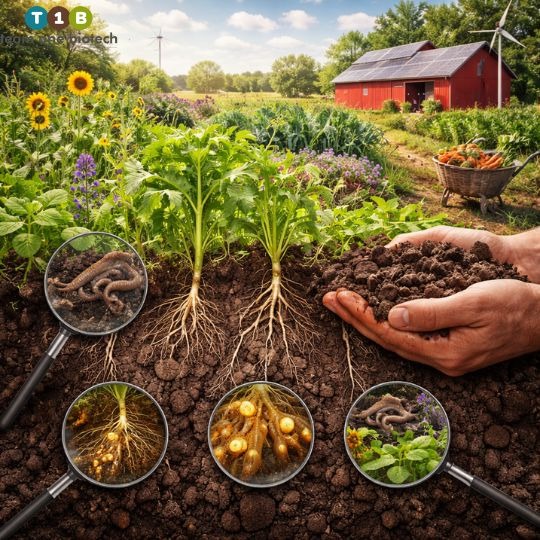
Introduce earthworms, nature’s soil engineers. A population of two hundred earthworms per square meter can process tons of organic matter annually, creating water-stable aggregates and distributing microbes throughout the soil profile. In trials across Maharashtra, earthworm-amended fields showed forty percent faster recovery of biological activity.

Phase Three: Biological Maintenance (Year Two Onwards)

Sustained Microbial Support

Continue annual applications of bio-fertilizers, though amounts may decrease as soil populations establish. Monitor microbial activity through simple field tests, healthy soil should smell earthy, form aggregates when moistened, and show visible earthworm activity.

Minimal Chemical Intervention

Reserve synthetic pesticides only for severe outbreaks, using bio-pesticides as first-line defence. This maintains the microbial communities you’ve worked to rebuild. Research from Tamil Nadu Agricultural University shows that once soil biological activity reaches seventy percent of pre-degradation levels, pest pressure naturally decreases due to enhanced plant vigour and predator populations.

Continuous Organic Inputs

Treat organic matter addition as non-negotiable. Whether through compost, crop residues, or cover crops, maintaining organic carbon above 1.5 percent ensures sustained microbial activity. This also improves water use efficiency, critical as climate variability increases.

Measuring Success: What Recovery Looks Like

Measuring Success: What Recovery Looks Like

Soil restoration isn’t abstract. Within eighteen months of implementing bioremediation protocols, farmers typically observe:

  • Improved soil structure, reduced compaction and better water infiltration
  • Darker soil colour indicating increased organic matter
  • Return of earthworm and beneficial insect populations
  • Reduced irrigation requirements by fifteen to twenty-five percent
  • Stabilized, then increasing, crop yields despite reduced chemical inputs
  • Lower input costs as biological processes replace purchased chemicals

Laboratory analysis should show rising microbial biomass carbon, increased enzyme activities (particularly dehydrogenase and phosphatase), and declining pesticide residue levels.

The Economic Reality: Investing in Long-Term Productivity

Transitioning to bioremediation-based agriculture requires upfront investment. Bio-fertilizers, organic amendments, and technical guidance cost money. However, the economics shift dramatically when viewed over three to five years rather than a single season.

A comparative study from Andhra Pradesh tracked fifty farmers transitioning from conventional to biological farming. Initial costs increased by twelve percent in year one. By year three, input costs had dropped twenty-eight percent below conventional levels whilst yields matched or exceeded previous production. Crucially, soil organic carbon had increased from 0.42 percent to 0.91 percent, a transformation that continues delivering returns for decades.

The calculation changes further when considering environmental costs. Pesticide runoff contaminates water sources that entire communities depend upon. Soil degradation reduces land values and limits options for future generations. Biological restoration addresses these hidden expenses that never appear in traditional farm accounting.

Beyond Individual Farms: The Collective Approach

Soil health operates at landscape scales. When your neighbour’s field serves as a reservoir for pests and chemical runoff, individual efforts face limitations. Progressive farming clusters in Karnataka and Punjab are adopting community-level bioremediation programmes, creating buffer zones of biological agriculture that benefit entire watersheds.

Government schemes like Paramparagat Krishi Vikas Yojana provide financial support for groups of farmers transitioning together. This collective approach reduces risk, shares knowledge, and creates economies of scale for purchasing bio-inputs.

Taking the First Step: Your Soil’s Second Chance

The exhausted soil beneath Amit Kumar’s feet, and perhaps beneath yours, isn’t permanently damaged. The microbiome that once made agriculture possible remains dormant, waiting for conditions that allow its return. Chemical pesticides created the problem, but biological solutions offer the remedy.

Restoration requires patience, knowledge, and commitment. It demands we think beyond the next harvest to consider the land we’ll leave our children. The science is proven. The products exist. The question is whether we’ll act before degradation becomes irreversible.

Your soil spent decades getting into this condition. Giving it two years to recover isn’t asking too much, it’s investing in the next century of productivity.

Restore Your Soil, Reclaim Your Future

Team One Biotech offers scientifically-formulated bioremediation solutions specifically designed for Indian soil conditions. Our consortium-based bio-fertilizers combine pesticide-degrading bacteria with nitrogen-fixers and phosphate solubilizers, addressing multiple restoration needs simultaneously.

Contact our agricultural specialists today for a customized soil restoration plan. We provide comprehensive soil testing, transition protocols, and ongoing technical support to ensure your bioremediation programme succeeds.

Don’t let another season pass watching your yields decline. The recovery starts now, with proven biological science and partners who understand Indian agriculture.

Looking to improve your ETP/STP efficiency with the right bioculture?
Talk to our experts at Team One Biotech for customised microbial solutions.

Contact+91 8855050575

Email:  sales@teamonebiotech.com

Visit: www.teamonebiotech.com

Discover More on YouTube – Watch our latest insights & innovations!-

Connect with Us on LinkedIn – Stay updated with expert content & trends!
Scan the code