
Aquaculture Inputs
With our aquabiome solutions, you can control your farm environment and improve feed efficiency and water quality with our beneficial microorganisms that support sustainable farming practices from hatchery to harvest
-

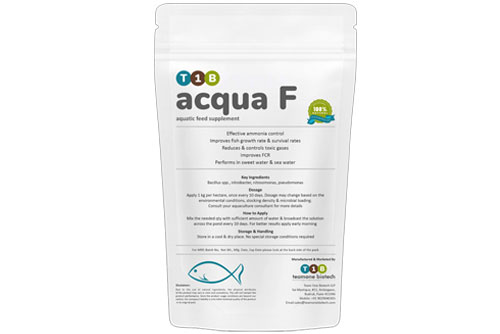
T1B™ Acqua F
aquaculture probiotics for fish farming
-

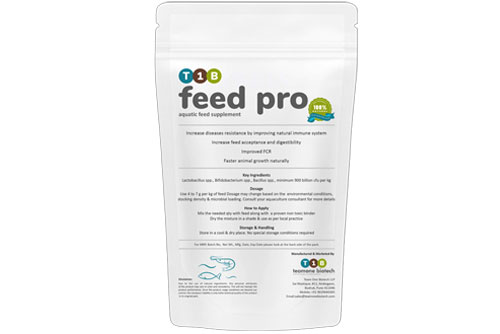
T1B™ Feed Pro
gut/feed probiotics for shrimp and fish
-

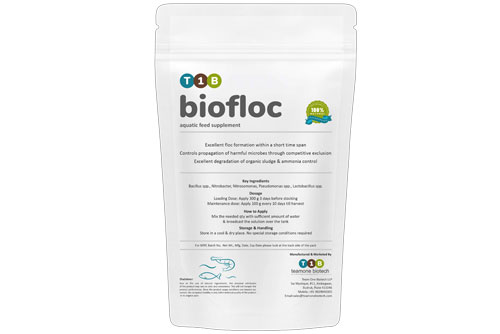
T1B™ Bio Floc
aquaculture probiotics for biofloc farming
-

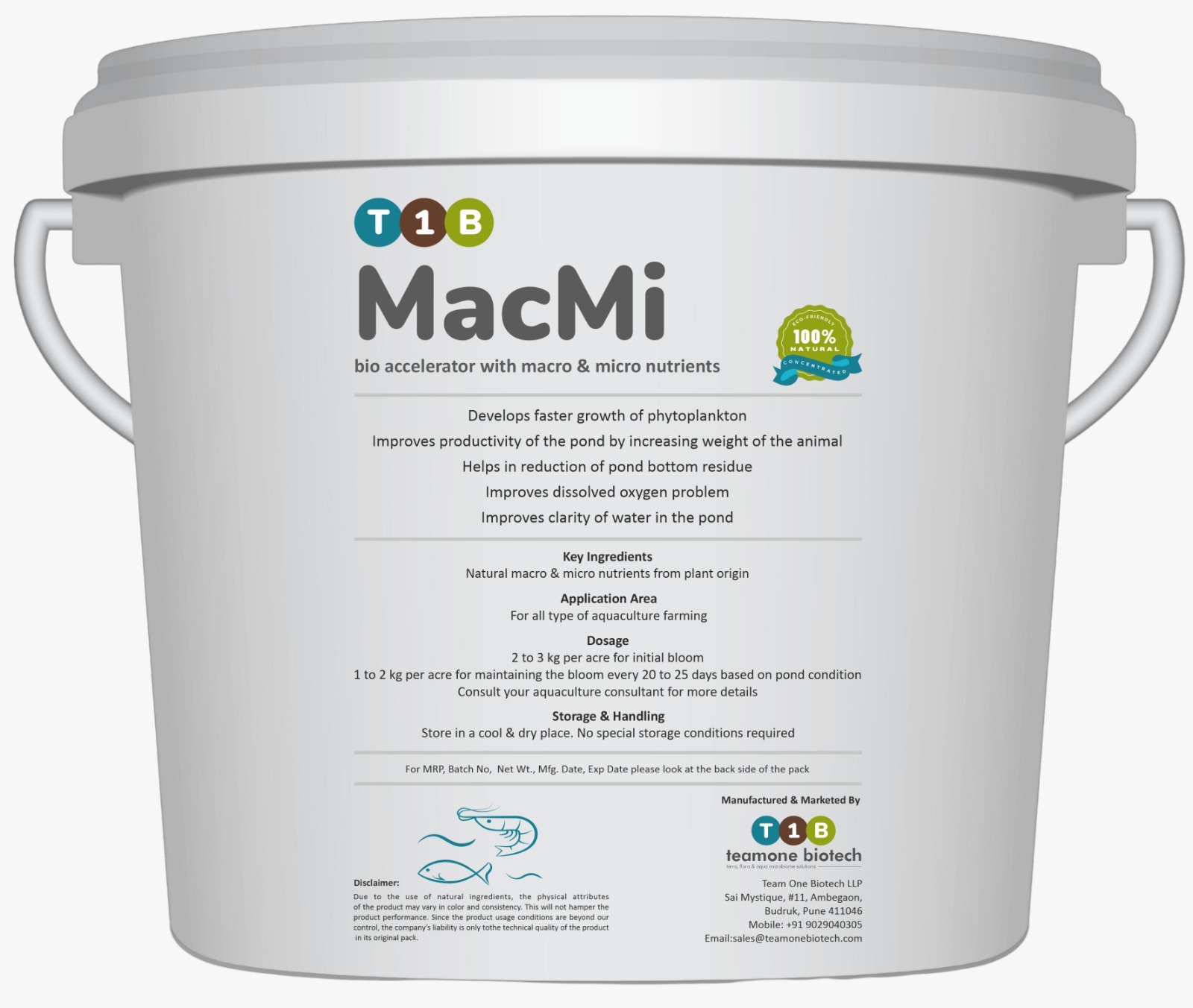
T1B™ MacMi Aqua
for shrimp & fish
-

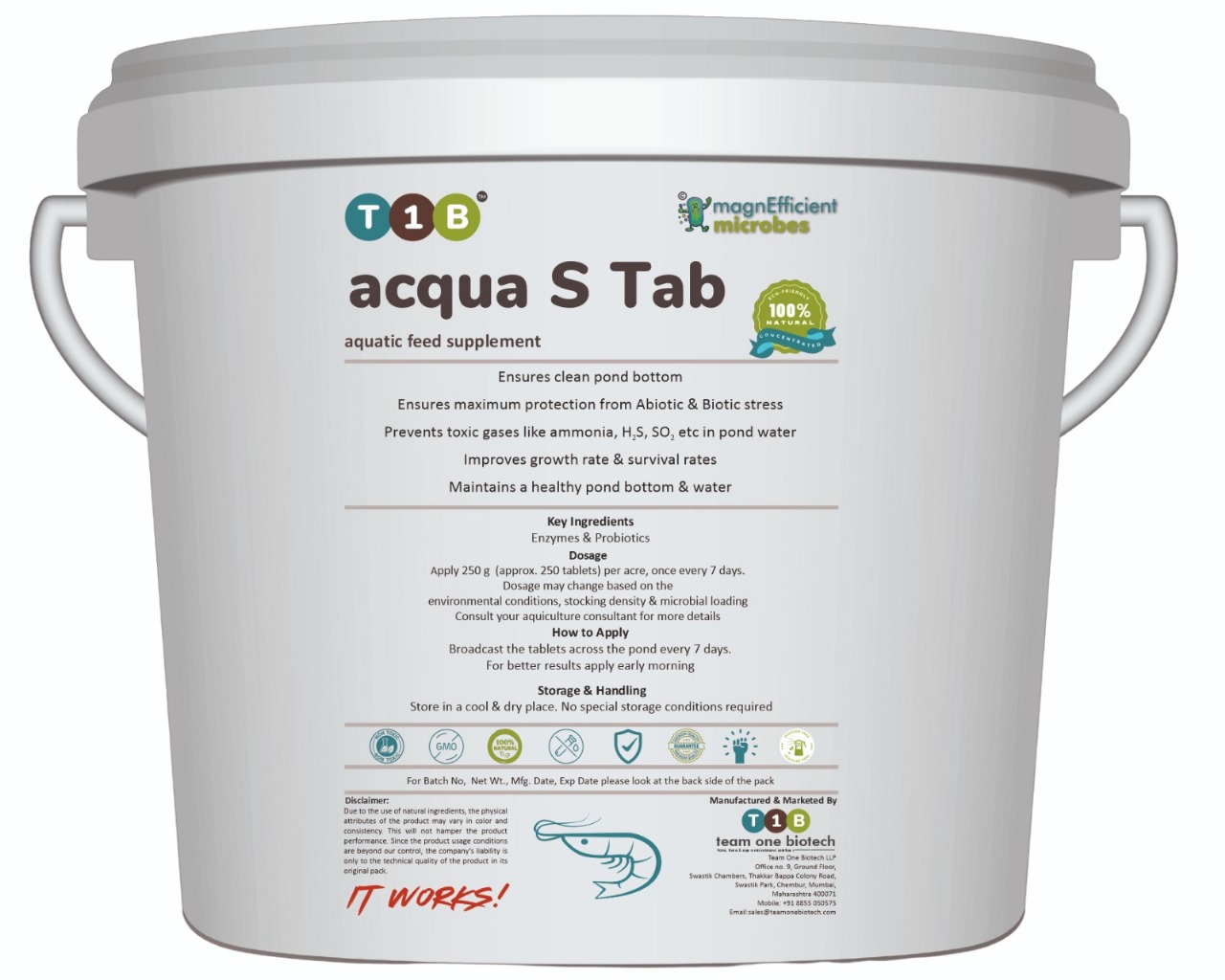
T1B™ Acqua S Tab
Aquaculture probiotics for vannamei and Penaeus monodon farming
-

T1B™ Acqua S
Aquaculture probiotics for vannamei and Penaeus monodon farming
You May Also Be Interested In
Wastewater Treatment Solutions
Advanced biocultures for wastewater treatment designed to enhance performance in ETP, STP, and WWTP systems for cleaner, compliant and sustainable water outputs.
Read More
Agriculture Bio-inputs
Natural microbial and nutrient bio-inputs that improve soil structure, crop productivity, and long-term agricultural sustainability.
Read More
Bioenzyme Natural Cleaners
Eco-safe bioenzyme cleaning solutions that effectively break down organic waste, stains, and odors—delivering powerful cleaning without toxic chemicals.
Read More

Animal Probiotics
Scientifically formulated animal gut probiotics that enhance digestion, immunity, and overall livestock performance for improved productivity.
Read More

T1B FOG Bio Bloc
Biological FOG treatment blocks that efficiently degrade fats, oils, and grease to prevent blockages and maintain hygienic drainage systems in industrial and commercial setups.
Read MoreLet’s talk about how we can work together
to make a difference in our shared world.
Aquaculture FAQs
Water Quality Management:
The use of the right bacteria can help reduce levels of ammonia, nitrite, and other
harmful compounds in pond water, improving water quality and promoting shrimp growth.
Disease Control:
Many bacteria can produce antibiotics and other beneficial compounds that help
suppress pathogens and diseases affecting shrimp.
Nutrient Cycling:
Bacteria play a crucial role in breaking down organic matter and releasing nutrients
that can be utilized by shrimp and other aquatic organisms.
Feed Conversion:
Beneficial bacteria help break down feed and convert it into forms that shrimp can
easily utilize, improving feed conversion efficiency and reducing costs.
It’s worth noting that the specific benefits depend on the type of bacteria used and
the application method. Bacterial products should be selected carefully, as not al
Competitive exclusion is an important concept in aquaculture, as it promotes the
growth of beneficial microorganisms in the aquatic environment while suppressing
harmful microorganisms. This helps improve water quality, animal health, and the
overall sustainability of aquaculture systems.
Seaweed extract is a product derived from certain types of seaweed and has a wide
range of uses in aquaculture.
Feeding:
Seaweed gel is a rich source of essential nutrients such as amino acids, minerals,
and vitamins. It can be used to feed a variety of aquatic organisms, including
shrimp, fish, shellfish, and phytoplankton.
Fertilization:
Seaweed gel acts as a natural fertilizer that promotes the growth of aquatic plants
and phytoplankton, which are important food sources in aquaculture systems.
Water Quality Management:
Seaweed gel helps improve water quality by removing excess nutrients and pollutants.
This reduces the risk of algal blooms and other water quality issues that can impact
aquatic organism health.
Inducing Spawning:
Seaweed gel can be used to induce spawning in aquatic organisms such as shrimp,
fish, and shellfish when added to the water.
Health and Immunity:
Seaweed gel contains bioactive compounds that enhance health and immunity by
supporting growth, reproduction, and disease resistance.
Environmentally Friendly:
Seaweed gel is a natural alternative to chemical fertilizers and pesticides,
reducing the environmental impact of aquaculture and promoting sustainable
production practices.
It is important to note that the effectiveness of seaweed gel in aquaculture can
vary depending on the species of seaweed used, production conditions, and the
concentration and quality of the extract.
Biofloc farming is an innovative aquaculture method that uses beneficial
microorganisms to create a sustainable, closed-loop system for raising fish
and other aquatic animals. The system is based on the development of
biofloc—a dense microbial ecosystem formed within the water
column of ponds or tanks.
In biofloc systems, fish and shrimp are raised in water rich in dissolved
organic matter, which serves as a food source for microorganisms such as
bacteria, protozoa, and algae. These microorganisms convert organic matter
into microbial biomass that can be consumed directly by the cultured species.
Biofloc also acts as a natural filtration system by removing excess nutrients
and pollutants from the water. It helps maintain water quality by supplying
natural oxygenation and reducing harmful compounds like ammonia and nitrite.
Biofloc farming is particularly suitable for intensive aquaculture systems,
including indoor recirculating systems and pond-based operations, where it
improves water quality, enhances growth and survival rates, and reduces
dependence on external feed and chemical inputs.
Sustainable aquaculture focuses on meeting the needs of both the industry and
the environment by responsibly and ethically raising aquatic organisms for food
and other uses. It involves practices that enhance the growth and productivity
of aquatic species while minimizing negative environmental impacts such as water
pollution, habitat degradation, and overfishing.
Molting in shrimp farming refers to the natural process in which a shrimp sheds
its exoskeleton, or outer shell. This occurs periodically throughout the shrimp’s
life. During molting, the shrimp secretes enzymes to dissolve the old shell, exits
it, and then forms a new exoskeleton.
Molting is a critical event in shrimp farming because it directly affects growth
and overall health. The frequency and timing of molting influence growth rate,
feed conversion efficiency, and disease resistance. Proper molting management
helps optimize shrimp growth and productivity.
Molting also impacts water quality within the culture system. Shed exoskeletons
release organic matter into the water, which can alter water chemistry and increase
disease risk. To manage these effects, farmers often adjust feeding strategies and
water quality parameters to support a healthy molting process.
By improving water quality and reducing stress, bio products help create a more favorable environment for molting. This can lead to more frequent and successful molts, contributing to faster growth, improved feed conversion efficiency, and increased disease resistance in shrimp.
High stocking density in shrimp farming can negatively affect shrimp production,
health, and growth. Stocking density refers to the number of shrimp per unit of
water, and problems arise when the number of shrimp exceeds the carrying capacity
of the culture system.
Poor Water Quality:
High stocking density leads to the accumulation of waste products such as uneaten
feed and excreta. This results in elevated levels of ammonia, nitrite, and other
toxic substances that can harm shrimp health.
Increased Stress:
Crowding raises stress levels in shrimp, which can suppress growth, reduce feed
conversion efficiency, and increase susceptibility to diseases.
Spread of Disease:
Dense populations facilitate the rapid spread of diseases and parasites, as
infections can be easily transmitted between shrimp.
Poor Feed Conversion:
Overcrowding can reduce feed conversion efficiency due to competition for food,
uneven feed access, and aggressive interactions among shrimp.
Waste from Cultured Species:
Unconsumed feed and excreta produced by cultured organisms can accumulate in ponds
and contribute significantly to water pollution.
Feed Usage:
Improper feed management can pollute aquaculture ponds. Uneaten feed and feeding
waste may settle at the bottom, decompose, and release excess nutrients and toxins
that degrade water quality.
Insufficient Water Exchange:
Poorly managed water exchange can cause stagnation, allowing waste and contaminants
to build up in the pond.
Runoff from Surrounding Areas:
Runoff from agricultural and urban areas can introduce pesticides, fertilizers,
heavy metals, and other pollutants into aquaculture ponds, negatively affecting
water quality and aquatic health.
Use of Chemicals:
Chemicals such as antibiotics, disinfectants, and algicides can contribute to water
pollution if not properly managed, potentially harming both the environment and
cultured species.
The ideal soil for shrimp aquaculture depends on the shrimp species being cultivated
and the specific requirements of the culture system. However, certain soil
characteristics are generally considered suitable for shrimp farming.
- The soil should have sufficient permeability to allow proper water exchange and
oxygenation, helping maintain good water quality and healthy shrimp growth.
Drainage:
The soil should have good drainage properties to prevent waterlogging, which can
lead to low oxygen levels and poor water quality.
pH:
For most shrimp species, the soil should be neutral to slightly alkaline, typically
with a pH range between 7.0 and 8.5.
Nutrient Content:
The soil should contain adequate nutrients to support healthy shrimp growth.
Salinity:
The soil should be capable of maintaining appropriate salinity levels required for
the cultured shrimp species.
In summary, soil suitable for shrimp aquaculture should have good permeability and
drainage, a neutral to slightly alkaline pH, sufficient nutrient content, and the
ability to maintain appropriate salinity levels for the target shrimp species.
Seed selection is a critical factor in aquaculture, as it directly influences the
productivity, health, and overall success of the culture system. Careful selection
of high-quality seed helps ensure better performance and sustainability.
Genetics:
Selecting seed with superior genetic traits supports improved growth rates,
stronger disease resistance, and higher overall production.
Size:
Choosing uniformly sized seed promotes even growth and appropriate stocking
density, reducing competition for resources such as food and space.
Health:
Proper seed selection minimizes the risk of introducing diseases into the culture
system. Seed should always be sourced from healthy, disease-free hatcheries.
Seed Quality:
High-quality seed that is well adapted to culture conditions results in better
survival rates, faster growth, and reduced stress.
Cost:
Careful seed selection helps lower costs associated with disease management,
restocking, and other operational expenses.
Like all aquatic species, shrimp have specific nutritional requirements for healthy
growth, survival, and productivity. Maintaining the right nutrient balance is
essential in shrimp aquaculture.
Protein:
Shrimp are primarily carnivorous and require a high level of protein in their diet
to support growth and survival. High-quality protein sources such as fishmeal help
meet these requirements. Lipids also play an important role by providing energy and
essential fatty acids needed for growth and reproduction.
Carbohydrates:
Although carbohydrates are not considered essential nutrients for shrimp, some
species can utilize them as an additional energy source when included at appropriate
levels.
Vitamins:
Vitamins are vital for shrimp health and development, particularly vitamins A, D,
and E. A balanced diet containing diverse feed ingredients helps ensure adequate
vitamin intake.
Minerals:
Minerals such as calcium, magnesium, and phosphorus are essential for shell
formation, growth, development, and reproduction in shrimp.
Antioxidants:
Antioxidants, including vitamin C, support the immune system and protect shrimp
against oxidative stress.
