
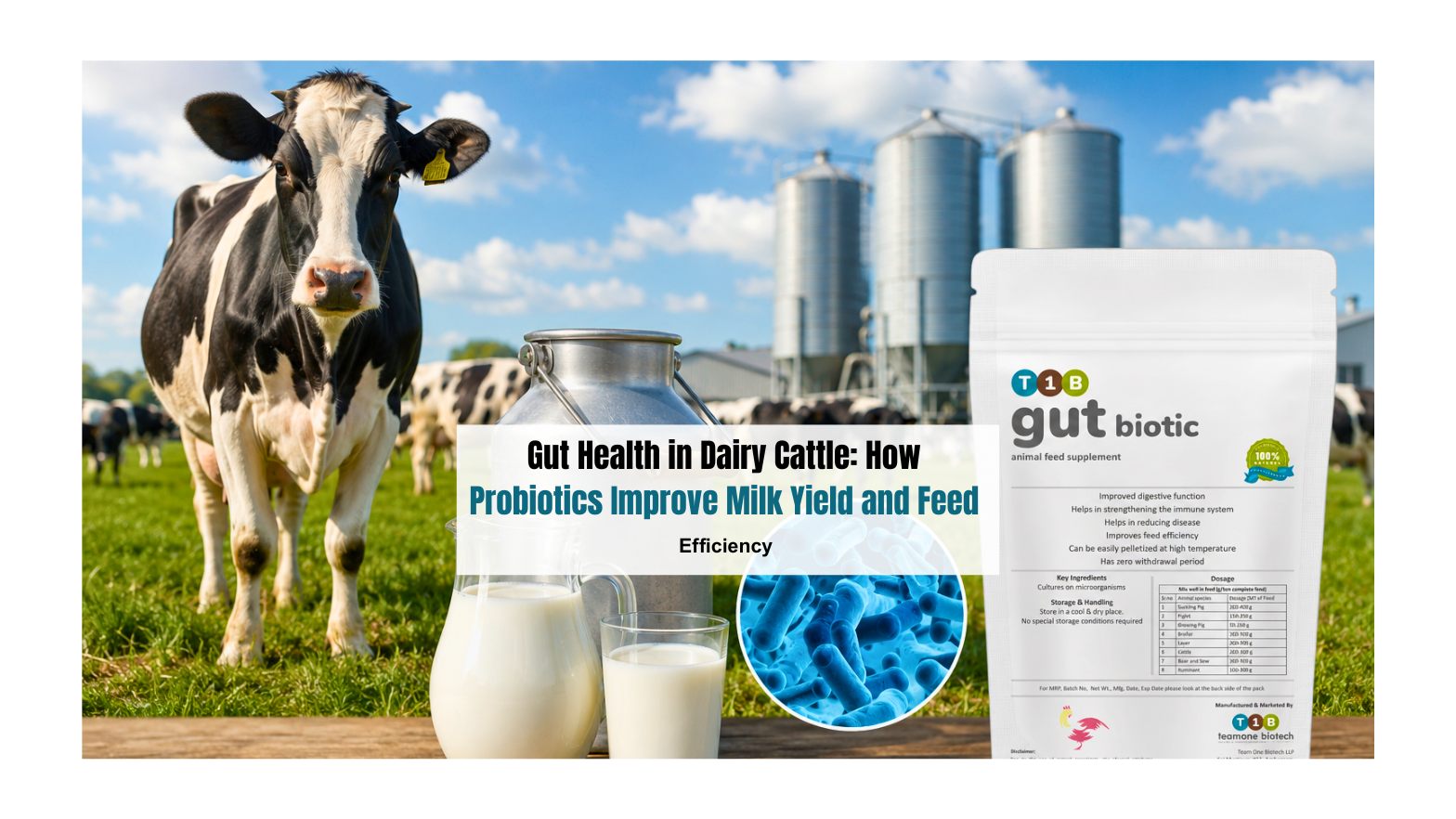

Gut Health in Dairy Cattle: How Probiotics Improve Milk Yield and Feed Efficiency
There is a particular kind of frustration that every serious dairy farmer knows well. You have invested in quality animals, you are sourcing the best fodder you can afford, your workers are putting in long hours, and yet, milk yield fluctuates, feed conversion feels inefficient, and your veterinary bills keep climbing. In an environment where input costs are rising faster than milk procurement prices, the margin between a profitable farm and a struggling one can feel razor-thin.
What if a significant part of the problem was invisible, living inside your cattle’s digestive system?
Gut health is one of the most underestimated levers in dairy farm management across global markets. And the science of probiotics for dairy cattle is emerging as one of the most practical, cost-effective tools available to farmers who want to close the gap between potential and actual performance.
The Rumen: Your Cattle’s Internal Bioreactor
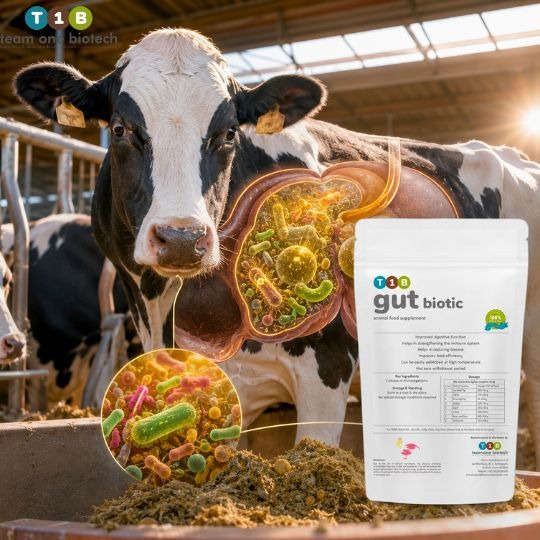
To understand why gut health matters so profoundly, you need to think of the rumen not as a stomach, but as a living fermentation chamber, a complex bioreactor packed with billions of microorganisms working around the clock.
Every kilogram of feed your animal consumes passes through this microbial ecosystem first. Bacteria, protozoa, and fungi in the rumen collectively break down cellulose and hemicellulose from fibrous fodder, synthesize volatile fatty acids (the primary energy source for the cow), and produce microbial protein that supports milk synthesis.
When this ecosystem is balanced, feed is converted efficiently, the cow stays healthy, and milk production reflects the quality of inputs. When it is disrupted, by heat stress, abrupt feed changes, poor fodder quality, or pathogen load, the entire chain breaks down.
The pH of the rumen is a precise indicator of this balance. A healthy rumen operates within a specific acidic range, and even a modest shift toward excessive acidity can impair fiber digestion, suppress immunity, and reduce milk fat percentage. This condition, known as sub-clinical acidosis, is often missed because affected animals do not show dramatic symptoms. They simply perform below their potential, quietly, consistently, and at your expense.
This is where probiotics for dairy cattle enter the picture. By introducing beneficial microbial strains directly into the feed, you actively support the rumen’s microbial balance and restore the conditions that drive optimal performance.
How Probiotics Improve Milk Yield
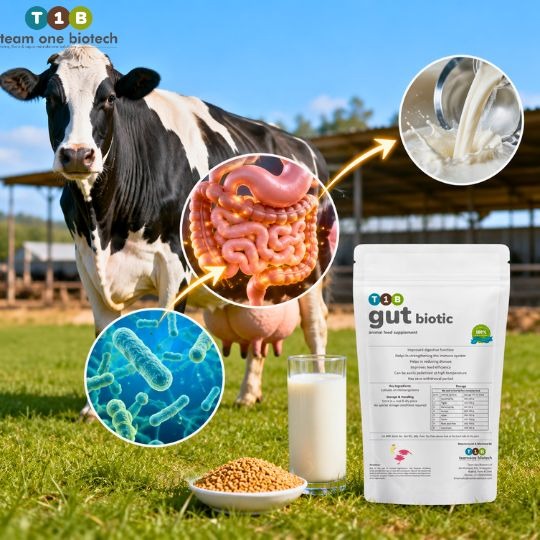
Stabilizing Rumen pH and Preventing Sub-Clinical Acidosis
Sub-clinical acidosis is arguably the most financially damaging condition on high-producing dairy farms, and it is almost never diagnosed. Cows affected by it eat less, digest fiber poorly, and shift energy away from milk synthesis. Milk fat percentage drops, often quietly, before farmers notice.
Probiotic strains, particularly certain Lactobacillus and Enterococcus species combined with yeast-based additives, work by consuming excess lactic acid in the rumen, stabilizing pH, and creating conditions where fiber-digesting bacteria can thrive. When fiber digestion improves, more energy is released per kilogram of feed, and that energy goes where you want it: into milk production.
Farms that incorporate microbial feed additives into their nutrition programs consistently observe improvements in milk yield within the range of 5% to 15% over baseline measurements. These improvements are particularly noticeable during periods of dietary transition or seasonal stress. It is important to note that these are general values and actual results may vary significantly based on farm-specific environmental conditions, the quality of baseline nutrition, and the specific formulation used.
The Role of Microbial Diversity in Consistent Milk Quality
Milk is not just volume, it is composition. Fat, protein, and solids-not-fat are the parameters that determine your price per litre at the cooperative or processor level. A rumen that is rich in diverse, beneficial microbial communities produces a more consistent fermentation pattern, which translates into more stable milk fat and protein levels across the lactation cycle.
Probiotics for dairy cattle essentially act as a microbial “top-up”, replenishing populations that are lost due to stress, antibiotic use, or poor fodder quality, and reestablishing the community structure that drives quality milk synthesis.
Feed Efficiency and Nutrient Use Efficiency
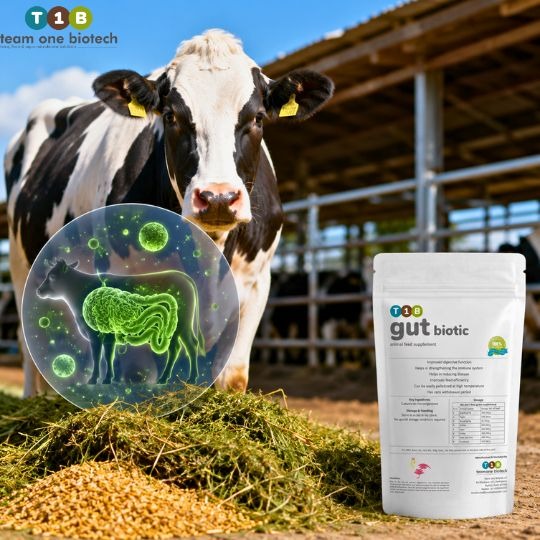
Breaking Down Fiber More Completely
Dairy farmers worldwide work with a highly varied fodder base. Green fodder availability is seasonal and geography-dependent. Dry fodder, including wheat straw, crop residues, hay, and silage, dominates the ration across many regions and seasons, particularly in areas with limited irrigated pasture or during winter months. These materials are nutritionally challenging. Their cell wall structure is dense, and without a well-functioning rumen microbiome, much of the potential energy passes through unutilized.
Specific probiotic strains have demonstrated the ability to enhance fiber-degrading enzyme activity in the rumen. Cellulolytic bacteria, when supported by compatible probiotic additions, become more active and efficient. The practical result is that your cattle extract more energy and nutrients from the same quantity of feed.
Improvements in Nutrient Use Efficiency (NUE) as a result of consistent probiotic supplementation have been observed in the range of 6% to 14% in peer-reviewed field trials across varied livestock production contexts. These are general values, and outcomes will depend on the specific farm environment, existing feed quality, cattle breed, and the formulation profile of the probiotic product being used.
Reducing Feed Costs Per Litre of Milk
The true financial benefit of improved NUE is not just that cattle perform better, it is that they perform better on less. When more of each kilogram of feed is converted into productive output, your cost per litre of milk produced comes down. Over a full lactation cycle, this shift can have a meaningful impact on your bottom line.
If you are managing a herd of 30 or more animals, even a modest improvement in feed conversion across the group accumulates into significant savings at the end of the year. Consulting with Team One Biotech for a herd-specific probiotic strategy can help you identify where the greatest efficiency gains are available in your current feeding program.
Immunity, Antibiotic Reduction, and Herd Resilience
A Healthier Gut Is a Stronger Immune System
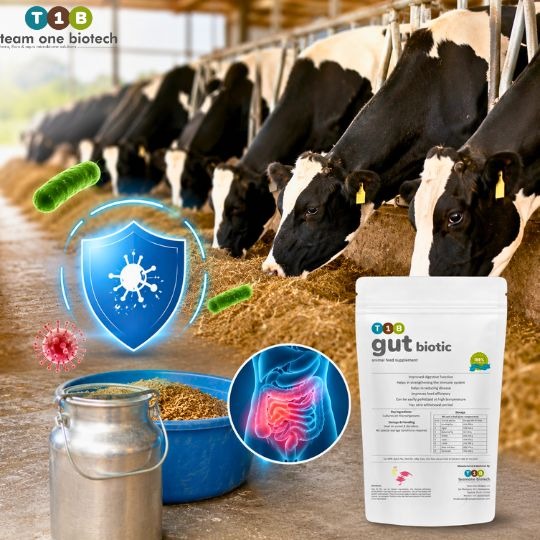
Approximately 70% of the immune system’s activity is rooted in the gastrointestinal tract. This is as true in ruminants as it is in humans. A rumen and gut lining that are populated with beneficial microorganisms create a physical and biochemical barrier against pathogens. Harmful bacteria have fewer sites to colonize, competitive exclusion keeps their populations suppressed, and the immune cells lining the gut are better activated and more responsive.
The downstream effect is fewer clinical illness events, fewer mastitis cases, lower rates of respiratory infection, and reduced incidence of metabolic disorders post-calving. Farms that shift toward probiotic-supported herd management frequently report a reduction in routine antibiotic use, which carries both economic and regulatory advantages as governments worldwide move toward stronger antimicrobial stewardship norms in livestock production.
Heat Stress Resilience in Commercial Dairy Operations
This is a dimension of probiotic science that is directly relevant to dairy farmers operating in warm and temperate climates globally, and it is not discussed enough. Regions across the Americas, the Middle East, sub-Saharan Africa, Southeast Asia, Southern Europe, and Australia subject high-producing Holstein-Friesian and Jersey animals to sustained thermal loads that their genetics were not originally designed to handle.
Heat stress suppresses feed intake, disrupts rumen fermentation, and triggers a cascade of hormonal and metabolic changes that directly reduce milk yield and reproductive performance. Adapted breeds handle heat better due to their physiology, but even they are not immune to the compounding effects of prolonged heat combined with poor gut health.
Certain probiotic formulations help the rumen microbiome maintain stability under thermal stress conditions. By supporting fermentation efficiency even when feed intake drops, probiotics help buffer the production losses that farmers in warmer climates accept as seasonal inevitability, losses that do not have to be as severe as they currently are. Improvements in heat stress resilience observed through probiotic supplementation range from moderate to significant depending on the severity of the thermal environment, breed, and baseline herd health. These are general values, and results will vary based on farm-specific conditions and environmental parameters.
The Global Context: Local Challenges, Targeted Solutions
Fodder Quality Variation Across Seasons
Fodder supply is not consistent in most dairy-producing regions of the world. The gap between flush-season pasture or green fodder and dry-season hay or crop residue-based rations is dramatic, and each transition is a stress event for the rumen microbiome. Probiotics for dairy cattle serve as a stabilizing bridge during these transitions, maintaining microbial populations that would otherwise crash when the feed base shifts suddenly.
Livestock Bioremediation and Farm Waste Management
A point that is increasingly relevant to progressive farm operators globally is the connection between gut health and effluent quality. Healthier digestion produces waste with different microbial and chemical profiles. Incorporating livestock bioremediation strategies, using microbial products to manage slurry, reduce ammonia emissions, and improve biogas yield from farm waste, is a logical extension of probiotic-forward farm management. Team One Biotech works at this intersection, offering solutions that address both animal performance and farm environmental management in an integrated way.
Making Probiotics Work on Your Farm
Probiotics for dairy cattle are not a magic supplement, they are a precision tool. Breed, production stage, local climate, existing feed formulation, water quality, and management intensity all influence which strains perform best and at what dosage.
Generic, off-the-shelf products may deliver inconsistent results because they are not calibrated for your specific herd and conditions. The difference between a product that works and one that does not often comes down to formulation specificity, viable cell count at the time of feeding, and compatibility with your existing ration.
This is precisely why a customized consultation matters. If you are a dairy farmer, cattle operator, or feed manufacturer looking to move beyond generic solutions and build a rumen health strategy that is designed for your operation, reach out to Team One Biotech. Their team of animal nutrition specialists will assess your current program and design a probiotic protocol built around your herd’s biology and your farm’s conditions.
Final Word
The rumen is where profitability begins. Protecting and enhancing the microbial ecosystem inside your cattle is not a fringe idea, it is one of the most evidence-backed interventions available in modern livestock nutrition. As feed costs continue to rise and pressure on milk quality intensifies, the farms that thrive will be the ones that invest in what cannot be seen but makes all the difference.
Probiotics for dairy cattle represent that investment. Done right, with the right strains, the right formulation, and the right guidance, the returns are real, measurable, and sustainable.
Get in touch with Team One Biotech today to explore what a customized rumen health and microbial feed additive program can do for your herd.