
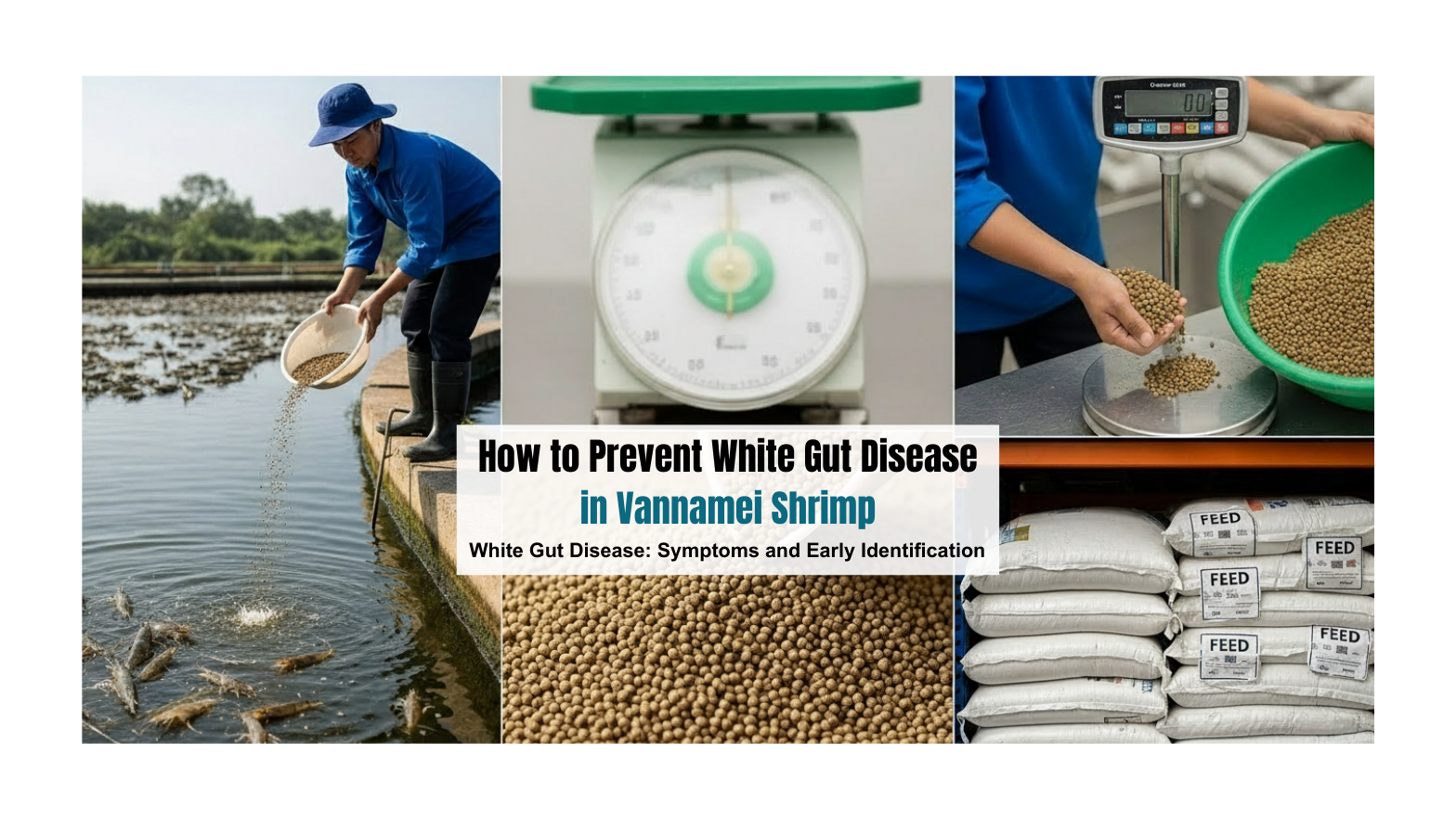

How to Prevent White Gut Disease in Vannamei Shrimp
The Silent Killer Devastating Indian Shrimp Farms
In the coastal districts of Andhra Pradesh, Gujarat, and Tamil Nadu, a silent epidemic continues to drain the livelihoods of thousands of shrimp farmers. White Gut Disease (WGD) has emerged as one of the most economically destructive conditions affecting Vannamei shrimp (Litopenaeus vannamei) cultivation in India. Unlike viral outbreaks that announce themselves with mass mortality, WGD operates insidiously, reducing feed conversion ratios, stunting growth, and triggering secondary infections that can wipe out 40-60% of a crop within weeks.
For farmers who have invested heavily in seed, feed, and infrastructure, discovering white fecal strings floating in their ponds represents more than a health issue. It signals the potential loss of an entire harvest cycle, debts that compound with each failed crop, and the uncertainty of whether the next cycle will fare any better.
For a comprehensive guide on managing pond health and maximizing production, see: The Complete Handbook for High-Yield Shrimp and Fish Farming.
The challenge is particularly acute in India, where monsoon-driven salinity fluctuations, elevated water temperatures exceeding 32°C, and high organic loads create the perfect storm for opportunistic pathogens like Vibrio parahaemolyticus, the primary bacterial agent behind WGD. Traditional approaches involving antibiotics have proven ineffective and environmentally damaging, leaving farmers searching for sustainable, science-backed solutions.
This is where bioremediation enters the picture. By understanding the root causes of White Gut Disease and implementing targeted prevention protocols, Indian aquaculture can shift from crisis management to proactive pond ecosystem management.
White Gut Disease: Symptoms and Early Identification

Visual Indicators
Early detection is critical for preventing widespread crop damage. Farmers should conduct daily monitoring for these characteristic symptoms:
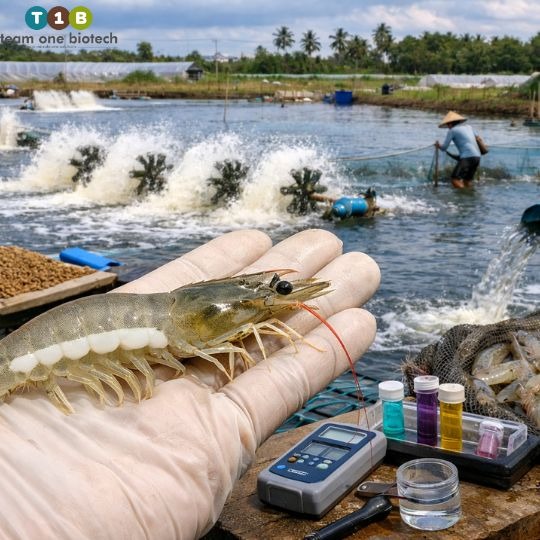
White Fecal Strings: The hallmark sign of WGD. These floating, thread-like structures appear white or translucent rather than the normal brown color of healthy shrimp feces. They indicate severe gut inflammation and disrupted digestive function.
Gut Discoloration: When examining harvested shrimp, the hepatopancreas and midgut appear pale, swollen, or contain white deposits. Healthy shrimp display a dark, well-formed gut.
Behavioral Changes: Affected shrimp exhibit reduced feeding activity, congregate near pond edges or aerators, and display lethargy. Feed consumption drops noticeably, yet feed remains visible on checking trays hours after application.
Growth Stagnation: Weekly size grading reveals minimal weight gain despite adequate feeding schedules. Body condition deteriorates, with shrimp appearing thin and fragile.
Secondary Complications
WGD rarely exists in isolation. The compromised immune status creates vulnerability to:
- Vibriosis and other bacterial infections
- Microsporidian parasites like Enterocytozoon hepatopenaei (EHP)
- White Spot Syndrome Virus (WSSV) co-infections
- Increased susceptibility to environmental stressors
Root Causes: Why White Gut Disease Thrives in Indian Aquaculture Systems
Understanding causation is essential for prevention. WGD is not simply a bacterial infection, it represents a systemic failure of pond ecology.
Primary Contributing Factors
Vibrio Proliferation: Vibrio parahaemolyticus and related species naturally exist in coastal waters. However, when populations exceed 10³ CFU/ml, they transition from benign inhabitants to pathogenic dominants. Indian coastal waters, particularly during pre-monsoon and post-monsoon periods, experience ideal conditions for Vibrio blooms.
High Stocking Density: Economic pressures push farmers toward stocking densities of 80-120 post-larvae per square meter. While this maximizes potential yield, it also creates stress, increases waste accumulation, and accelerates pathogen transmission.
Feed Management Failures: Overfeeding leaves uneaten feed on pond bottoms, where it decomposes and feeds bacterial populations. Poor quality feed with inadequate binders results in nutrient leaching before shrimp can consume it. Many local feed formulations lack essential immunostimulants and gut-health promoters.
Organic Load Accumulation: Dead plankton, fecal matter, uneaten feed, and decomposing biofilm contribute to rising biological oxygen demand (BOD). Indian ponds, especially those with limited water exchange, can see organic matter accumulate to toxic levels within 60-70 days of culture.
Water Quality Deterioration: The Indian monsoon brings dramatic salinity fluctuations, from 15 ppt to 35 ppt within weeks. Concurrent temperature variations, alkalinity crashes, and dissolved oxygen deficits stress shrimp immunity. High ammonia and nitrite levels directly damage gut epithelium, creating entry points for pathogens.
Inadequate Pond Preparation: Rushing between crop cycles without proper pond drying, liming, and bioremediation allows pathogen reservoirs to persist in sediment and biofilm.
The Bioremediation Breakthrough: How Beneficial Microbes Prevent White Gut Disease
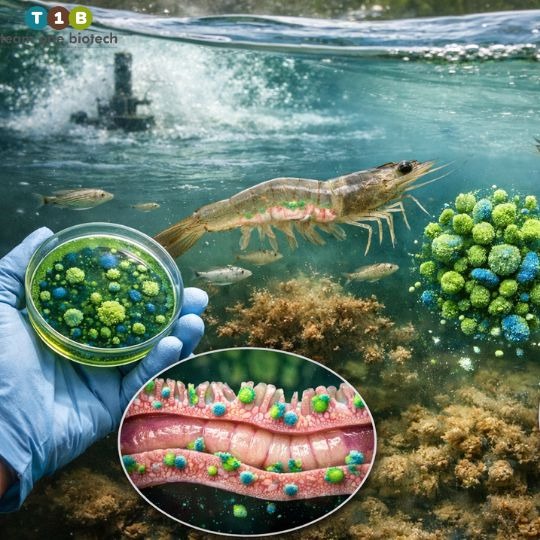
Bioremediation represents a paradigm shift from treating disease symptoms to engineering pond ecosystems that suppress pathogen establishment. The approach leverages beneficial bacterial strains to outcompete harmful microorganisms while improving water quality parameters.
Mechanisms of Action
Competitive Exclusion: Probiotic strains like Bacillus subtilis, Bacillus licheniformis, and Lactobacillus species colonize available niches in water, sediment, and shrimp guts. By occupying these ecological spaces first and maintaining high populations, they deny pathogenic Vibrio species the resources needed to establish dominance.
Organic Matter Degradation: Specific Bacillus strains produce powerful enzymes (proteases, lipases, amylases) that break down complex organic compounds. This reduces BOD, minimizes sludge accumulation, and eliminates the nutrient-rich environment that supports Vibrio blooms.
Pathogen Antagonism: Beneficial bacteria produce antimicrobial compounds (bacteriocins, organic acids, hydrogen peroxide) that directly inhibit pathogenic bacteria without harming shrimp or disrupting broader ecosystem balance.
Gut Health Promotion: When incorporated into feed or water, probiotics colonize shrimp intestinal tracts, strengthening gut barrier function, enhancing nutrient absorption, and stimulating localized immune responses. This fortifies natural defenses against bacterial invasion.
Nutrient Cycling: Nitrifying bacteria convert toxic ammonia to nitrite and then to less harmful nitrate. Heterotrophic bacteria assimilate nitrogen into bacterial biomass, which is then consumed by zooplankton, creating a balanced nutrient cycle.
Comprehensive Prevention Protocol: A Step-by-Step Implementation Guide
Preventing White Gut Disease requires systematic intervention across all production phases. This protocol integrates bioremediation principles with practical aquaculture management.
Phase 1: Pre-Stocking Pond Preparation (Days -30 to -1)
Complete Pond Drying: After harvest, drain ponds completely and allow sediment to dry for 7-14 days. Sun exposure eliminates pathogen reservoirs and oxidizes accumulated organic matter.
Sediment Removal: Remove 5-10 cm of bottom sediment from ponds used for multiple cycles, particularly in sludge accumulation zones near aerators and feeding areas.
Liming and pH Adjustment: Apply agricultural lime at 200-500 kg per hectare depending on soil pH. Target pH of 7.5-8.5 optimizes beneficial bacterial activity while suppressing acid-tolerant Vibrio species.
Probiotic Pond Treatment: Before filling, apply Bacillus-based bioremediation products at 2-5 kg per hectare. Team One Biotech’s specialized pond preparation formulations establish beneficial bacterial populations before pathogenic species can colonize.
Water Filling and Conditioning: Fill ponds gradually over 3-5 days. Treat incoming water with probiotics and organic acids to immediately establish positive microbial balance. Target parameters: salinity 15-25 ppt, pH 7.8-8.3, dissolved oxygen above 5 mg/L.
Plankton Bloom Development: Fertilize with organic carbon sources and trace minerals to promote beneficial phytoplankton blooms. Maintain Secchi disk transparency of 30-40 cm before stocking.
Phase 2: Post-Stocking Management (Days 1-45)
Strategic Probiotic Application: Apply water-soluble probiotics twice weekly at 1-3 ppm. Focus applications during afternoon hours when water temperatures peak and bacterial metabolism is highest.
Feed Management Excellence: Feed only after observing active foraging behavior. Use checking trays to monitor consumption and adjust quantities accordingly. Remove uneaten feed within 2-3 hours.
Feed Enhancement: Mix feed-grade probiotics at 0.5-1% of total feed weight. Include immunostimulants like beta-glucans, vitamins C and E, and organic minerals. Team One Biotech offers customized feed supplements formulated for Indian farming conditions.
Water Quality Monitoring: Test critical parameters twice daily, dissolved oxygen (morning and afternoon), pH, temperature, ammonia, nitrite. Conduct weekly analyses for alkalinity, hardness, and bacterial populations.
Organic Load Control: Apply bioremediators specifically targeting organic matter degradation when BOD begins rising. Monitor sludge accumulation and increase aeration in high-density zones.
Salinity Management: During monsoon periods, monitor salinity changes and adjust gradually. Avoid fluctuations exceeding 5 ppt within 24 hours. Maintain optimal range of 15-25 ppt for Vannamei.
Phase 3: Critical Growth Period (Days 46-90)
Intensified Monitoring: As biomass increases exponentially, waste production and oxygen demand surge. Increase water quality testing frequency and probiotic dosing.
Selective Harvesting: Consider partial harvesting at Day 75-80 to reduce stocking density and metabolic load on pond ecosystems.
Stress Mitigation: During extreme weather, increase vitamin C supplementation, reduce feeding by 20-30%, and boost probiotic dosing by 50%.
Vibrio Monitoring: Conduct monthly bacterial plating to quantify Vibrio populations. If counts exceed 10³ CFU/ml, increase bioremediation intensity and reduce organic inputs.
Emergency Response Protocol: If white fecal strings appear, immediately reduce feeding to maintenance levels, apply therapeutic probiotics at triple normal dosage, increase aeration, and conduct partial water exchange if parameters permit.
Phase 4: Pre-Harvest Optimization (Days 91-120)
Feed Quality Upgrade: Switch to high-protein finisher feeds with enhanced digestibility. Maintain probiotic supplementation through final feeding.
Harvest Timing: Plan harvest during stable weather patterns. Avoid harvesting during heavy rains or temperature extremes when stress increases disease susceptibility.
Biosecurity Maintenance: Continue bioremediation protocols until harvest completion. Pathogens can proliferate rapidly in stressed, crowded conditions during harvest operations.
Advanced Bioremediation Strategies for Challenging Environments
Zone-Specific Treatment
Not all pond areas experience equal pathogen pressure. Apply concentrated probiotic treatments to:
- Feeding zones where organic accumulation is highest
- Dead corners with poor circulation
- Deeper areas where anaerobic conditions develop
- Aerator proximities where shrimp congregate under stress
Synergistic Product Combinations
Team One Biotech has developed multi-strain formulations that address simultaneous challenges:
- Nitrifying bacteria + organic digesters for comprehensive waste management
- Probiotic + prebiotic combinations that enhance colonization and persistence
- Immunostimulant packages that work alongside microbial treatments
Custom Protocol Development
Every farm presents unique challenges based on soil type, water source, stocking practices, and local pathogen profiles. Team One Biotech offers on-site water quality assessment and customized bioremediation protocols tailored to your specific conditions.
Economic Impact: Return on Investment in Prevention
Implementing comprehensive WGD prevention protocols requires upfront investment in quality probiotics, monitoring equipment, and management time. However, the economics strongly favor prevention:
Disease Treatment Costs: Emergency treatments, antibiotics, and therapeutic chemicals typically cost 15,000-25,000 rupees per hectare with inconsistent results.
Crop Loss Impact: Partial crop loss of 40-50% represents losses of 2-4 lakh rupees per hectare in potential harvest value.
Prevention Investment: Comprehensive bioremediation protocols cost approximately 8,000-12,000 rupees per hectare per cycle.
Improved Performance: Farms implementing consistent bioremediation report 15-25% better feed conversion ratios, 10-20% higher survival rates, and 8-12% faster growth rates, directly translating to significantly higher profitability.
Rebuilding Pond Ecosystems for Long-Term Profitability

White Gut Disease in Vannamei shrimp is not an inevitable cost of intensive aquaculture. It is a preventable condition that emerges when pond ecosystems become unbalanced and pathogenic bacteria gain competitive advantages. The solution lies not in more aggressive chemical interventions but in creating and maintaining ecological conditions that naturally suppress disease.
Bioremediation represents the future of sustainable, profitable shrimp farming in India. By establishing beneficial microbial communities, maintaining optimal water quality, and managing organic loads effectively, farmers can dramatically reduce WGD incidence while improving overall production efficiency.
The coastal farmers of Andhra Pradesh, Gujarat, and Tamil Nadu have demonstrated remarkable resilience in the face of disease challenges. With science-backed bioremediation protocols and expert support, the Indian aquaculture industry can transform from crisis management to predictable, profitable production cycles.
Ready to Protect Your Next Crop?
Team One Biotech offers comprehensive support for implementing WGD prevention protocols:
- Free water quality analysis and pond assessment
- Customized bioremediation product recommendations
- Technical training for farm managers and staff
- Ongoing consultation throughout your production cycle
Contact Team One Biotech today to schedule your farm evaluation and discover how our specialized bioremediation solutions can safeguard your investment and maximize your harvest yields.
Don’t wait for white fecal strings to appear. Prevent White Gut Disease before it starts.
Looking to improve your ETP/STP efficiency with the right bioculture?
Talk to our experts at Team One Biotech for customised microbial solutions.
Contact: +91 8855050575
Email: sales@teamonebiotech.com
Visit: www.teamonebiotech.com
Discover More on YouTube – Watch our latest insights & innovations!-
Connect with Us on LinkedIn – Stay updated with expert content & trends!